The Ritual of Water | An Iban Ceremony for New Life

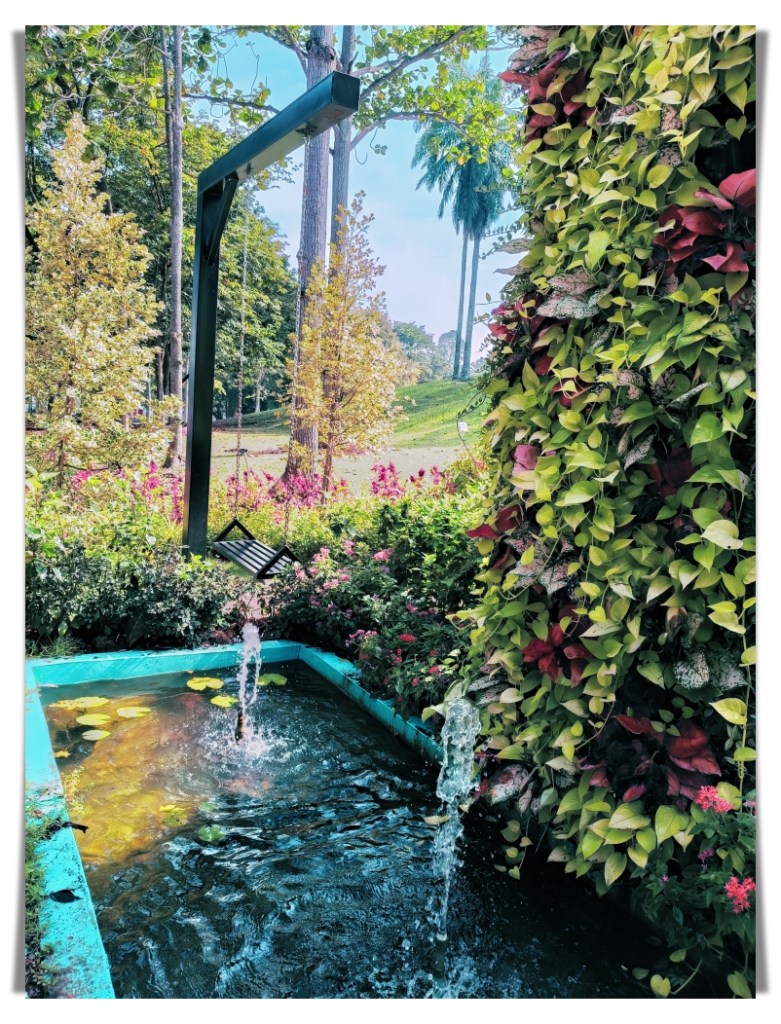
Last weekend, I found myself standing knee-deep in a shallow river in Janda Baik. The sunlight came through a canopy of trees above, casting soft streaks of light on the water’s surface. Everything felt quiet and peaceful. My kids splashed further upstream, and their laughter echoed off of rocks and trees. I stood still, closed my eyes, and let the water swirl around my legs as it flowed downstream.

It reminded me of the Iban traditional child-naming ritual. I’ve never seen it with my own eyes, but I learned about it from the elders and through reading. This ritual was held following the naming of the child and to formally “introduce” the child to the river. 

In the Iban way of life, water is more than a physical element. A body of water like a river is also a spiritual space. It gives life, but it is also a source of danger. We wash with water from the river, and sometimes, when the water is clear, we even drink and cook with it. It carries our boats to other villages, fields, and faraway places. However, it’s also where crocodiles and other dangers live. No Iban has grown up without hearing stories about someone who was attacked at the river. When a child is born, we don’t just give them a bath. We also hold a ritual to beg the river not to harm them. 

After the child is named, the bathing ritual begins. The night before the ceremony, the father informs the longhouse community of his intention. At dawn the next morning, the whole longhouse community walks to the river in a solemn procession. A flag bearer is at the front, and a man carrying a fowl follows him. Both of these men are chosen from among the respected elders. Two women walk behind them. One carries offerings and the other carries the child wrapped in handwoven pua kumbu. The rest follow, beating the gongs as they walk.

At the riverbank, the flag bearer cuts the water with a knife. The man with the fowl recites an invocation to call upon the spirits of water, earth, sky, and all the creatures that swim below the surface. He asks that the child be given good fortune, sharp vision, and safety. He calls the crocodile, the soft-shelled turtle, the barbus fish, the semah, and the tapah. He calls each one by name and tells them to regard this child as family, not food. He says, 

“If this son or grandson of ours happens to capsize and sink while he is visiting, you are the only ones who can lift him up and keep him afloat.”

It is not a metaphor but a real request, born out of fear and hope.

After the invocation, the child is bathed and the fowl is slaughtered. People make noise on purpose, like banging gongs and laughing, to drown out any bad omens. If the child is a boy, one wing of the bird is tied to a spear with red ribbon. The wing is attached to a heddle rod if it’s a girl. A bamboo basket full of offerings is then hung from a leafy pole. 

After that, they return to the longhouse and sprinkle the child with sacred water to get rid of bad omens. A feast is held and the gongs ring out to mark the ritual’s success. The child is now considered truly part of the community, and both the people and the river know it.

As I stood in that river at Janda Baik, I began to think about the rituals we’ve forgotten. What would it mean to reclaim a gesture like this, perhaps not literally but in spirit? The Ibans don’t all live in longhouses anymore. Some of us reside in cities and raise our kids as urbanites, but water still calls us. Maybe part of why we seek places like Janda Baik is because something in us still longs to make peace with the river. Rivers still take us places. They still give and take. And we too are still vulnerable to things we can’t see.

Maybe modern mothers need more moments like this, when they can recognize their fears, their prayers, and their desire to protect the people they love. We might not need to cut the water with a knife, but we can still offer a prayer, still whisper a blessing:

“We beseech you to confer on him fortune, give him sharp vision so that he will be fortunate, wealthy, and blessed with good health throughout his life. 

We can still speak to the river, and certainly we can still be heard. 


I write about Iban culture, ancestral rituals, creative life, emotional truths, and the quiet transformations of love, motherhood, and identity. If this speaks to you, subscribe and journey with me.
The Story Behind My Name | Pop Culture, Ancestral Power, and the Pua Kumbu

My first name, Olivia, was given to me by my aunt, who was an avid Olivia Newton-John fan. She loved the music and for her, the name represented something beautiful and worth passing on. So I became Olivia, named after a beautiful and talented singer. 

Growing up, I didn’t think much about it. It was just my name, four syllables, easy enough to pronounce, and slightly more trendy than the names around me. But back then it was common to see kids with names such as Donny Osmond or Cliff Richard. It was tacky, I admit, but I still take the compliment of being named after a superstar. However, over time, I began to notice how names carry stories and I realized mine was only half told. 

While Olivia came from pop culture, my second name came from something far older, deeper, and more spiritual. It was given to me in honor of a woman in my family, a great-grand-aunt who was once an early 20th-century Iban master weaver of the sacred pua kumbu (ceremonial cloth). She was not only skilled in her craft but also legendary. In our culture, women like her were known as “indu takar, indu ngar.” These were women who could receive weaving patterns in dreams from the supreme deity, Kumang, and translate them into woven cloths imbued with spiritual power. 

In days of old, the pua kumbu held a sacred role in the ritual and festival of enchaboh arung, where severed enemy heads were received. These clothes were woven by the wives or mothers of Iban warriors, guided by spiritual forces from the heavenly realms of Panggau Libau and Gelong. Upon their husbands’ and sons’ return from war, the women would spread the pua kumbu across their arms, welcoming them home and placing the enemy heads upon the cloth. (Refer to the footnote for more details). 

For Iban women, including my great-grand-aunt, weaving was more than just a craft. It was their “warpath,” parallel in sacredness and risk to the men’s headhunting expeditions. Before they could begin a new ceremonial piece, they needed to receive it in a dream and enter a specific spiritual state. One wrong move, even in how they prepared their threads, may lead to misfortune or even death. Their work carried great responsibility and risk. It required focus, discipline, and faith in the divine. 

I may not entirely understand the weight my great-grand-aunt bore, but I have always felt an echo of it. Receiving her name was an inheritance. It connected me not only to her but also to the spirit of her work and her path. 

I don’t weave cloth, but I do write and draw. Often it begins with a dreamy vision, like a found phrase or an emotion that I can’t fully articulate. There’s always that strong urge to make sense of it and mold it into something tangible. When I started my blog, I named it Olivia’s Atelier because I wanted it to be a personal and meaningful space. As Virginia Woolf once said, this is a room of my own. This is a space where I could shape something substantial based on my truths. 

Recently, I updated the blog header to reflect more of where I come from. I didn’t want anything generic or trendy but I wanted something that expressed my culture and heritage. So I chose an image of pua kumbu, the sacred textile woven by women like my great-grand-aunt. It carries more than visual beauty, with rich deep reds, blacks, and intricate patterns throughout. It holds power, dignity, and sacredness. 

To some, it may just look decorative. However, for me, it serves as a subtle way to assert my identity and heritage in this fast-moving, globalized world. 

My great-grand-aunt likely never imagined her name and legacy would live on in a digital space, passed down to a woman who lives a century apart. But I think of her often when I work, especially late at night when the house is quiet and I am writing or drawing. I wonder if this page I write or draw on is my version of the loom. 

That thought changes the way I approach my work. I don’t follow trends or write for algorithms. I build my work and portfolio slowly and with care. I try to create things that have meaning, even if they are simple. This is my way of remembering and continuing a legacy that is otherwise pushed aside by the more flashy things the crowd chases. 

I won’t mention my great-grand-aunt’s or my second name here. Some things should be kept private but rest assured, I carry her with me. She is part of my story and also why this blog exists. 

I was named after a singer whose voice brought joy to many. And I was also named after a woman whose hands transformed dreams into sacred cloth. Both of those women live inside me. They influenced how I perceive the world and the way I write or create. 

When you visit this blog and notice the patterned header, know that it holds a layer of memory and pride of a culture. It holds a legacy and strength that runs beneath everything I share. 

I have a first and a second name. One name was given; the other inherited, and both live on in everything I write and create. 

Footnote:
After returning from war expeditions, Iban warriors would spend about a week in huts away from the longhouse, cleansing themselves and preparing their “war trophies” (enemy heads). The heads were carefully skinned, the brains removed, and then smoked for several days. Once properly preserved, the warriors dressed in their finest regalia for a grand arrival during the enchaboh arung festival, where the skulls were placed into the waiting arms of their wives or mothers.


Olivia Atelier offers printables, templates, and art designed to inspire reflection, healing, and creativity. Visit Olivia’s Atelier for more.

What Motivates Me to Keep Creating as a Writer and Artist

I sometimes wonder if it’s foolish to keep doing this. I write, create, draw, and start all over again. There’s no assurance that anyone is listening or anything will come of it. But still, I keep coming back. I wake up before the world stirs and write. I build and dream out loud. Why? Because something inside me refuses to stay silent. 

I believe my primary motivation is the need to express myself truthfully. I don’t do it for performance or to convince anyone. I just express myself either through writing or drawing without having any expectations. I’ve spent far too many years conforming to the expectations of others. I am a wife and a mother. I am reliable and strong. But when I write, I can be tender, unfiltered, and fully myself. Even if the words come out wrong or the idea is incomplete, it is still mine. Creating allows me to regain the parts of myself that were left behind. It’s how I come back to myself. 

Writing helps me express things I can’t say out loud. It makes room for contradictions like guilt and delight, compassion and tiredness. It allows me to say things that I’ve been holding back for years. Some of my poems or essays contain silent confessions. Others are simply letters I’ve never sent. However, they all stem from the same place: a desire to live truthfully, even if just on the page. 

And something wonderful happens when I release that into the world. My words reach out and connect with the right people. People crave connection. Everyone. You and me. My words may give comfort to those who scroll past the noise and pause at a sentence because it sounds like something they previously felt but never said out loud. I don’t share my writing for likes or analytics, but I have hopes that someone, somewhere, would read what I wrote and feel seen. 

Connection doesn’t always mean interaction. Sometimes it’s just the feeling of being less alone. A stranger may read my words and find a piece of themselves in them. It may seem trivial and unimportant, but there’s something deeply rooted about it. It’s honest, authentic, even mundane. 

And there’s something else that draws me in—my culture. Iban women weren’t always taught to speak up, though they did have important roles in the hierarchy of things. No matter where I am in the world, I carry my ancestors with me. I carry their strength and courage in my veins. And I want to record that because I want to remember. I want my children to remember too. Writing helps me to cling onto what the world keeps trying to erase. 

When I write about Iban culture or way of life, I feel as if I am reconstructing myself. I know these stories matter even if just a handful of people read them. 

I am also deeply motivated by creative freedom. I’ve had roles, jobs, and seasons where I adhered to the rules. It paid the bills, certainly, but it drained my spirit. This space I’ve built—my blogs, art, and shops—is mine. I don’t need to wait for anyone’s permission. I can write anything I want, like a parenting essay on Monday, publish a poem on Wednesday, and draw something for fun on Friday. The flexibility and ownership are essential for my creative spirit. 

There’s something powerful about knowing I can change course if I need to. I don’t have to adhere to a specific niche or present a specific version of myself. All my creative work reflects every aspect of me, whether they are messy, raw, or incomplete, they are all mine. 

Perhaps the most tender motivation is I do this for my children. Money is important, of course; I do earn from some of my work, but money is less important when it comes to showing my children who their mother truly is. It’s important for them to know that I have dreams and aspirations, and I wasn’t just the mother who prepared their meals and helped with homework. I want them to know that I was also someone who wrote her way through pain and hope. I want them to see me grow and not simply survive. This, I hope, may give them permission to do the same. 

I want my children to know that it’s okay to change direction, to outgrow old narratives and start again. I want them to see that growth doesn’t always look like a straight line. Sometimes it’s slow, silent, or even invisible. But regardless of the progress, it’s still growth. And I want them to have the courage to follow their own paths, no matter how long or winding they get. 

So when things become hard, and they do, I try to come back to these five truths. I don’t always get it right. There were days when I doubted or gave up, but the fire never completely went out. And when I return, it welcomes me back like a lover with wide open arms. 


Olivia Atelier offers printables, templates, and art designed to inspire reflection, healing, and creativity. Visit Olivia’s Atelier for more.

Passing Stories Along | A Visit to BFBW Subang Parade

Books are expensive in Malaysia. Anyone who reads a lot already know this. A single paperback can cost as much as a meal for two people at times. And when you’re trying to pay your bills, parenting, buy groceries, or just get through the month, buying a new book feels like a luxury that’s easy to postpone.

That’s why I’ve always liked used bookstores. Yesterday I went to a small, quiet bookstore in Subang Parade called BFBW – Books for a Better World. I wrote a short post about it on Threads, but the visit stayed with me. The variety of titles and the reasonably priced books weren’t the only factors. It was the mood and what the place stands for.

The bookstore is small. There aren’t any cozy corners or mood lighting for photos. There were just clean white shelves, a blue donation box with a cartoon bear on it, and fluorescent lights above. There were no frills in the room, and the floor was just cement. But it still felt good, simple, welcoming, and real.

What made it feel meaningful was the sense that every book had already lived a life. Each one had been read, or maybe left unread, carried in someone’s bag, or left waiting on a nightstand. They were now waiting for someone else to bring them home. That continuity, stories passed from person to person, makes used books unique and special.

I ended up buying three books for RM10 each. One was Committed by Elizabeth Gilbert, which I’ve wanted to read for a long time. KL Noir was another one that caught my eye because of its subtitle: “Without shadows, there can be no light.” The last one was Life Inside My Mind, a book of essays by different writers about mental health. That one hit home.

These books weren’t in perfect shape. One had corners that were folded. The edges of the other one had faded. But that didn’t matter. I liked that they had been somewhere before me. Someone else had opened these pages and read them, or maybe they didn’t. It’s possible that the book was passed on without being read. It had traveled in any case.

That’s one of the little things that make used bookstores so nice. When you buy a book, you’re getting more than just a book; you’re getting a piece of someone else’s journey. It gives the book a deeper meaning that new books don’t always have.

At the front of the store, BFBW also has a donation box where people can leave books they don’t need anymore. The donated books aren’t just sold again; they’re also given to literacy programs and charities. Communities, schools, and small libraries benefit directly. It’s a simple system that supports access to reading.

While standing there, I reflected on my own bookshelves at home and the books I have kept but no longer read. Some of those books meant something to me at one time, but now they’re ready to go. I also bought books on a whim and never read them all the way through. I realized that giving them away could give them a new life.

It reminded me that sharing stories is more than just writing and publishing. It’s also about letting go and letting a book continue its journey by giving it to someone else. By letting go, we are passing on what helped us in the past or what we never got around to reading.

As a mother and a writer/artist, I often think about the kind of legacy I want to leave behind. This includes not only my own work but also the values I pass on. I want my kids to grow up in a world where they can get their hands on books. Where knowledge and imagination aren’t limited by price and where stories travel. Bookstores like BFBW make that vision feel possible.

If you live in the Klang Valley and have books that are in good shape, whether they are fiction, nonfiction, or children’s books, think about giving them away. Or take a little time to look around and pick up a few. You might find something you didn’t expect. You might rediscover the joy of reading without pressure.

I’m glad I stopped by. I left with three books and the feeling that I was part of something bigger. You are not just a reader but a link in a generous chain of people passing stories along. It really is that simple sometimes.


Olivia Atelier offers printables, templates, and art designed to inspire reflection, healing, and creativity. Visit Olivia’s Atelier for more.

What I Enjoy Most About Writing

I’ve been writing since I was a child, but it wasn’t until I was an adult that I figured out what I enjoyed most about it. It’s not always the act of writing itself, like filling up notebook after notebook or the satisfying click of the “publish” button. What I love most about writing is how it helps me understand myself and the world in ways that nothing else can.

Writing has always helped me see things more clearly. It calms my mind and helps me sort through complicated feelings and thoughts. I sometimes start writing without knowing what I want to say. But as the words come, my ideas begin to settle. The unpleasant feelings start to fade and the fog clears. Writing gives me a sanctuary to think, reflect, and heal.

I often write to work through feelings I haven’t fully processed, like grief, confusion, doubt, or painful memories. Writing gives those emotions a safe place to land. It helps me carry what would otherwise feel too heavy. Sometimes I don’t need a solution. Just putting the words down is enough. It becomes a form of release that quietly brings me back to myself.

Writing also helps me connect with others. Whether it’s a blog post, a poem, or a message on social media, it creates an invisible thread between me and someone else. I may not know who reads my work, but I write with the hope that my words might make someone feel seen, understood, or a little less alone. That subtle and honest connection has become something I deeply value.

Writing is also a wonderful way to leave a legacy. My Iban poems and cultural reflections are more than just creative expressions. They are a way to preserve and pass on language, traditions, and identity to the next generation. I want my kids to know where they came from when they grow up. I want them to read my words and experience a sense of recognition, rootedness, and curiosity about their heritage. This is how I use writing to become a bridge between generations.

I also love how writing lets me be creative. Fiction allows me to step into different characters and have different experiences. I can explore new points of view, see other possibilities, and live other lives without leaving my own. It stretches my thinking and enhances my sense of empathy. Writing fiction helps me deal with truths that I’m not ready to face head-on yet. And it sometimes leads me to discoveries I didn’t expect, like revealing emotions or insights I didn’t know I had.

Writing also makes me think more clearly. It helps me make sense of an issue or an argument by breaking it down and looking at it from different perspectives. It forces me to be honest, think more deeply, and clarify what I really believe. That process is good for my mind and heart. It helps me sit with complicated things without rushing to resolve them.

And then there’s the simple joy of making something that never existed before. It is satisfying to create something that has meaning for me and perhaps for others, whether it’s a poem, a blog post, or a whole collection of work. I like the feeling of completing a piece of writing and being proud of how I shaped it from start to finish.

Some days I write because I feel inspired and some days I write because I need to. But no matter what, writing never feels like work. It feels like returning to something that has always belonged to me. It’s a place where I don’t have to perform or pretend and can just be me.

So, when I think about what I enjoy most about writing, it comes down to this: it helps me live more honestly. It helps me think better, feel better, and observe the world better. It helps me connect, remember, and make sense of things. Writing has helped me heal, find clarity, find purpose, and build connection with others. I can’t think of anything more satisfying than that.


Olivia Atelier offers printables, templates, and art designed to inspire reflection, healing, and creativity. Visit Olivia’s Atelier for more.

First Image of a Black Hole | Looking Across Space and Time

I didn’t think I would cry. I just wanted to watch something that wouldn’t make my grief worse. Netflix’s documentary, Black Holes: The Edge of All We Know, wasn’t supposed to make me weep, but I wept anyway.

I lost it as soon as they showed the first image of the M87 supermassive black hole. It was an image of a dark center with a faint, perfect ring of light around it. Such an event had never happened before in human history. We used to think we could never capture it. And there it was. It was no longer just theory or math but something we could finally see and name. We could finally see the unseeable.

It wasn’t the mind-blowing science that got to me. It was the time it took for that image to travel to our planet. That image of light we saw in 2019 had been traveling for 55 million years from the galaxy M87. We somehow caught that image of the black hole in this present day during our lifetime. What we were really looking at wasn’t just a region in space. We were looking back in time.

Image source

Fifty-five million years ago, the Earth was in the early Eocene epoch, which was only ten million years after the dinosaurs vanished. The world was warm and tropical and teeming with early mammals. Forests covered much of the land. Our distant ancestors were small, curious primates who climbed trees and lived on a planet that was still recovering from extinction.

The light began its journey somewhere in that ancient, lush world. It left behind a galaxy that no living thing on Earth had ever thought of. It traveled through the universe quietly and steadily as life on Earth evolved. It kept going as continents shifted, species came and went, and the first humans learned to make fire, sing songs, build temples, write poetry, and wage wars. It travelled throughout millions of millennia and arrived in our lifetimes.

That’s why I cried. So poetic. It felt like divine timing, a cosmic coincidence that was too beautiful to ignore. Our existence coincided with this fleeting moment in history, marking the completion of that ancient light’s journey. That all of human history had aligned so that we could see the shadow of something that used to only exist in the realms of physics and imagination. A black hole is a void so complete that it bends reality, and the light that falls into it makes it visible to our eyes.

I felt small and humbled. I reflected on the countless generations that had lived and died without ever being aware of this. In the grand scheme of things, our stories are extremely small. But somehow, we were able to look back 55 million years and make sense of what we saw. We were able to see it because we had the courage to ask questions and persistently search for answers. 

I think that’s what stayed with me. It’s a reminder that certain things we perceive as unknowable may not remain so. Sometimes, truth comes like light from far away – slowly, patiently, and without fail. And sometimes, the edge of everything we know is just the beginning of the realm of future discoveries.

I wonder how many more truths are coming our way right now. If we keep looking, I wonder what other things that seem impossible we might discover.


Olivia Atelier offers printables, templates, and art designed to inspire reflection, healing, and creativity. Visit Olivia’s Atelier for more.

How I’ve Been Moving My Own Goalposts

I’ve been creating and publishing my work for years, but if you heard me talk about my work, you might think I’m just getting started.

I have this strange habit that I’ve noticed. I always add a “but” to every milestone I reach. In 2015, I published my first coloring book. This was long before the age of AI and before everyone was selling and publishing coloring books in droves. It was a huge feat for me because I had no formal education in design or tools but in the back of my mind it wasn’t a big deal because it wasn’t a novel. I sold my art and designs to people all over the world, but it was only a few dollars at a time. I’ve been interviewed on the radio a couple of times…but they were only thirty minutes. I’ve been featured in a local newspaper (The Star) and magazines…but no one remembers them. Even my poems, two in a local online literary journal and one in an international one, also come with the quiet disclaimer that they weren’t in a fancy, hardbound anthology.

In 2018, two of my paintings were part of a group show in Lisbon, Portugal. At the time, I remember feeling honored…and then telling myself right away that they were only small pieces, as if that made it less important that people on the other side of the world had chosen and seen them.

My brain seems to be programmed to move the goalposts as soon as I score. Everything I’ve done immediately ceases to count because it wasn’t more extensive, profitable, or longer. It’s a silent erasure of my own work and not humility. And the more I consider it, the more I see how deeply ingrained it is. Somewhere along the way, I learned that worth could only be measured in extremes.

I think part of it stems from the way accomplishments are often celebrated. Best-sellers, award winners, and overnight sensations often make the headlines. Seldom do the slower, more steady steps receive the same attention. Perhaps that’s why I find it difficult to appreciate them in my own life because they’re not the kind of victories that garner much attention.

But lately, I’ve been thinking about the new voices I’ve seen online. People who are just starting out as artists or writers are celebrating their first novel draft, drawing, or Etsy sale. Their happiness is apparent. They aren’t comparing it to some unseen standard. They don’t say “but” after their announcement. I wish I could have that. And it makes me think about how many moments I’ve missed out on because I wouldn’t let myself be proud for more than a second.

The truth is that my creative life has been full. I’ve brought six coloring books from idea to market, my art and designs have traveled farther than I have, I’ve done an overseas group show, I’ve done radio interviews, print features, and years of steady blogging. It exists not because I waited for permission, but because I put it out there into the world. And yet, I’ve been the one who’s diminishing it.

Here’s another truth: I don’t share links to my interviews or published works on my blog or social media. They carry my real identity, but I want to stay anonymous for now. That gives me a sense of freedom because I can create without worrying about my name, my face, or the expectations that come with them. Without that attachment, I can try new things, explore, and even fail without worrying that my whole identity is at stake.

The price of this mindset, both the anonymity and the constant moving of the goalposts, isn’t just emotional. It seeps into motivation. You never feel like you’ve arrived when you keep moving the finish line. And without that rest and a moment of acknowledgement and gratitude, the trip starts to feel like an endless uphill climb.

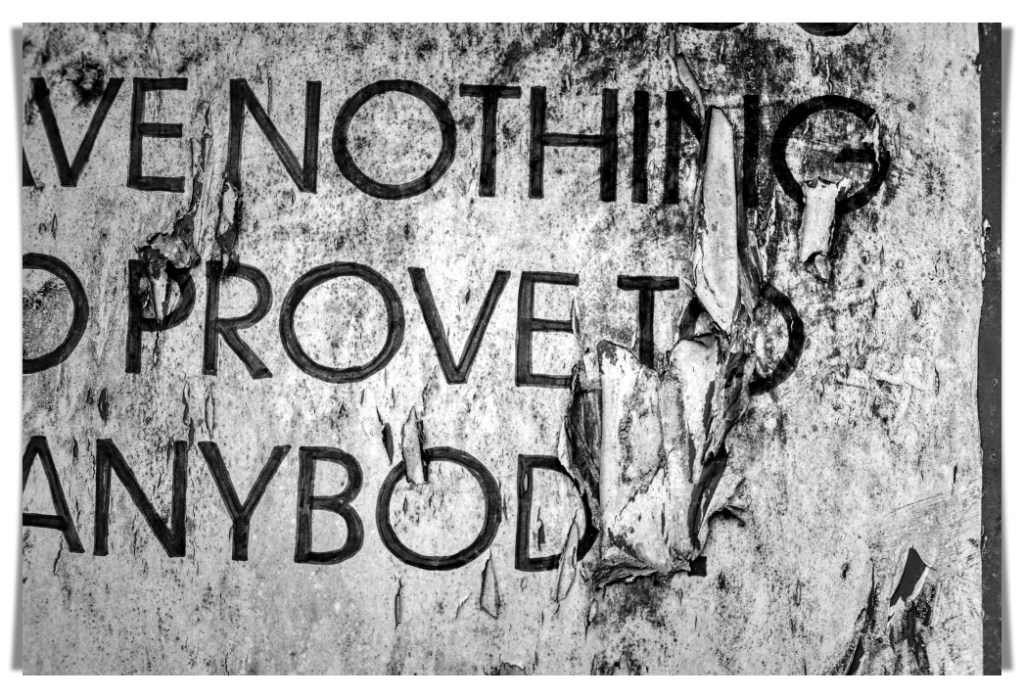
I’ve been trying to change this by creating tangible reminders that my work is real and worth noticing, not by forcing myself to feel proud. I made a “Proof Folder.” I keep screenshots of kind messages from readers or buyers, pictures of my books and art in the world, sales confirmations, and links to features or interviews. It’s an effort to fight against my habit of forgetting. I’ll open the folder on days when the “but” tries to take over. I’ll remind myself that the work was done, that it mattered, and that it still does.

I don’t know if I’ll ever be able to completely silence the voice in my head that says, ‘It’s not enough.’ But I might be able to learn to say something more true: It’s all mine. I made it and that counts.


Olivia Atelier offers printables, templates, and art designed to inspire reflection, healing, and creativity. Visit Olivia’s Atelier for more.

If We Had Stayed | A Prose Poem from an Alternate Life

It was never loud between us. Our love never needed proof. Just subtle signs. A gaze that lasted too long. A jacket shrugged off without being asked. How his silence moved toward mine and made room.

We live above the bookstore near the station. The one with crooked shelves and a leaking pipe that drips near the poetry section. On quiet mornings, I wake first. The kettle whispers steam. He is still asleep, half-buried in the blankets, one arm flung across my side of the bed. I write before the city wakes up. One lamp on. My pen moves slowly and carefully across the page because some mornings are fragile. 

Some days, we walk to the cafe where we first met. The one where the windows get foggy, and I forgot a pen once. He never mentions that he kept it. Never asks why I replaced it. But he returns it anyway, weeks later, as if it was never gone. The pen, not the moment we shared.

We have a habit of not explaining. He says it once, at the door, without turning around. 

We often stroll to Yanping Riverside Park. It is our routine. We never call it that, but we keep coming back to it. On quieter days, we walk under trees that offer more than just shade. Kids dart past on scooters, while we walk slowly. His hand near mine. Sometimes he stops at the railing and looks at the river. I can feel him and the constellation he carries between us.

He rarely talks about work, and when he does, it’s only in fragments. Just enough to remind me that there are things that can’t be put into words. And that’s enough. I don’t have to know everything about him to love him.

I learn to read his silences. The way he checks the locks twice. The way his eyes drift when he’s too tired to pretend. I never think of his silence as distance. It’s a huge part of the whole.

We don’t talk about forever. We just stay.

There are rooftops and rain, the wind carrying jasmine from someone else’s balcony. Matcha soft-serve he buys without asking. The way he looks at me when I hand him a poem. How he holds it like a feather.

We don’t make any promises. But he and I stay.

He once told me that being around me hurt him like a third lung. I don’t say anything. I just trace my thumb over his knuckles and let the silence remain. There are no anniversaries. No statements. Just the ritual of being there.

He catches me when I slip on uneven pavement. His fingers wrap around my arm like the answer to the questions I’ve been too scared to ask. He says, “I guess I’m here to catch you.” I smile and file that sentence in the back of my mind, where the most important things live. 

Our life together isn’t always perfect. We fight. We turn our backs in sleep. But we stay. He doesn’t save me. I don’t save him. We just stop pretending we don’t need each other.

And in this world we’ve carved our lives into, the silence isn’t absence—it’s alive, trembling like a living thing.


Olivia Atelier offers printables, templates, and art designed to inspire reflection, healing, and creativity. Visit Olivia’s Atelier for more.

When Entertainment Crosses the Line | On Exploiting Women’s Pain for Ratings

Something very disturbing happened on Malaysian live TV last night. During Anugerah Melodi, Bella Astillah was made to present an award to the woman her ex-husband had cheated on her with. It was like watching a slow-motion car crash; you want to look away, but you can’t because you can’t believe that something so cruel could be planned, aired, and packaged as entertainment.

And what’s worse? Some people had the nerve to call Bella unprofessional for walking away. Let me be clear: Bella didn’t overreact. She didn’t make a fuss and was able to hold back. And the fact that she had to hold back at all, in a situation that no woman should ever have to be in, is the real tragedy. What happened wasn’t entertainment. It was a public humiliation well-dressed with glitter and applause.

It’s absolutely shameful for a system to think it’s okay to put a woman in the same spotlight as the person who hurt her family, just for shock value. And then to show it live, knowing all the history and emotional turmoil that went into it? It’s bad taste with a total lack of respect for human dignity.

I usually don’t pay much attention to the entertainment industry, whether it’s local or international. I’ve never really been interested in it, and most news about celebrities goes right by me. But this incident made me livid. Because this wasn’t a drama for Slot Akasia (TV segment for local drama) but real pain being paraded as a spectacle. And as someone who has been through a lot of trauma myself, I couldn’t help but feel triggered by how easily that pain was exploited and dismissed.

This is where we need to have a larger conversation about the ethics of our entertainment industry. And it doesn’t stop there. What we show on TV isn’t a random thing. Our kids are watching. They’re learning how to treat people by watching how we treat them, especially how we treat people who are hurting. And in a country where bullying in schools is becoming all too common, moments like these send a dangerous message: that it’s okay to make fun of someone’s misfortune and to humiliate them in public for fun. We are showing our kids that it is okay to mock someone’s pain instead of showing compassion.

This was bullying, plain and simple, with stage lights and applause. And if we’re not careful, we’re teaching the next generation that being mean is acceptable and even rewarded. How did we end up here? When did we start treating other people’s pain as a show? Bella’s case is not one of a kind. We’ve seen this happen over and over again: trauma being used to get ratings, tears being turned into headlines, and women being told they have to keep it all together for the show.

Some might say that’s how show business works. But no, it isn’t. That’s exploitation and there’s nothing glamorous or entertaining about it.

We should talk about how the media often takes advantage of women’s shame. The pattern is disturbingly consistent, whether it’s reality TV setting women up to be shamed, talk shows baiting vulnerable guests for views, or award ceremonies like this one forcing a confrontation that never needed to happen. The main idea is that your pain is only worth as much as the clicks or views it gets.

The aftermath makes it worse. Many people who watched Bella instead of standing by her side mocked her, questioned her professionalism, and invalidated her trauma. Because it seems that when a woman doesn’t smile and appear “redha” through her sorrow, she becomes the problem.

But let’s turn the tables for a second. Think about how it would feel for a man to have to give an award to the man his wife cheated on him with. Would people think he was being dramatic? Or would we be outraged on his behalf?

People expect women to always be gracious and smile politely. Women are always expected to rise above and endure. But when they don’t, the reaction is quick. However, endurance is not the same as healing. And being polite when someone betrays you isn’t professionalism but emotional suppression that comes at a cost. 

Mental health is not a joke. Emotional abuse leaves real scars on people. And being triggered on live TV is not something to be mocked or dissected for gossip. People should be kind and show empathy. But last night, there was no empathy to be found. Instead, we saw a media industry that cares more about viral moments than about people’s lives.

So let’s call this out for what it is: unethical, tone-deaf, and deeply irresponsible.

TV3 Malaysia, you had many opportunities to do better. You knew the history and what was at stake. And you still chose to be sensational over being sensitive. You didn’t read the room and let Bella down. And by doing that, you failed every woman who has ever been told to suck it up, “redha,” and move on.

If you defended the setup or laughed it off, I ask you to think more deeply. Would you have been as calm as she was if you were in her shoes? If the pain were yours, would you call it “just an award presentation”?

We need to stop making trauma into entertainment. And we really need to stop expecting women to be composed when they are badly betrayed. We need to make a clear distinction between storytelling and exploitation to increase ratings and views.

Bella, you didn’t do anything wrong. Your emotions were valid and it took a lot of courage to say her name out loud and present her that award. Many of us saw you as a person who deserved respect and dignity and not a humiliating headline.

To the rest of us: let this be a reminder that empathy should never be optional, especially when the cameras are rolling.


Olivia Atelier offers printables, templates, and art designed to inspire reflection, healing, and creativity. Visit Olivia’s Atelier for more.

Where Is God in a Universe That Expands?

A couple of nights ago, I found myself thinking about black holes and the curvature of spacetime. It wasn’t a planned deep dive into physics. It all started with a simple question: how can a black hole not be seen/invisible? That question led to one of the most intense conversations I’ve ever had. It started with astrophysics and then slowly turned into theology. And like most of the things I reflect on late at night, it made me more curious than it did give me answers.

I learned that space is not empty. It is a real piece of “fabric” that can bend, stretch, and ripple. This fabric curves because of mass, which is what we feel as gravity. The more mass there is, the stronger the curvature and the stronger the gravity. This is why a black hole’s pull is so strong: its mass is compressed into such a tiny point that even light can’t get away from it. The event horizon is the line that marks the end of visibility (what we can see). Beyond it, not even light can come back. It’s not that the black hole is an empty hole; it’s that our limited perception doesn’t allow us to see past a certain point.

But what excited me was finding out that time is also a part of this fabric. Time doesn’t flow evenly throughout the universe. Time slows down around massive objects because their gravity pulls on the fabric of space more strongly. Time goes by more slowly when there is more gravity. This means that time moves a little slower on Earth than it does in space. And time almost stops close to a black hole. Do you know that one hour near the black hole is equal to thousands of years on earth? That alone changes how I perceive reality. Time doesn’t go in a straight line; it bends or curves relative to the surrounding mass.

And then there’s the expansion of the universe. I used to believe that the galaxies are moving away from each other in some cosmic ocean. Little did I know that the space itself is stretching like an elastic fabric. Space isn’t moving galaxies through it; it’s actively growing and pulling them apart. And here’s the interesting part: this expansion is speeding up. But what or who did it? The scientists call it dark energy, and it’s a force in the universe that we don’t really understand. Dark energy makes up about 68% of the universe we know about. It pushes everything away from one another, making the space between galaxies grow bigger and bigger.

All of this left me thinking: where is God in all this?

What kind of God made the universe that keeps stretching, spacetime that is constantly changing, and stars that collapse and disappear into black holes that bend reality to the point of no return? What kind of God exists in that?

For a while now, I’ve been deconstructing my faith. I have questions that I’m sometimes scared to ask out loud. I grew up believing in a God who was all-knowing, all-loving, and in control. But the more I learn about suffering, physics, and history, the harder it is to hold on to that version of God.

But still… I still have faith in God but not necessarily the all-powerful entity on a throne somewhere above the universe. I still believe in a God that started all of this.

It’s possible that God isn’t outside the universe, looking in. It’s possible that God is the universe—the intelligence within the fabric of spacetime and the consciousness behind every expansion and collapse. He is not a puppeteer or a micromanager but a divine presence that orchestrated the cosmic mystery.

Two years ago, I bought a book by Daniel S. Zachary called “A Leap in Science and a Step of Faith.” He’s an astronomer. I went to one of his talks once, a couple of years ago. The subtitle of the book is “Seeking God for the Scientifically Curious”. I didn’t read it back then. Maybe I wasn’t ready or was still too scared to confess that I didn’t believe the version of God I had been raised up with. But what about now? I believe I’m ready to read it and slowly explore and find answers to my doubts.

The truth is that I’m not looking for a perfect theology anymore. I’m looking for a God who makes sense in a world where stars are born and die, time bends, and the universe is expanding to somewhere or nowhere. I’m looking for a God who can deal with my doubts and doesn’t get scared when I ask, are we the only intelligent beings in all of this?

The design is too accurate and intelligent so I tend to believe that we might not be the only ones. Some entity might be lying awake somewhere else, asking the same questions under a different sky. Or maybe we are alone, but I don’t think we have the capacity to figure it out. It’s just not possible.

I don’t believe in a God who needs me to do everything right anymore. I believe in a God who sees my reconstructing as a gift to myself. And if that means I have to float through this cosmic mystery for a while longer, so be it.

This drifting is holy.

And maybe God isn’t the answer I was searching for but the gravity that keeps pulling me back to the questions.


Olivia Atelier offers printables, templates, and art designed to inspire reflection, healing, and creativity. Visit Olivia’s Atelier for more.