What Rest Looks Like After Fifteen Years of Mothering

It’s been a long time since I’ve had a truly lazy day.

I’m not talking about a day off from chores or deadlines. I’m referring to a day when I let go of everything without feeling pulled in any direction. It’s the day where I don’t feel like I have to be useful or productive or show up for someone else.

Most of my days for the last 15 years have been spent on others. When my kids were younger, especially when they were babies and toddlers, everything was about them. Feeding, bathing, cleaning, holding, and comforting them came first. When they were sick, it meant even less sleep and more work. At that time, I was tired all over, not just my body. It got into my thoughts and emotions as well. Everything was affected by the exhaustion.

There was no such thing as a lazy day back then. It seemed like I had to work for rest. And even when I tried to rest, it cost me something. Waking up from a nap meant a mess. A slower morning meant that I was already behind when I started my day. A moment alone was always interrupted.

At night, when everyone else was asleep, I had the house to myself. Finally, the house was quiet, and I could breathe. I stayed up, though, although I was tired. I wanted a moment when no one needed me so I could be a person again. I found out later that this was called “revenge bedtime procrastination.” It made sense to me. I wasn’t staying up because I had energy, but I stayed up because I didn’t have any other time to be alone.

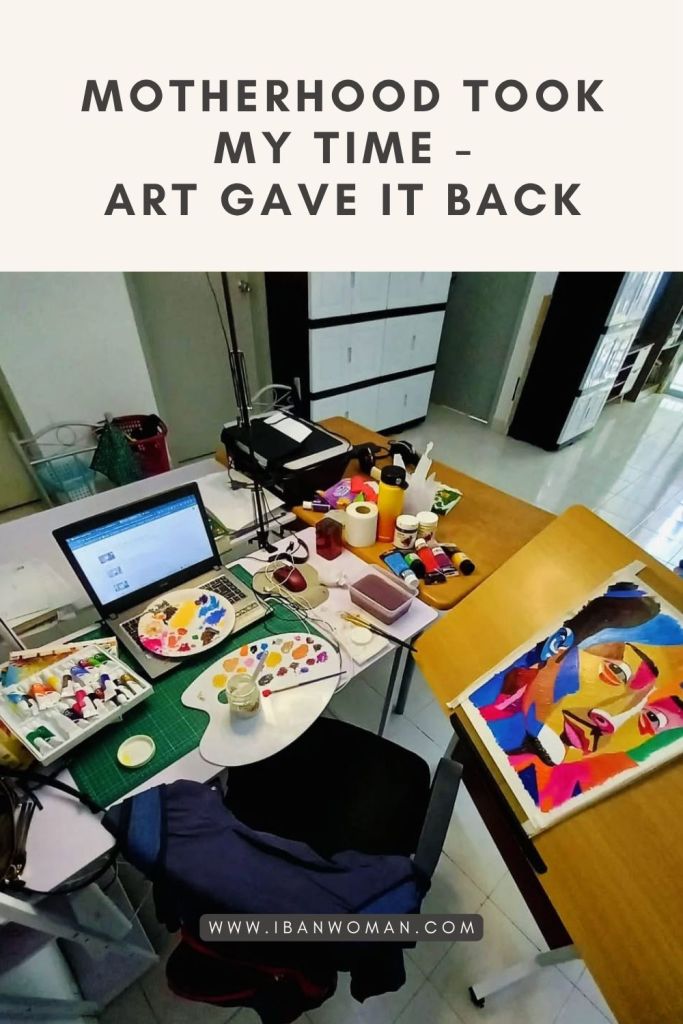
Back then, I still made time for art. I still wrote in my journal. It was not consistent but enough to keep a small part of myself alive. My creative work never stopped; it just happened in the margins during stolen hours. Or in between picking up the kids from school and doing laundry. I didn’t think of it as something extra but as something I depended on. 

Now, with the kids older, I have more “free time” or space. The demands on my time are different. My kids are more self-sufficient, and I can finally enjoy long periods of peace. But I still don’t take lazy days. 

Even on weekends when I don’t have any plans or on school holidays when things are slower, I still gravitate toward my work. And by work, I don’t mean a job. I mean things that feed my mind and spirit, like writing, painting, and reading. These things are not obligations. They’re what make me feel most alive.

Some people might think what I do is work. But for me, it’s the opposite of draining because it gives back and keeps me grounded. I don’t create to be productive. It’s in my nature to create.

That’s why the idea of lazy days is strange to me. I don’t resist rest. I just experience it differently. When I spend time writing or making art, I’m not trying to prove anything. This is how I return to myself and how I unwind inwardly while still moving.

If you ask me if lazy days make me feel rested or unproductive, I would say neither. I don’t have lazy days. I have quiet and slow days or days where I work inward, even if nothing shows on the outside.

Rest doesn’t always look like lying on the couch doing nothing. Putting on soft music and painting without a goal in mind is one way to relax. Sometimes it’s writing in a journal in the early morning, before anyone else wakes up. Sometimes it’s reading a book that makes me feel less alone.

To be honest, I don’t think I want a life full of lazy days. I want to live a life where I feel like I’m really there in everything I do. Whether it’s being a parent, creating something, or just being still. Maybe that’s what I’ve been working toward all this time.


I write about Iban culture, ancestral rituals, creative life, emotional truths, and the quiet transformations of love, motherhood, and identity. If this speaks to you, subscribe and journey with me.
The Farthest I’ve Been From Home

I always feel like I have to do more. Write more, draw more, make more, improve more, and perform more. There’s always something I haven’t finished. A file I haven’t uploaded, a design I need to tweak, a poem I must refine, a post I need to write, a plan I need to make. The list goes on for days and weeks, and even when I finish one thing, another takes its place before I can breathe.

I wake up thinking about it. I go to bed, still mentally rearranging tasks. I convince myself I am being responsible. I convince myself that I’m doing what I love. I tell myself that this is what I have chosen. But to be honest, most days all I want is to be done. I’m done with the expectations. I’m done with continually showing up. I’m done with the excessive urge to be productive. Everything seems to be extremely tiring, and I’ve almost reached the limit of what my mental, emotional, and physical state could cope with. 

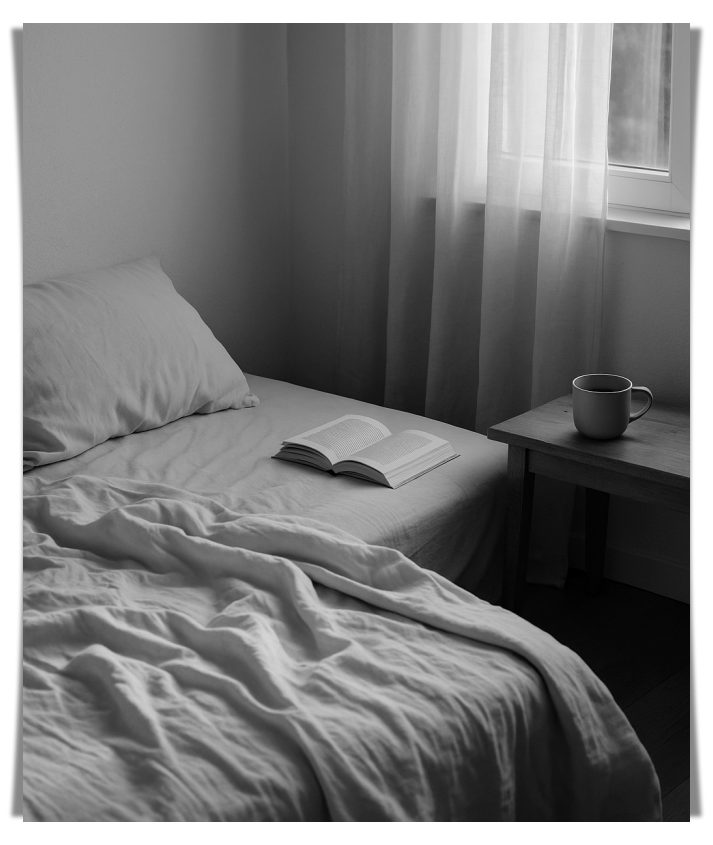
Most days, all I really want to do is read in bed in the afternoon. I want to let myself fall asleep while a book slips from my grasp. I want to wake up when I want to, not when the alarm goes off or someone needs me. I want to stop feeling guilty for taking a break. I want to stop seeing time as something I owe to others. 

It sounds easy, right? Not at all, because I’ve built a life where I have to earn my rest. I keep telling myself that I don’t deserve to stop until everything is done. I’ve always believed that slowing down was a sign of weakness and that being worn out was proof that I was accomplishing enough.

Maybe it’s aging or the weariness of parenting. Maybe it’s the silent accumulation of years spent prioritizing the needs of others. However, these days I don’t dream of escape or achievement. I want silence. I want weightlessness. I want the freedom to stop carrying everything for everyone all the time. Sometimes I think the farthest I’ve ever been from home isn’t an actual place, but rather this version of myself that feels I must earn my rest.

Even when I traveled far, like when I lived in other countries, stayed in new cities, or walked streets where no one knew my name—I still carried the same urge to prove my worth. I wish I could go back and tell the younger version of myself that you don’t have to fill every moment. Your life doesn’t have to be a performance. You’re allowed to exist without having to produce or create anything. You’re free to just be. 

The truth is, I’m struggling to believe it now. I can’t convince myself that it’s okay to read in bed anytime I want, and I doze off when my eyes feel heavy. I’m struggling to believe that everything I’ve built won’t fall apart if I do nothing for a few hours. Because if I never feel free in my creative life, what good is it?

I experienced that same heaviness after lunch today. I guess it stems from sheer exhaustion. 

I looked at my to-do list. I looked at my computer. And then I looked away. I carried a novel and jumped into bed. I let the afternoon go. I could always write and draw something new tomorrow. They all could wait. And right now, I need to read. And sleep. 


I write about Iban culture, ancestral rituals, creative life, emotional truths, and the quiet transformations of love, motherhood, and identity. If this speaks to you, subscribe and journey with me.
The Other Me | The Woman Behind the Poem

When I wrote the poem “The Other Me,” I wasn’t trying to sound bold or dramatic. I was just being honest by telling my truth. 

People often assume they know me. They see a woman who is quiet. A wife. A mom. A Christian. Someone who shows up, serves, nods politely, and doesn’t cause trouble or controversy. I’m familiar with this image because I’ve lived inside it for most of my adult life. It’s not that it’s wrong. It’s just incomplete.

There has always been a deeper current under the surface. Beneath all that facade of neatness, there is someone who asks harder questions or feels hurt when silenced. There is someone that remembers who I was before all the roles and expectations started to pile up on me.

“The Other Me” is not a fictional character. She is a real person who has always been by my side. I put her away, hidden, so that I could make room for acceptance, safety, and community. In religious communities, women are often praised for being quiet, gentle, and obedient. Where doubt must be neatly dressed in submission, and discomfort is treated like rebellion.

The poem came from the grief of hiding and of living a half-truth because the whole truth felt like too much.

I was taught to be agreeable as a child or to be well-liked. I learned that being difficult was the same as being rejected. That if you had questions, you lacked faith. That wanting more, like more closeness, more freedom, and more honesty, was wrong or selfish.

So I stayed small. I stayed quiet. I played the role so well I almost forgot I was acting. But staying quiet has a price.

When you’re around people who only know the version of you that makes them comfortable, a certain kind of loneliness grows. They love that safe version of you and they honor her because she embodies the values they approved. But you start to wonder if they would still love you if you said something out of character. What if I stopped editing myself for the sake of their comfort? What if I let the fire show?

And then one day you write a poem.

You write it because you have things you want to say but can’t. Your body remembers what your mind tries to bury. Because there is a woman inside you who is sick of bending over backwards to meet other people’s expectations.

You don’t even know if you’ll share it when you write it. But that is beside the point because the truth is you need to see this woman and say to her, “I haven’t forgotten you.”

“The Other Me” is about the version of myself that doesn’t fit into polite spaces. She is the one who laughs too loudly, writes about God and desire in the same line, and asks questions about things she was told not to touch. She loves deeply but won’t let anyone else control her.

In the past, I was scared of her.

But now I know she isn’t a threat. She isn’t being defiant just to be dramatic. She is just being honest. She is the version of me that lived and survived. And I owe her more than just silence.

When I say I feel alone sometimes, I mean it in a specific way. I don’t mean that I don’t have anyone around me. What I mean is that I don’t have a place that feels like home and where I belong. I don’t quite fit in with the local creative community, where the type of poetry that gets attention is usually light, easy to read, and trendy. I write differently. I write deeply. And sometimes, that depth becomes a wall between me and the world I want to reach. 

At the same time, the people who connect with my work often live far away. They have different cultures, different worldviews. We connect through words, but we live in different worlds. That, too, feels like a dislocation.

But still, I write.

Because this is how I heal, and this is how I remember. This is how I get back the parts of myself that I’ve tried to hide for a long time.

The Other Me is not a rebellion. It is a way for me to return to the version of me that I’ve neglected.

And maybe, just maybe, if I keep writing her into existence, someone else out there who also feels out of place, half-formed, and unseen, will recognize themselves in my words. And that recognition will feel like belonging.

We might not need to fit in to be complete. Maybe we just need to be honest.

And that is what this poem gave me. A little more honesty. A little more light. A little more room to breathe.

And to the version of me that is still hiding: I see you. We’re coming home.

Note: This poem is not published yet, but you can read a short excerpt on my Threads post.


Olivia Atelier offers printables, templates, and art designed to inspire reflection, healing, and creativity. Visit Olivia’s Atelier for more.

What I Know Now That I’m in My 40s

As I get older, I realize that change doesn’t stop. You don’t reach a certain point where you finally feel “together.” When I was in my 20s, I thought that women in their 40s had it all figured out. They knew how to love, how to parent, and how to stay calm when their world fell apart and the bills were late and the kids were fighting. But now that I’m here, I know the truth: we’re all still learning and figuring things out.

In my 40s, I no longer chase the idea of being extraordinary. I want to be real, present, and kind to myself. I’ve stopped apologizing for being quiet, for needing time alone, or for feeling deeply. I used to shrink myself so people would find me easier to digest and tolerate. Now I let the fullness of who I am take up space, even if it makes other people feel uncomfortable.

I have learned that performance doesn’t determine one’s worth. Worth doesn’t come from being productive, getting praise, or doing everything right. Even when I’m still, I am still worthy. Or when I’m unseen or unnoticed. Or when I am not achieving a single thing. This kind of emotional growth doesn’t happen overnight. It came through years of burnout and soul-wrestling, trying to be everything to everyone and having nothing left for myself.

Motherhood taught me that but not in a pretty, “Pinterest-quote” way. It taught me in the messy, heartbreaking moments that often happen in the trenches of parenting. Motherhood revealed the gaps in my patience, where I lost my sense of self or the ghosts I hadn’t exorcised yet. It forced me to look at myself when I was at my worst and ask, “Can I still be nice to my kids? Can I still stay and get through it all?”

Marriage, too, has been a teacher but not always a gentle one. Love in your 40s is less exciting and can be boring but I’m speaking from my experience. It’s less about the big, impressive things and more about the small, boring things like showing up for each other. Or listening when you’re tired and don’t really care about the nitty-gritty of it. Or saying you’re sorry first. I used to think that being in love was like being high. But now I know better.

My art and writing have saved me more times than I can count. They gave shape to emotions I couldn’t name. They held me when I felt invisible. When I returned to writing poetry after years on hiatus, it felt like coming home to an old friend who never stopped waiting. I don’t write to impress anymore; I write to learn and understand. I want to tell the truth without worrying about how it sounds or how it looks. That’s the heart of my creative healing.

And this is my truth: I am a woman who is no longer afraid to feel everything.

I’ve learned to slow down and take my time. I’ve learned to walk away when something costs me my peace. I’ve learned to take a break without guilt. I’ve learned to feed myself what nourishes, not what numbs. I’ve learned that joy isn’t something you chase relentlessly. Joy is something you notice. You can find joy anywhere you look hard enough. In your child’s laughter. In the soft, fading light at 7.30pm. In the peaceful and dull parts of your life.

I’ve stopped needing everyone to like me. Not everyone will. And that’s okay. I am not for everyone. But I am for the people who value honesty over performance, presence over perfection, and depth over decorum.

Being a woman in your 40s means I carry both tenderness and steel in my bones. I know how to hold space and when to keep things to myself. I know how to tell the truth even when it hurts. I still make mistakes, of course. I still feel anxious most of the time, but I’m not as scared of being seen as imperfect. There is no pretending. What you see is what you get.

I don’t have it all figured out. But I know who I am now. And I like her more than I ever have.

Now That I Know

I don’t need fireworks.
I light my own sky
with the hush
of knowing I survived.
No more performance prayers.
No more bloodletting for love.
If I bend now, it’s not to please–
but to plant.
My thighs and belly are soft.
My words are sharp.
I’m no longer a girl
waiting to be chosen.
I have chosen myself,
my whole being–
transforming.

© 2025 Olivia JD


Olivia Atelier offers printables, templates, and art designed to inspire reflection, healing, and creativity. Visit Olivia’s Atelier for more.

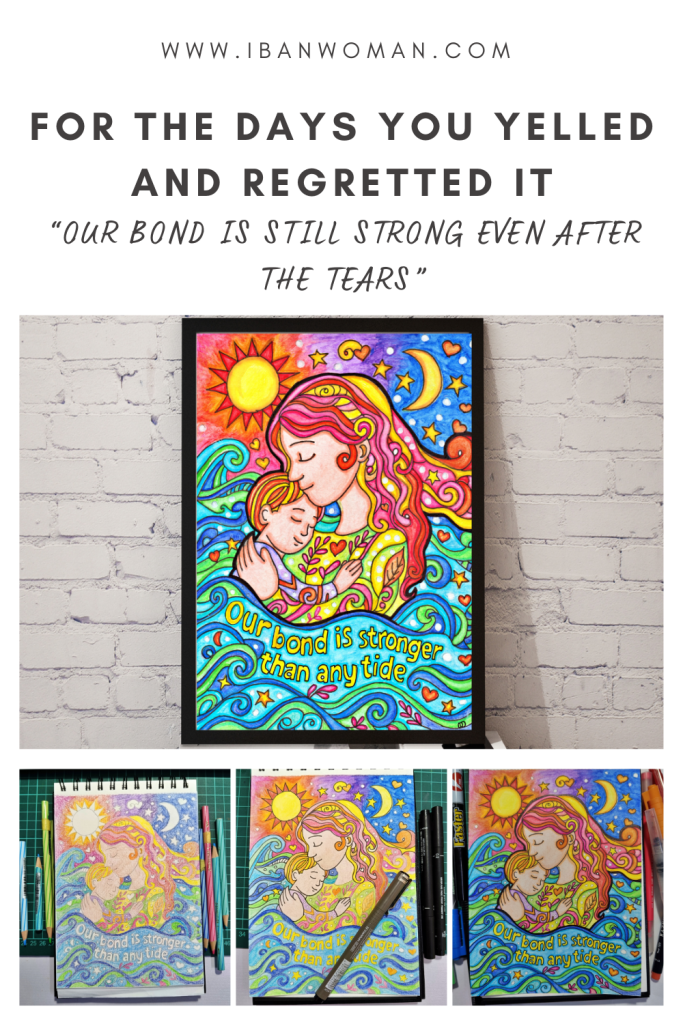
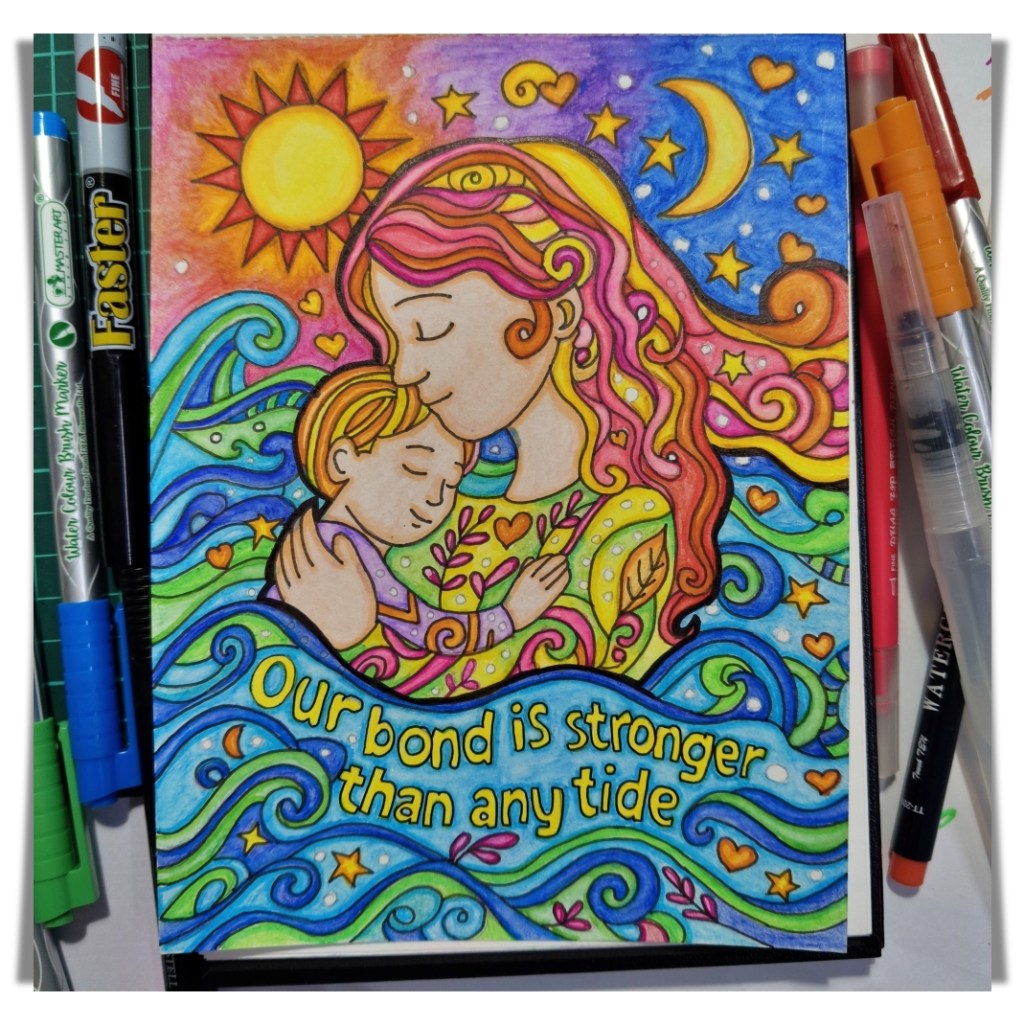
Printable Affirmation for Moms | Our Bond Is Stronger Than Any Tide

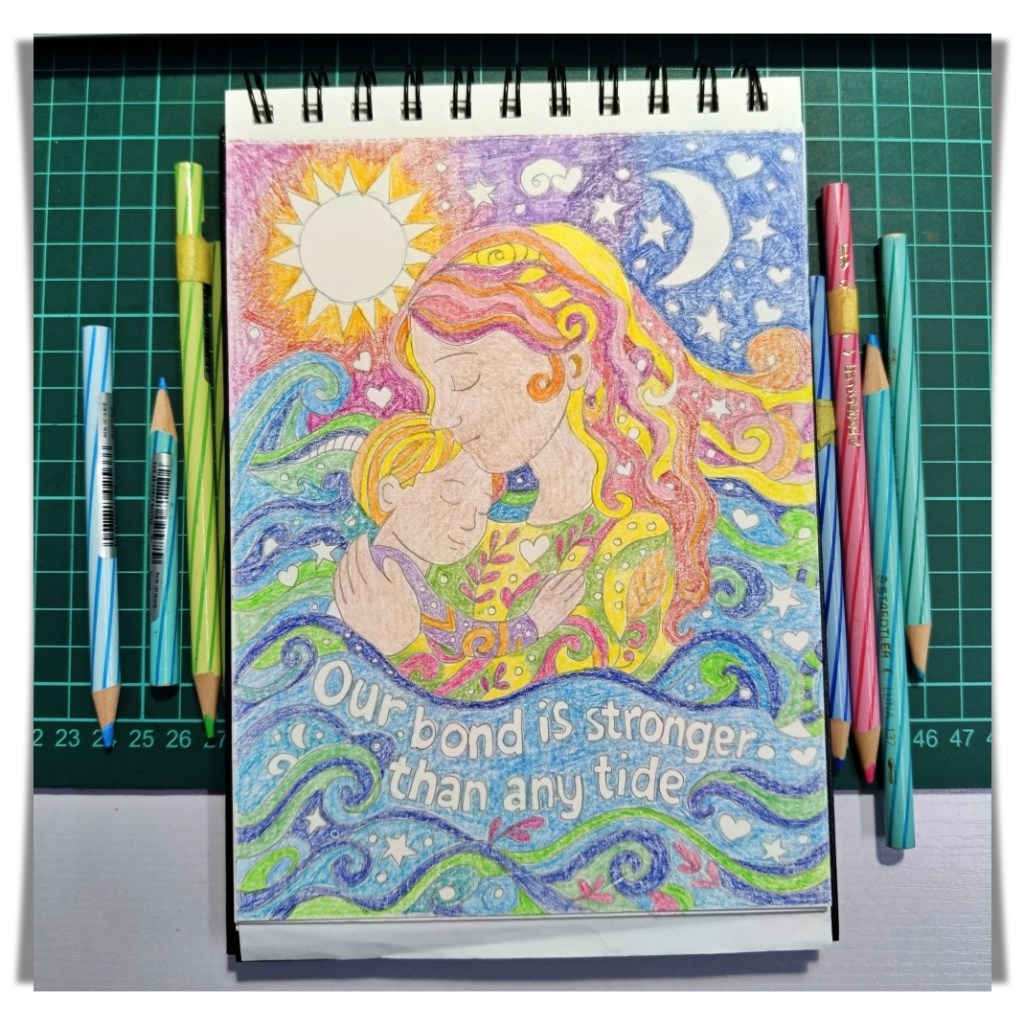
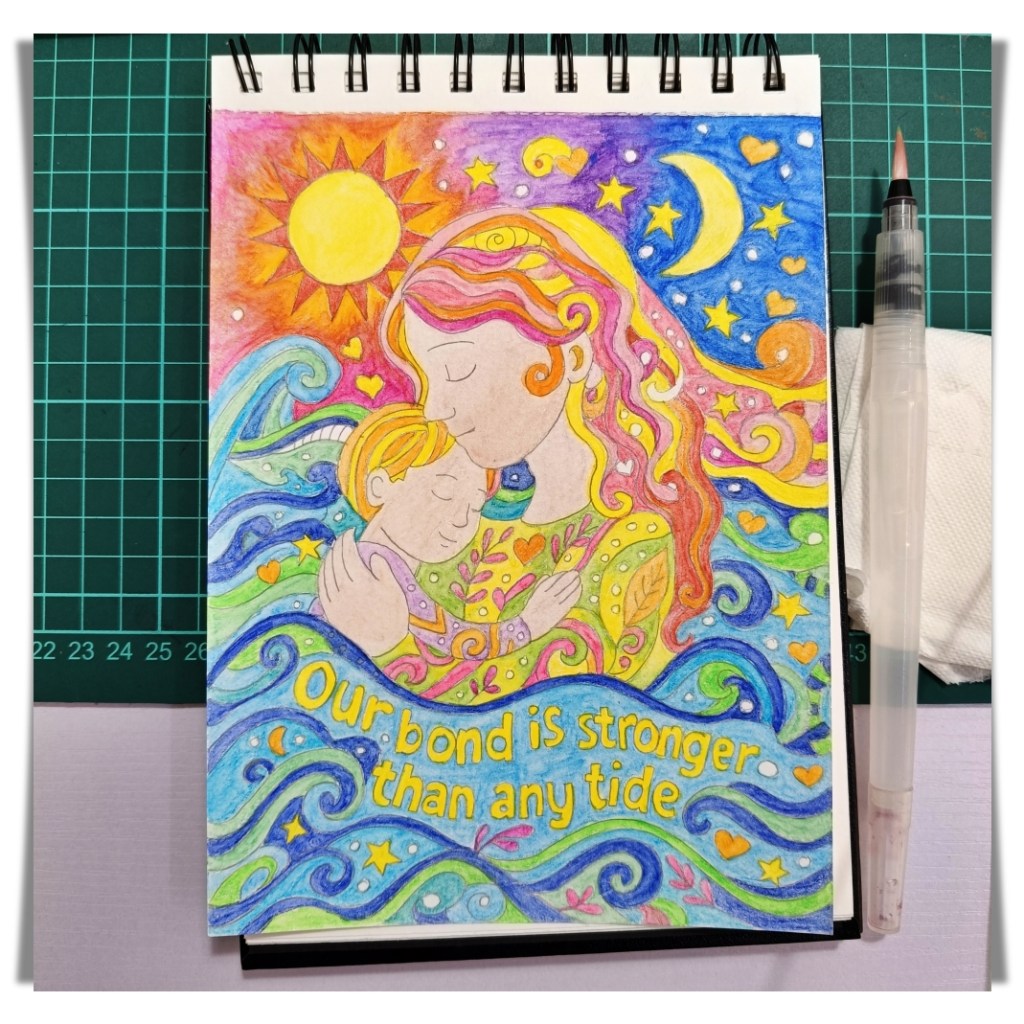
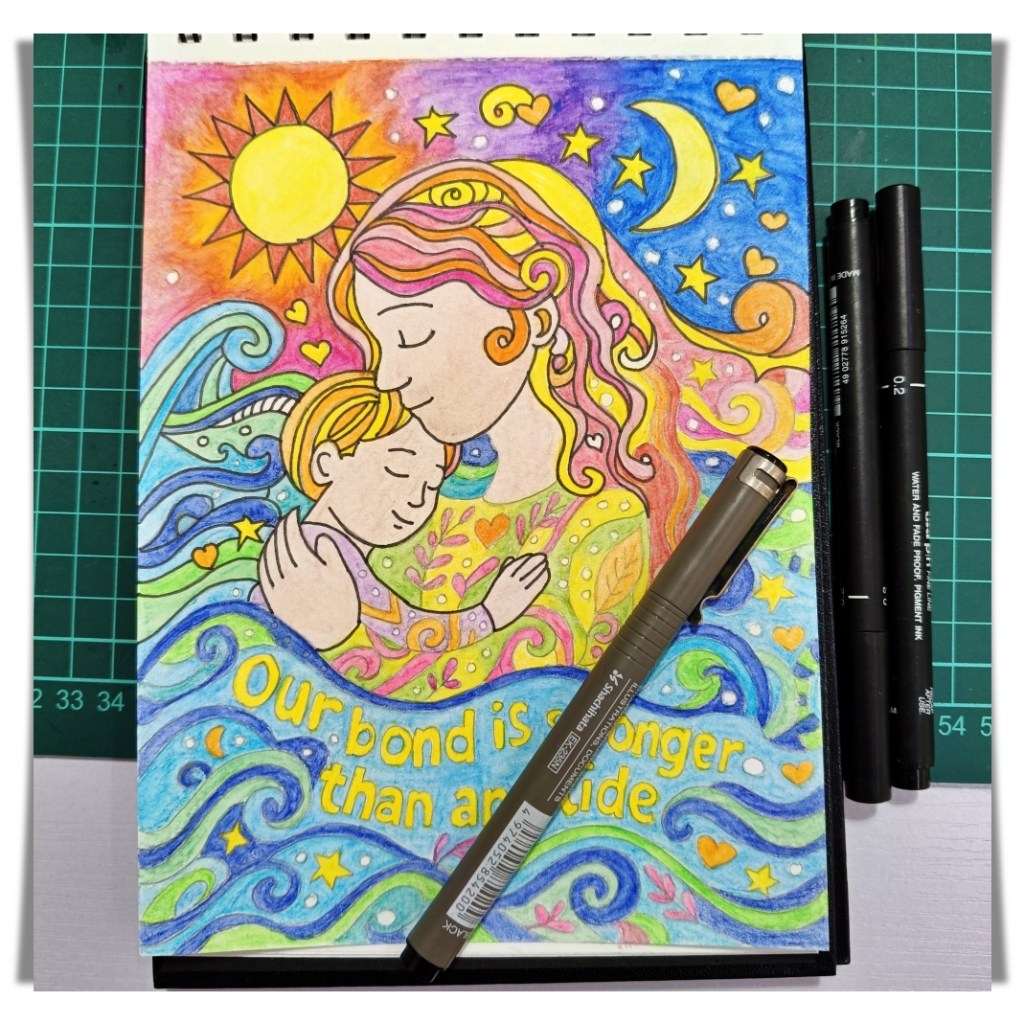
Hand-drawn printable affirmation art of mother and child with sun, moon, and waves — emotional support for overwhelmed moms.

My kids are older now. I’ve long moved past the stage of yelling. Through years of learning and reflection, I’ve softened. I still scold my kids when needed, but never in the uncontrolled way I used to when I was younger and overwhelmed. That part of me has grown quieter. But the memory? It still lives somewhere inside me, not to shame me, but to remind me of how far I’ve come.

I remember one particular moment when I yelled at my daughter. This happened many years ago. Later that evening, I sat on the edge of the bed, silent. My hands remained tightly clenched. My throat still raw. And my heart? That was the worst part. It stung with guilt and regret I’d experienced too often. When I saw her small shoulders shake, I wanted to swallow every hurtful word and undo my mistakes. But, of course, that’s not how time works.

I remembered a post I wrote not long ago, This Is Not the Mother I Meant to Be. Those words came from the same place where this printable affirmation was born: a dull aching between failure and love, a desperate desire to do better, to be more patient, to un-yell the things we shouted when we were too exhausted or too raw.

This new art piece—Our Bond Is Stronger Than Any Tide—came from reading late-night Reddit posts written by exhausted mothers. Posts full of remorse and shameful confessions. Most of these women probably didn’t need guidance. They just needed someone to sit next to them and say, “I know. I was there too.”

In the illustration, I drew a mother and child surrounded by waves. Above them, the sun and moon coexist, as if to indicate that both light and shadow belong together. It was my way of acknowledging that we all have both. The love that rocks us, and the exhaustion that drags us down. There are days we sing, and there are days we snap. And still, our bond endures. It may be bruised and tender. But never broken.

I wanted this printable affirmation to serve as a comforting presence in someone’s home. Not in a Pinterest-perfect way, but in the way love still finds its way in—despite the irritation, despite the frustration.

We don’t talk enough about these moments. When we talk about motherhood, we often focus on the good things while ignoring the difficult ones that come with a lot of guilt. The moments when we despise ourselves for our tone, for slamming doors, for causing disconnection when all we wanted was to connect. We show up for our kids with snacks, schedules, and crafts, but we sometimes forget to show up for ourselves. We forget that we are human, too.

And this is what I want this piece to convey: You are not alone. You are not defined by your worst moment. You are a mother, and that is the most human thing of all.

If you’ve ever whispered apologies through the crack of a bedroom door…

If you’ve sobbed in the bathroom, wondering why your patience never seems to last…

If you’ve ever thought, “This is not the mother I was meant to be”…

Then I hope that this printable affirmation for moms speaks to you.

Because our bond with our children isn’t defined by one bad day. Or even a hundred. It’s shaped by the “rhythm of return”: the apologies, the “I love yous,” the bedtime cuddles even after chaos.

Our Bond Is Stronger Than Any Tide is now available in my Etsy shop, Olivia’s Atelier. You can print this motherhood affirmation for your desk, your mirror, your journal, or your wall. Let it be a companion and a reminder. A safe place to land when everything else feels hard.

Because you, mom, are still growing and changing. And love? It never stops trying.

Explore the art here: Printable Affirmation – Our Bond Is Stronger Than Any Tide
© 2025 Olivia JD

This Is Not the Mother I Meant to Be

I could name only one, but that wouldn’t be honest.

A lot of times in my early years as a mother haunted me quietly like background static in an otherwise happy song. The yelling, harsh words, and unwarranted anger all fell directly on little shoulders. I wrote a poem about it once. It’s titled This Is Not the Mother I Was Meant to Be. It is now available in my Etsy shop, which can be found here.

The poem is more than just a piece of text. This is my confession. A gentle, timid apology. A mirror I held up to my own face on days when I thought I had failed in the most important duty.

I meant to be gentler. I wanted to listen more. But there were times when I snapped, yelled when I should have breathed deeply, spanked when I should have paused, gave them junk food and called it dinner and said things I wish I could take back. Things like, “Be quiet. Enough. Just stop.” When all I truly wanted to say was, “I am exhausted, honey. I am trying. I love you so much, it hurts.”

Even now, the guilt weighs heavy. But, with time, I’ve realized that remorse isn’t supposed to tie me to the past. It is meant to teach me, then let me go.

As the kids grew older, I began having open conversations with them. I apologized. Not in grand speeches, but in quiet moments together: during car rides, at bedtime, or while having a meal. To my astonishment, they forgiven me. Completely, freely. As children frequently do when love triumphs over regret.

Their forgiveness was a balm. But can I forgive myself? This is still a work in progress.

What comforts me now is the realization that motherhood is not a destination. It is a process of growing. Every mistake I made was the result of a version of myself doing my best with what I knew. And I understand better now. I pause longer. I listen more carefully. I still make mistakes, but I’m more aware of them. I grow together with them.

So, if you’re a parent who’s been lugging guilt about like a hidden stone, maybe it’s time to let it go. Perhaps you can let the softer part of yourself speak. The one who continues to show up, try, and love with each broken, beautiful step.

Because this is not the mother I meant to be. But I’m still evolving to be a better version of myself.


Visit Olivia’s Atelier for printables, reel templates, and planners made to support overwhelmed moms with gentle, soulful tools.
🕊️ Enjoy 50% off everything until June 2.