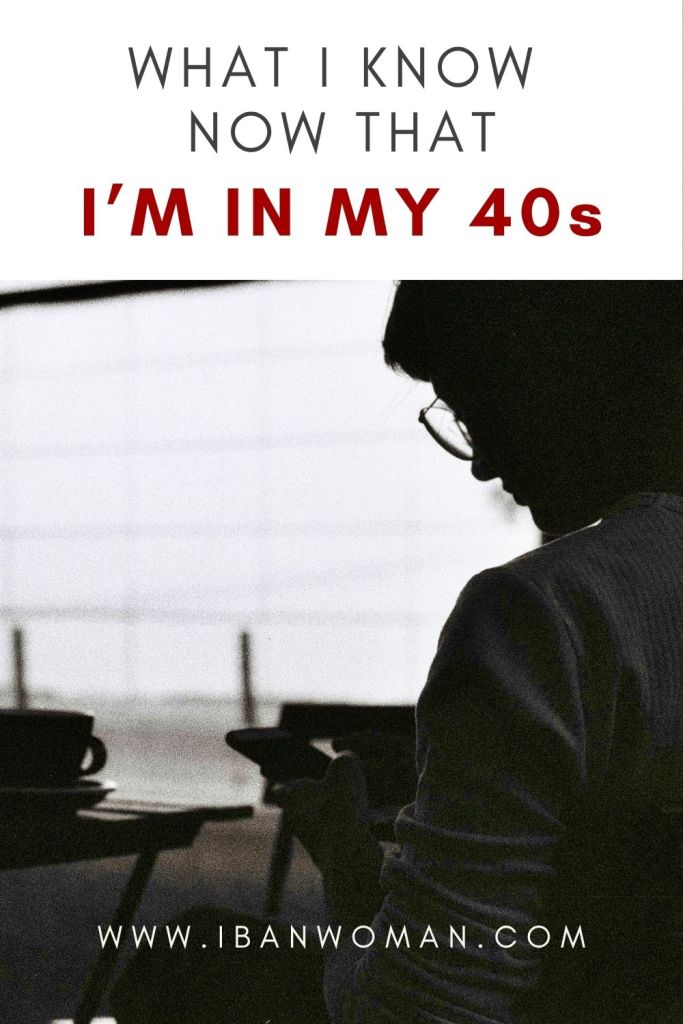
What I Know Now That I’m in My 40s

As I get older, I realize that change doesn’t stop. You don’t reach a certain point where you finally feel “together.” When I was in my 20s, I thought that women in their 40s had it all figured out. They knew how to love, how to parent, and how to stay calm when their world fell apart and the bills were late and the kids were fighting. But now that I’m here, I know the truth: we’re all still learning and figuring things out.

In my 40s, I no longer chase the idea of being extraordinary. I want to be real, present, and kind to myself. I’ve stopped apologizing for being quiet, for needing time alone, or for feeling deeply. I used to shrink myself so people would find me easier to digest and tolerate. Now I let the fullness of who I am take up space, even if it makes other people feel uncomfortable.

I have learned that performance doesn’t determine one’s worth. Worth doesn’t come from being productive, getting praise, or doing everything right. Even when I’m still, I am still worthy. Or when I’m unseen or unnoticed. Or when I am not achieving a single thing. This kind of emotional growth doesn’t happen overnight. It came through years of burnout and soul-wrestling, trying to be everything to everyone and having nothing left for myself.

Motherhood taught me that but not in a pretty, “Pinterest-quote” way. It taught me in the messy, heartbreaking moments that often happen in the trenches of parenting. Motherhood revealed the gaps in my patience, where I lost my sense of self or the ghosts I hadn’t exorcised yet. It forced me to look at myself when I was at my worst and ask, “Can I still be nice to my kids? Can I still stay and get through it all?”

Marriage, too, has been a teacher but not always a gentle one. Love in your 40s is less exciting and can be boring but I’m speaking from my experience. It’s less about the big, impressive things and more about the small, boring things like showing up for each other. Or listening when you’re tired and don’t really care about the nitty-gritty of it. Or saying you’re sorry first. I used to think that being in love was like being high. But now I know better.

My art and writing have saved me more times than I can count. They gave shape to emotions I couldn’t name. They held me when I felt invisible. When I returned to writing poetry after years on hiatus, it felt like coming home to an old friend who never stopped waiting. I don’t write to impress anymore; I write to learn and understand. I want to tell the truth without worrying about how it sounds or how it looks. That’s the heart of my creative healing.

And this is my truth: I am a woman who is no longer afraid to feel everything.

I’ve learned to slow down and take my time. I’ve learned to walk away when something costs me my peace. I’ve learned to take a break without guilt. I’ve learned to feed myself what nourishes, not what numbs. I’ve learned that joy isn’t something you chase relentlessly. Joy is something you notice. You can find joy anywhere you look hard enough. In your child’s laughter. In the soft, fading light at 7.30pm. In the peaceful and dull parts of your life.

I’ve stopped needing everyone to like me. Not everyone will. And that’s okay. I am not for everyone. But I am for the people who value honesty over performance, presence over perfection, and depth over decorum.

Being a woman in your 40s means I carry both tenderness and steel in my bones. I know how to hold space and when to keep things to myself. I know how to tell the truth even when it hurts. I still make mistakes, of course. I still feel anxious most of the time, but I’m not as scared of being seen as imperfect. There is no pretending. What you see is what you get.

I don’t have it all figured out. But I know who I am now. And I like her more than I ever have.

Now That I Know

I don’t need fireworks.
I light my own sky
with the hush
of knowing I survived.
No more performance prayers.
No more bloodletting for love.
If I bend now, it’s not to please–
but to plant.
My thighs and belly are soft.
My words are sharp.
I’m no longer a girl
waiting to be chosen.
I have chosen myself,
my whole being–
transforming.

© 2025 Olivia JD


Olivia Atelier offers printables, templates, and art designed to inspire reflection, healing, and creativity. Visit Olivia’s Atelier for more.

What Romance Means to Me Now

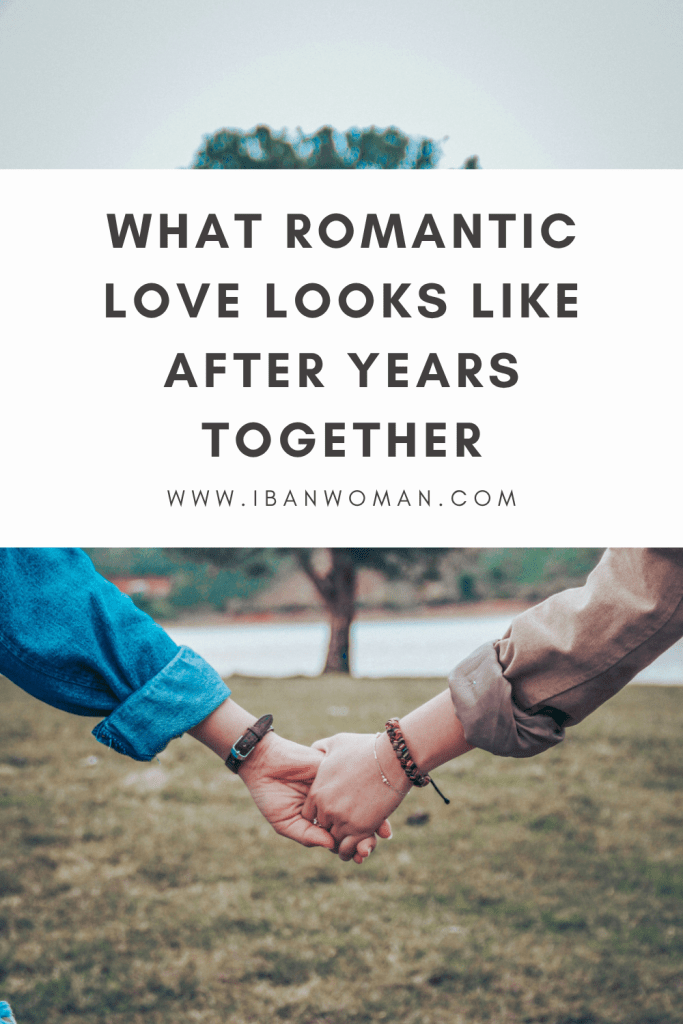
A couple holding hands in a quiet park, showing what romantic love looks like after years together

I used to think that romantic love was supposed to be grand. Surprises, flowers, and long letters written by hand that show how much you miss them. Maybe it was because I grew up with 90s love songs and paperbacks that always had that one scene, you know, the one where everything fell into place and you replayed it in your head for years. I’ve desired that kind of love for a long time. I used to think that if love didn’t look like it did in the movies, it probably wasn’t love.

But now? This is what romance means to me.

It’s in the small, mundane things. How he puts my mug in the same place every morning because he knows it’s the only one I use. How he listens even when I talk about things he doesn’t understand, like my blog traffic, my latest art idea, or why I spent an hour editing a blog post. It’s how he laughs at my jokes that aren’t funny to anyone else. It’s how he doesn’t flinch when I break down for the fifth time in a week or when my anxiety keeps me up at night.

For me, the definition of romantic is all about being present for the one you love. It’s not loud or demanding attention. It’s in the effort to keep choosing someone even after the butterflies have settled into the routine of everyday life.

And to be honest, I had to unlearn a lot of what I thought I knew about love to understand this. I had to stop waiting for scenes in movies and start paying attention to what was happening in my life. I pay attention to things like the way our hands touch when we’re having a tense conversation. The way he carries the groceries when I’m too tired to talk. The way he makes time for the kids even when he’s tired from work.

I think about how our love has changed over the years. How it grew to hold grief, misunderstandings, financial challenges, and stress from being a parent. We came close to giving up at times. There were times when I wasn’t sure I still liked him. He probably didn’t like me at times too. But we stayed. We learned how to communicate to each other. We fought, made up, fell apart, and started over.

I think that’s romantic too. Romance in real life is not the absence of conflict, but the commitment to return. To make peace. To say you’re sorry even when it’s hard. To give each other room to grow, even when it’s hard.

Learning how to be your own safe place is another part of romance. It took me years to understand that I couldn’t keep hoping that someone else would save me from my loneliness, sadness, and exhaustion. I also had to learn how to take care of myself. I learned to listen to and parent my inner child by whispering kind things to myself when I felt ugly or unworthy.

Now, everyday romance is my husband standing by the kitchen’s door while I cook, just to be near me. It’s him asking if I’ve eaten. It’s the silence we share at night, when the house is finally quiet and we are just two people who have made it through another day together.

And sometimes, romance looks like him leaving me alone when I need time alone.

I used to feel guilty about the lack of passion in our love. That it didn’t make me swoon anymore. Now, though, I see the beauty in this gradual, steady burn and the way it grounds me.

I want to say this to anyone who thinks their relationship is too ordinary to be romantic: don’t underestimate your quiet love. The love that keeps trying. The love that stays despite knowing your worst. The love that continues to thrive in the mundane.

Romance is not always in the gestures. Sometimes, it’s in the staying.

Sometimes, it’s in the letting go.

And sometimes, it’s in the way we turn the ordinary into something sacred.

Romance

He doesn’t bring me roses—
because I said they’re useless.
So he brings silence
when the room inside me aches.

He doesn’t write letters—
he reads my face
and answers with
a gentle hand
on my lower back.

He doesn’t call me beautiful—
but he finds my mug,
pours the water,
watches the rice,
mops the floor.

No fireworks,
no symphonies—
just staying
that doesn’t beg to be seen.

And I,
still learning not to ask for more
than this
steady, worn-in miracle.

© 2025 Olivia JD


Olivia Atelier offers printables, templates, and art designed to inspire reflection, healing, and creativity. Visit Olivia’s Atelier for more.
Marriage Refines You (If You Let It)

Nobody warned me that marriage would teach me the lessons I never anticipated.

They said it would take work. They said communication was key. They said love changes. All of this is true. But no one told me that marriage is fundamentally a slow-burning crucible of personal transformation. Of course there are romance and domestic joy, but those aren’t the main things. Marriage refines you. But only if you allow it.

If I had written this post twenty years ago, things would have been different. I would have told you about the joys of growing older together, about shared jokes and parenting accomplishments, and the comfort of being wanted and desired. I might have glossed over the friction. Or made it poetic, full of excuses.

But now, I want to tell the truth: Marriage teaches you who you truly are, often through pain.

This isn’t the kind of pain that stays with you forever, at least not in a good marriage anyway. But this pain would show you how weak, selfish, and proud you are. It’d expose the parts of you that you didn’t realize needed healing until you kept bumping up against another human being who sees you completely, and sometimes unflatteringly.

In the early years, I believed that in order to be respected, I had to be right. I used to believe that a good wife was someone who was nice and made quiet sacrifices. I thought conflict meant something was wrong.

Then came the truth: Conflict is the classroom. Friction is the fire. Silence is not always peace, and compliance is not intimacy. I learned this slowly and painfully, through nights of misunderstanding, long periods of emotional detachment, and the grief of feeling invisible.

Marriage has pushed me to confront my shadow selves: the part of me that resents when he doesn’t read my mind, the part that wants to be acknowledged for invisible labor, and the part that withdraws rather than communicates when I’m upset.

He has his parts too. When both of us are weary, stressed, or simply being human, those parts collide like stones.

But here’s what I’ve learned: Stones sharpen one another.

We grow as a result of the friction, not in spite of it. This relationship has gradually dispelled some of my misconceptions. I’ve become less concerned with appearing good and more interested in becoming whole. I’ve learned how to stay present during an argument without dissociating. I’ve learned to say, “I need this,” without shame. I’ve learned to apologize and own up to my mistakes because I value the connection more than the ego battle.

Marriage has taught me about perseverance. This perseverance is not the kind where you smile and bear it, but the kind where you continue to show up to face the difficult conversations, the painful realities, and the pain of building your character.

It has taught me that love is not the absence of conflict, but the willingness to hold space for each other’s growth.

This isn’t a post about martyrdom. This isn’t about perpetuating toxic behaviors or glorifying suffering. This is about the refinement that happens in long-term relationships, when two people choose to keep coming back to the table, even when it is a mess. Especially when things are messy.

Some days, love looks like scrubbing the kitchen while the other sits quietly. Some days, it looks like asking, “Can we talk?” even when the previous talk didn’t end well. Some days, it means choosing forgiveness over keeping score. Other times, it involves setting a boundary that says, “I will not carry this alone anymore.”

Marriage as a teacher is subtle, persistent, and deeply transformative. Refinement doesn’t happen all at once. It’s gradual, and at times it feels like failure. But what I do know is that I am not the same person I was when I agreed to this life together. And I’m thankful.

Marriage, in its own imperfect, beautiful and annoying way, is a never-ending teacher. And I’m slowly turning into someone I can be proud of, not because I’ve mastered love, but because I’ve let love master me.


This Is Not a Love Poem (But It Is)

This is not a love poem.
It doesn’t lace silk into longing
or wraps itself around your wrist
like a bracelet of breathless metaphors.

It’s the crack under the door
when we don’t speak for hours.
The grease-stained dinner plate
left by your elbow
and the silence I sit with,
like a burning candle.

This is not a sonnet.
This is the sound
of your sigh in the middle of my sentence.
The way you leave the room,
still loving me.

I wanted something softer, once,
but this? This is love
that turns me over like soil.
That presses its palms into my spine
and says: grow here.

I have.

And it hurts.
And it heals.
And it is you.

© 2025 Olivia JD


Olivia’s Atelier offers printables, templates, and art designed to inspire reflection, healing, and creativity. Visit Olivia’s Atelier, Redbubble, and Teepublic for more.

What His Silence Taught Me About Intimacy

It wasn’t an awkward silence. Nor the silence of distance or dismissal. His silence was something else entirely. It had gravity. Shape. It wrapped around me like twilight settling over the city. And in that silence, I discovered something I never fully understood before: intimacy does not necessarily manifest itself through words or touch.

In those early days, I remember him across the café table. We spoke, certainly. But it was in fragments. There were lengthy intervals where nothing needed to be said, yet I never felt compelled to fill the silence. He never pushed. Never filled silences just to hear himself speak. And maybe that’s why I found myself letting my guard down, little by little, without even meaning to.

There was something sacred in how he listened. He didn’t listen to respond. He listened like he was trying to memorize me. When he finally did speak, it wasn’t to impress or correct me but to reflect something I hadn’t realized I was trying to express. His silence wasn’t an absence. It was presence without intrusion.

One evening, we stood side by side on Lover’s Bridge. The river shimmered beneath us, and the sky was painted in pink and gold. We didn’t touch. We didn’t speak. But something passed between us, though, that couldn’t be seen or touched. Somehow right then and there, our bodies found a rhythm beside each other, like the choreography of trust.

What surprised me the most was how seen I felt in his silence. He didn’t demand performance. He didn’t ask for confessions. And yet, standing next to him, I felt understood. It felt as though he was able to hear everything I didn’t say yet still chose to stay.

That kind of intimacy is unusual. It asks nothing but provides everything. It is not based on lofty declarations but on humble agreements. Like how he read my poems and didn’t say anything after but looked at me with nonjudgmental eyes. Just understanding.

In a culture obsessed with noise and proof, he reminded me that some truths are whispered. Some of the most personal experiences we may have are felt rather than expressed. Some bonds are born not in words, but in willingness. To stay. To witness.

So no, his silence never made me anxious. It made me feel safe. It taught me that intimacy isn’t always loud or clear. Sometimes it’s a quiet agreement between two people who stop pretending they have to explain everything to be understood.


✨ Visit Olivia’s Atelier for printables, reel templates, and planners made to support overwhelmed moms with gentle, soulful tools.
🕊️ Enjoy 50% off everything until June 30.