When I Was Five, I Was Just Trying to Survive 5 Languages

Daily writing prompt
When you were five, what did you want to be when you grew up?

Anne Sexton, one of my favorite poets. Image source.

I don’t remember what I wanted to be when I was five.

Maybe that’s because nobody asked. Or maybe because the word “ambition” didn’t exist in my world yet. It wasn’t a concept that came naturally to me. At five, I was navigating five languages all at once.

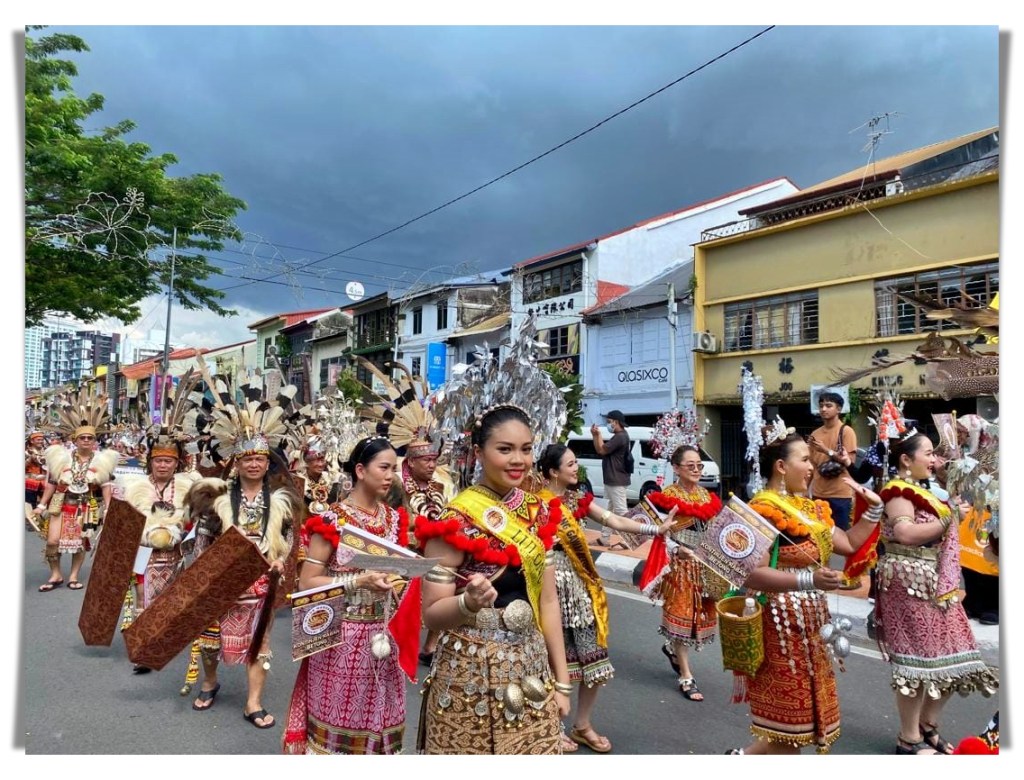
I started kindergarten at five, never dreaming of jobs or what I wanted to be when I grew up. I didn’t see it as something odd back then, but living in a multicultural country, I (and every Malaysian kid) was already exposed to different languages at a young age. My mother tongue was Iban and Malay was the national language. However, I was sent to a Chinese (Mandarin) speaking kindergarten. At the same time, I was learning English, my third language. On top of all that, many of my classmates spoke in another dialect—Sarawak Malay, which sounded nothing like the formal Malay I read in books. At the tender age of five, I was exposed to five different languages or dialects all at once: Iban, Malay, Mandarin, English, and Sarawak Malay.

I was grappling with words. My head was full of unfamiliar sounds, new rules, and foreign grammar. Maybe I didn’t have space for dreams then because I was too busy trying to understand the world through different languages.

Things started to shift when I turned eight. That’s when my mother made me a library card.

I was too young to go to the library on my own, so every couple of weeks, she borrowed two books for me—one in Malay, the other in English. I don’t remember what the first books were, but I remember how it felt—the excitement of holding stories in my hands. This is when I learned to lose myself in other people’s words and slowly began to find my own. I was a voracious reader and continued to devour books after books in the years to come.

I didn’t know I wanted to be a writer until my teens. And even then, it wasn’t ambition—it was longing. Since the age of 10, I had started to write poems and stories on the side. I never imagined it could be more than a hobby. I come from a place where literature isn’t part of daily life, where writing isn’t seen as a real path. Writers, I believed, didn’t make money and there was no future in it. So I studied computing instead because it was practical and could land me a great career—which it did.

But I kept writing. Privately. For fun.

Then the era of the Internet came, and with it, a different kind of freedom. I started blogging in 2008, but when the children came, I had to set it aside to raise them. However, I went back to it in 2017 and wrote actively on a platform for years. I gained a decent following (2000+) and was getting paid for my work. It was a very nice side gig until the platform’s new policy made me rethink my direction. When you were using a platform that wasn’t yours, you had to endure the whims of those in charge. So I started this little home here, in my own corner of the internet.

Since the pandemic, I’ve published four poems in literary journals and am currently working on a novella. I’m writing more poems and submitting them to literary journals for publication.

Writing may not pay the bills, but it pays in ways that matter more. It connects me to myself and gives me the courage to face my truths and share them with the world. Writing fills me in the ways that matter most.

So no, I don’t remember what I wanted to be when I was five.

But maybe I’m becoming it now.

The Loneliness That Lives Inside Love

Daily writing prompt
What’s something most people don’t understand?

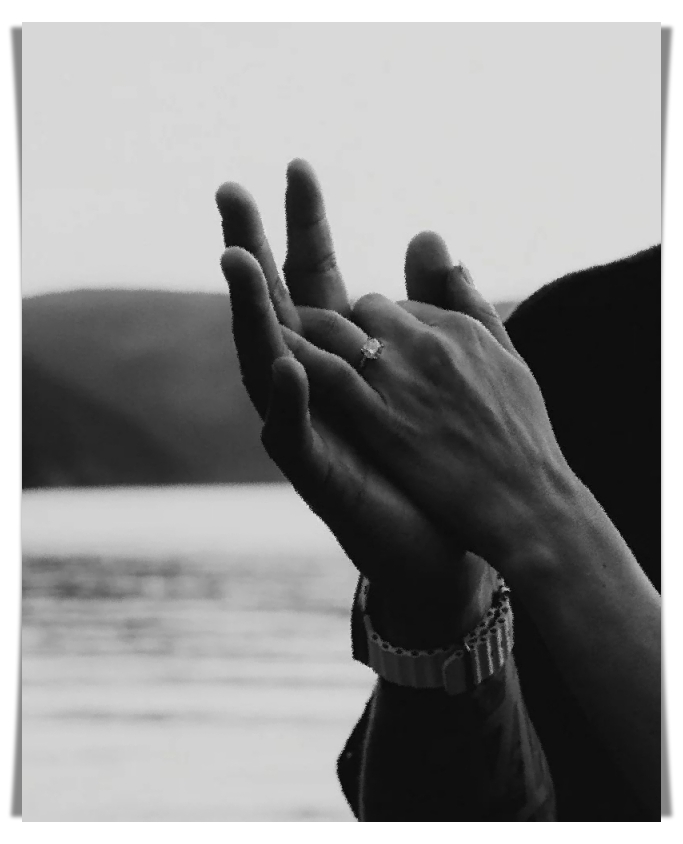
Image source

Most people don’t understand that you can love someone deeply, share a life with them, raise children together, sleep side by side every night—and still feel alone.

You still feel alone—not because they don’t love you or they don’t try. It’s because they can’t meet some of your deepest needs. Again, this is not because they’re unwilling or are dense but because that’s not how they’re built. That’s not who they are. You can’t force people to be what they are not. 

This post is not meant to bash my husband.

My husband and I had been together for 26 years. That’s a long time to share a life. Throughout our marriage, he carries many burdens. He works hard and often under tremendous pressure. He provides and makes sure we have what we need. The kids and I never lack anything and I see that and never take it for granted. Every time he comes home from work, no matter how exhausted he is, he still smiles and gives me a warm hug. When the kids were little, they would race to the door to greet him. And sometimes they still do, even as teenagers. I know what that kind of weight does to a person—the pressure of being the provider and the silent burden of responsibility.

But I carry a lot of weight too. And most of them are invisible. It’s emotional and mental load. The labor of noticing, of anticipating needs, of asking questions to diffuse stress, soothing tensions, bridging gaps.

People rarely see that part. They think that if a marriage lasts, it must be balanced. But many don’t realize that love doesn’t always mean symmetry. 

My husband is a sweet, sweet man. He is not cruel or careless. He simply wasn’t taught how to sit inside discomfort and witness pain without attempting to fix or fleeing from it. He tries in his own way by cracking awkward jokes, physical closeness, showing up with food or spoiling me rotten. And I’ve learned, over the years, to see the love in those things.

But I must be honest and as a writer, confronting my deepest truth is necessary. I want more than physical efforts or gestures. I want to be seen and not just supported. I want conversations that delve deep and not just coexistence. I want someone to meet me at the door of my inner world and not be afraid to come in. 

Am I being bitter and writing all these down under the cloak of anonymity? Certainly not. We discussed this many times and he’s admitted he can’t meet me there because he is who he is and not built that way. And I acknowledge and accept him as who he truly is. And with acceptance, there is peace. Because I know I haven’t met all of his needs either. Marriage always goes both ways.

Most people don’t understand that kind of grief. It’s the grief that comes with loving someone who can’t meet you where you are. It’s bittersweet and lonely. That loneliness doesn’t scream—it’s just there, aches, and lingers.

But even within that grief, there is love. There’s kindness, history, forgiveness, effort, sacrifice, and acceptance of all that is good and bad. I love him so much. We are trying. Maybe not always in the same way, but still—we try each and every day. 

We both carry weight. His is visible, important, and perhaps measurable in the eyes of the world. Mine is not. And that’s what most people don’t understand. 


I wrote this poem to accompany this post. Here you go:

Marriage

I fold the laundry—
his shirts, inside out,
boxers with holes,
T-shirts over-stretched,
but we wear them anyway—
like this marriage—
flawed, warm in its own weather.

My mind jumbled with lists—
he doesn’t see them.

He brings home groceries
but forgets the eggs.
The kale is yellowing on the edges.
When good mood returns
he touches my hip like a question,
but never waits for the answer.

Still, he comes home.

Every night,
hanging his silence next to mine.
We sit.
We eat.
Scroll through our newsfeed.

I carry the emotional X-rays,
the careful calibration of my moods
to his weather.

But he carries things too—
numbers, bills,
the fear of shame
of not being the man
his father never taught him to be.

We are not broken,
only bruised by expectation.

And still,
he holds the child when I break,
warms the bed before I slip in.
Calls me “babe”.
In return,
I still reach for his length
to soothe myself to sleep.

So no—
I don’t need rescue.
This is the truthful
opening of the hearts
of two people
carrying what they can.

He lifts the roof.
I hold the floor.

And in the middle,
we meet.

Copyright © Olivia JD 2025
All Rights Reserved.

You are welcome to subscribe to my blog if my words resonate with you. Thank you.

When I Am an Older Woman, I Shall Continue to Write with AI

Daily writing prompt
How has technology changed your job?

I know my title is going to ruffle some feathers, but hear me out. 

“When I am an old woman, I shall wear purple…” Jenny Joseph wrote these words in her best-loved poem, Warning. She wrote it as a form of rebellion and a declaration that she no longer needed permission to be who she is. She used the poem to assert her freedom to live, dress, and speak on her own terms. 

I found this poem after stumbling upon a video of Helena Bonham Carter reading it.

As someone in her late 40s, I think about that poem more often these days. No, I don’t feel old (well, slightly). I’m no spring chicken anymore, but I think of that poem because I feel done. Done asking for permission, done explaining myself, done seeking validation—to and from anyone. This sentiment is especially true when it comes to how I write. 

Here is my declaration: I use AI, and I am not ashamed of it.

I’ve written about this before—here—when I discussed the growing tendency to shame people for using AI in their creative work. I’ve watched from the sidelines as creatives everywhere bickered among themselves about who is original versus who is not (read: cheaters). Right versus wrong.

It’s as if we’re all secretly cheating on some literary or art exam, as if the tools we use somehow invalidate the core essence or soul of what we’re trying to say or illustrate.

Let me be clear: I don’t condone copying and pasting from a chatbot and claiming it as your own. That’s not my message. I advocate for the ethical use of AI—as a thinking partner, a sounding board, a tool that helps me do the work I’ve always done, just faster and more efficiently. 

I’m a portrait artist too. This is one of my past works.

AI helps me brainstorm. It guides me in structuring my ideas, refining my voice, and clarifying my points. It helps me generate new angles I might have overlooked when I’m struggling with perimenopausal brain fog. AI also reminds me to be grateful that I live in an era where I have access to high-tech tools and that my creativity doesn’t have to work alone.

Could I do all these things without AI? Absolutely. But it would take me days. And often, time is a luxury I can’t afford—not with work, family, responsibilities, and a thousand other things that make up my life. I’ve written this before and I’m repeating it again:

AI is helping more people to express themselves than ever before. Why are we writing? We write to express our emotions, share stories, and communicate ideas. I enjoy writing, and I do so on a daily basis. I want everyone to have that right and that joy, regardless of their circumstances. We can’t all go on long writing retreats by the sea, with our spouses pouring us delicious cups of coffee. The reality for most of us is that writing can be difficult. Maybe we have kids tugging at our clothes, maybe we’re exhausted from a full-time job, maybe we didn’t have great opportunities in school. Maybe English isn’t our first language—like me, an indigenous woman from an obscure tribe in Borneo—or maybe we’re fighting dyslexia, ADHD, or arthritis just to get the words on the page.

So I use what’s available, with intention and discernment. And I keep writing and making art. 

AI is a tool, just like Photoshop is to photographers. No one accuses a skilled photographer of cheating when they enhance their work using Photoshop. The tool doesn’t make the art, but it helps bring the artist’s vision to life. It’s the same with me. I brainstorm and discuss my ideas with a chatbot (ChatGPT, Gemini, DeepSeek) before writing my own work. Then I refine it using tools like QuillBot or Grammarly. Others might prefer ProWriting Aid. These are just part of the process—like spellcheck, revision, or editing.

To my fellow middle-aged friends—especially those of us who’ve lived long enough to know what we want but are still figuring out how to say it—don’t be afraid of AI or feel ashamed of using it. Never let someone else’s discomfort dictate how you create. We have to speak boldly, not shrink.

The truth is, AI is here to stay. We can’t put it back in the box and pretend it doesn’t exist. There is no going back to a world before it. And if you can’t go against it, make it your ally. Use it wisely, and with integrity.

That’s what Jenny Joseph was really talking about, wasn’t she? The unapologetic freedom.

When I am an older woman—well, older than I am now—I shall continue to write with AI. I shall ignore the gatekeepers and the purists. I shall write freely, fiercely, authentically, and without shame. And I shall wear purple.

Just because I can.

I handwrote all of my writing, including this blog post, before editing it using QuillBot.

Declining Population Trend In Malaysia | My Perspective

Image source

I recently read a Facebook post that talked about how Malaysia’s population is going down. But it didn’t really surprise me because the birth rate has been falling around the world. Professor Dr. Sharifa Ezat Wan Puteh, a local health expert, said that if this trend keeps up, Malaysia could have a population that is mostly made up of older people by 2030. As a woman, I see this trend as a sign of how our lives and expectations are changing because of changes in society, the economy, and culture. Let’s look into what caused this change in the population and what it means for Malaysia and other places.

Mindset Shift

In the past few years, I’ve seen a lot of women decide not to get married or have kids. The way people think about family life is changing. In Malaysia and many other places, the idea that women should be the main providers is being examined again. More and more women want freedom and equality, and this can be seen in the choices they make about marriage and family. Birth rates are going down because more people want to be independent, travel, and find self-fulfillment.

In 1970, Malaysian women aged 15 to 49 had an average of 4.9 children per woman. This rate had dropped a lot by 2021, when it was only 1.7. This big drop shows that people’s priorities have changed. Many women are now focusing on education and jobs, which can be hard to balance with a traditional nuclear family. Women are changing how they think about fulfillment and achievement, and it’s not always about having children and getting married.

Economic Pressures and Career Priorities

As traditional views on family life change, women in Malaysia and around the world are putting their jobs and personal growth first. Pressures from the economy are a big part of this trend. As a mother, I am very aware of these problems. The sharp rise in the cost of living has made it harder for families to raise kids. People in Malaysia are having a hard time with money because more people are moving to cities, and the prices of housing, schooling, and health care are going up. This has caused many people to think about how big their families should be.

Access to Family Planning and Education

Women today have the freedom to make decisions that fit their desires and way of life. This includes making well-informed choices about their sexual health. Women in Malaysia have more power over their reproductive choices thanks to efforts to make family planning programs and sex education easier to access. This gives women more power so they can plan their families in ways that fit with their personal and work goals. This makes the drop in birth rates even greater.

Implications and Future Directions

This drop in population has effects that reach far and wide. In terms of the economy, it could cause a lack of workers, which would mean that foreign workers are needed. It also puts more stress on social aid services because there are fewer young people to help an aging population. In terms of society, this change can affect how communities are formed and how families work together.

As women continue to shape the future, it is important to deal with the reasons why birth rates are going down and make policies that help people match their work goals with family obligations. To solve Malaysia’s demographic problems, they will need to make workplaces more supportive and flexible for parents, offer cheap child care, and encourage a culture that values both career and personal success.

In conclusion, the world’s population is going down. This is a complicated problem that is caused by economic challenges, shifting perceptions about family size, and advancements in family planning. As a woman, I think that knowing about these things is important for dealing with and creating the future. We can lessen the effects of this trend by addressing its causes and backing policies that are fair for everyone, even though it is clear that the birth rate will probably never reach the levels it had in the 1980s and 1990s.

💃 Happy International Women’s Day 2025 💃

Why Stories Matter | The Transformative Power of Literature

There is a quiet power in stories that goes beyond entertainment and escapism. At its core, literature is the act of giving voice to things that can’t be seen or touched. It forms our feelings, hopes, fears, and questions into something we can hold and share. Stories don’t just reflect our lives; they also hold the weight of human experience across time and space.

The first thing that comes to mind when I think about the power of literature is how it can bring people together. Reading a book is like crossing a bridge; it lets us see and feel the world through someone else’s eyes. In this way, it breaks down the walls that separate us. By fostering empathy, literature reminds us of our shared humanity and allows us to see through another’s eyes. Literature makes us face the idea that our experiences, no matter how unique they seem, are reflections of something bigger than ourselves. When I was young, I read Catcher in the Rye by J.D. Salinger, and it changed the way I thought about how people connect with each other. Holden Caulfield’s cynicism and vulnerability proved how stories can reflect our deepest desire for understanding.

Literature helps us understand not only other people but also ourselves. A story can be like a mirror, showing us things we would rather not see. It reveals our inner wants and fears, as well as our flaws. Reading is a paradox. It makes us lose ourselves in another world, only to find pieces of ourselves reflected back. The lasting power of literature lies in this duality—the simultaneous journey both inside and outside of oneself. Also, Salinger’s book helped me see myself in new ways. Holden’s struggles with authenticity and alienation are a lot like my desire for belonging and self-acceptance.

In the same way, stories live on forever and can transcend time. Because writing is timeless, the words of a writer or a poet who has died a long time ago remain relevant to people today. This doesn’t mean that stories stay unchanged. In fact, they change with each reading based on the reader’s views and their context. What a text meant to the original audience might be very different from what it means to us now. A story is alive in the way it changes with us. Different generations’ readings and reinterpretations enrich it further. One Hundred Years of Solitude by Gabriel García Márquez was recently adapted into a drama, which debuted on Netflix in December 2024. The magical realism in the book has kept readers intrigued for decades, but this version gives the story new life. It enables a new group of viewers to experience its themes of love, loss, and history through a fresh lens.

There is also a bravery that comes with writing. When writing, a writer has to be courageous and believe that their words will touch someone and stay with them. When people write, they often reveal parts of themselves that they wouldn’t share in any other way. They embedded pieces of their own truths into the plot of a story or the flow of a poem. Ralph Keyes’s book The Courage to Write talks about how the courage to write comes from being ready to face overwhelming fears and self-doubt. Writing is brave because it forces the writer to be honest and open, even if the outcome is unknown. It’s not because it leads to fame or admiration. For readers, this vulnerability can change everything. It creates a bond between the writer and the readers, fostering a mutual understanding that surpasses the written word.

But, of course, not every story is pleasant. Some show us harsh realities and make us question what we believe. Some stories force us to face uncomfortable truths. But these stories are still important. The hallmark of enduring literature is that it does not shy away from complexity. It recognizes that beauty and pain, hope and sorrow, often go hand in hand. So, stories help us deal with the complicated things that happen in life; they don’t give us easy answers but instead push us to think, ask questions, and grow.

Stories have the capacity to establish continuity in a world that often appears fragmented. They remind us that we are a part of a bigger story that began a long time ago and will go on after we die. Literature connects us to each other and to the huge, complicated web of human experience.

Why do I write? It comes back to the idea that stories matter. It’s not that they make big, dramatic changes to the world; it’s that they change us in small, subtle ways. They invite us to pause, contemplate, and feel. Indeed, this invitation represents a revolution in a world that demands speed and certainty all the time.

Iban Culture | Gawai Antu @ Feast of the Dead – A Personal Journey Through Memory and Meaning

I don’t see a lot of articles anywhere that talk about the culture of my people, the Dayak Iban of Sarawak, Borneo. Maybe there are plenty in native languages, but so far not much is written in English, so I thought instead of lamenting about it, why not write it myself? I admit I don’t have a vast knowledge about my culture; however, it shouldn’t stop me from writing about what I know. In this post I’m going to talk about one aspect of our culture called Gawai Antu, or the Feast of the Dead. I believe the feast of the dead is widely celebrated worldwide across different countries and cultures. It’s no different with the Iban people. After all, who doesn’t want to memorialize and pay tribute to their departed loved ones?

The Iban people of Sarawak, Borneo, have a rich and deeply rooted culture that is shaped by mythology, oral traditions, and a close connection between the spiritual and physical worlds. At the heart of this culture are the many “gawai,” or feasts, that mark important moments in life, from celebrating a bountiful harvest (Gawai Dayak) to honoring the spirits of the departed (Gawai Antu). Each gawai carries its own meaning, traditions, and importance, but none have left a deeper impact on me than Gawai Antu, or the Feast of the Dead.

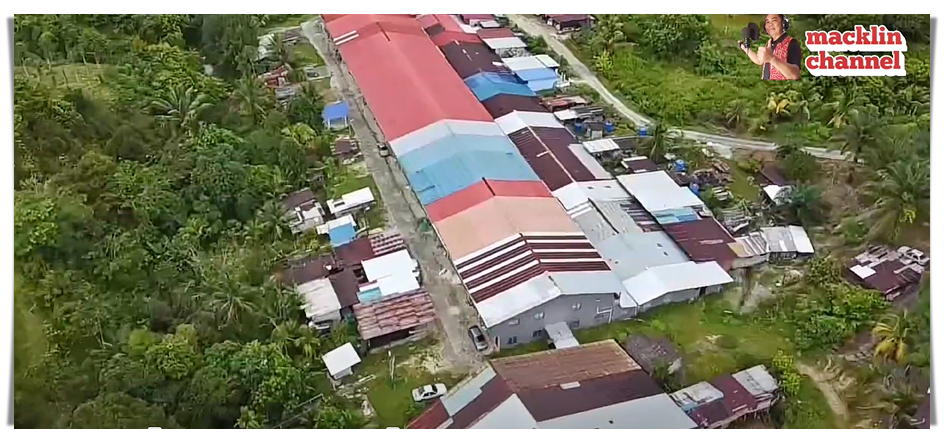
My father’s longhouse: Ng. Batang, Ulu Krian, Saratok. Image source: Youtube

I was ten years old when I first experienced Gawai Antu at my father’s longhouse in Ng. Batang, Ulu Krian, Saratok. At the time, I didn’t really understand its meaning. I just knew it was a rare and grand occasion that transformed the quiet longhouse into a place of celebration, ritual, and remembrance. Even now, decades later, I can still hear the loud gongs, see the elders in their ceremonial attire, and recall the haunting beauty of the invocations to the spirits and deities. It was a glimpse into something much bigger than myself, which was a connection between the living and the dead. This festival was deeply embedded into the very fabric of our identity.

Unlike Gawai Dayak, which is an annual celebration, Gawai Antu happens once in a generation. It is a collective effort that takes years of preparation, with families saving up to host this event in honor of their ancestors. This isn’t a normal feast. It’s an elaborate feast that symbolizes a final send-off for the souls of the departed. It’s a way of ensuring they are properly honored before moving on to the spirit world. It is both a farewell and a tribute, reinforcing the Iban belief that death is not an end but a transition to another realm.

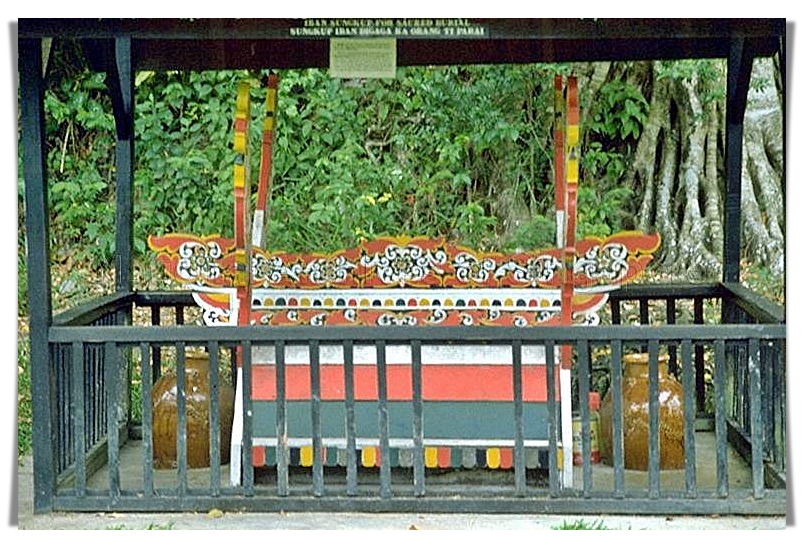
A “sungkup”. Image source: National Archives of Singapore

As a child, I was captivated by the sights and sounds of the festival. The longhouse came alive with music, laughter, and the smell of traditional food. Thousands of guests from neighboring longhouses (villages) gathered, filling the space with a sense of community and shared purpose. I watched as men skillfully built the “sungkup” (memorial huts) for the deceased, while women wove baskets called “garung” to hold the ceremonial rice wine, “tuak Indai Billai.”

One of the most mesmerizing rituals was “ngalu petara,” where men and women, dressed in their finest, marched through the longhouse to welcome the spirits of the dead. Another unforgettable moment was watching the “lemambang” (bards) chant poetic invocations while carrying bowls of “ai jalung” (special rice wine) from midnight until dawn. Their lyrics, which were passed down through generations, painted vivid images of the spirits’ journey from the afterlife back to their longhouse for one final feast with their loved ones. At 4 a.m., the honored “bujang berani” (men of valor) drank the “ai jalung” to symbolize a moment of pride and recognition.

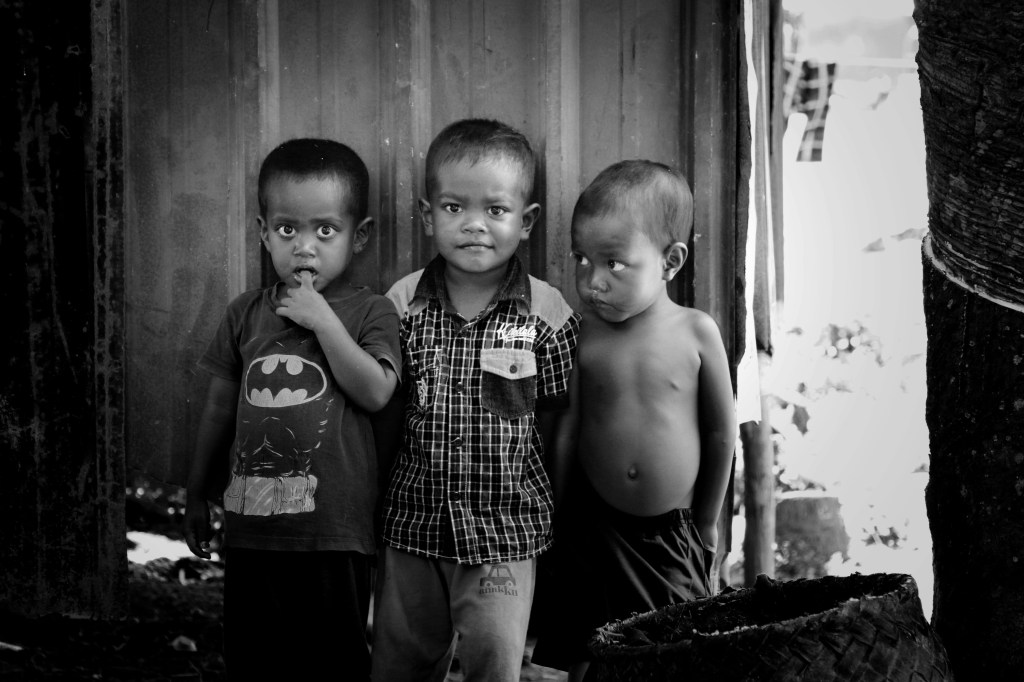
Image source: My sister

It wasn’t until adulthood that I fully grasped the significance of Gawai Antu. It is a festival of remembrance and a reaffirmation of our roots. It’s a way of keeping our ancestors’ legacies alive. As an Iban living away from my homeland, these memories have become even more precious. They remind me of who I am and where I come from, especially in a world where modern life often pulls us away from traditional practices.

Writing about Gawai Antu feels like my own way of preserving this tradition. In many ways, storytelling serves the same purpose as the rituals. It honors the past by keeping memories alive and strengthening our sense of belonging. But I won’t lie; this responsibility sometimes feels overwhelming. I wonder if my children will ever truly understand the depth of these traditions, or if they will see them as outdated practices of a time long gone. Still, I hold onto hope that through stories, whether in poetry, essays, or simple conversations, I can spark their curiosity and encourage them to explore their roots.

“Bujang Berani”, a man of valor drinking the “ai jalung”. Image source: Gawai Antu documentary

If there is one thing Gawai Antu has taught me, it is the value of memory. In a society that sometimes stresses development over history, this feast is a reminder that our identity is both about who we are and where we came from. Honoring our ancestors involves acknowledging their difficulties, successes, and sacrifices, as well as understanding how they influence our lives now.

Decades after my first Gawai Antu, the memories are still fresh in my mind. The loud gongs, sacred chanting, and communal spirit are memories from my childhood as well as pieces of a greater story about connection, heritage, and meaning. Gawai Antu has taught me that remembering our ancestors means, in many ways, honoring ourselves, as we are the living continuation of their journey.

My poem, “Gawai Antu”.


Note:
A documentary about Gawai Antu was made several years ago, you may watch the trailer here:

I don’t have any photographs of Gawai Antu from my childhood. They are kept safely in my parents’ home in Sarawak. The photographs in this post are credited to the sources listed below each image. For more information on Gawai Antu, you may visit these sites:

The Gawai Antu
Gawai Antu – the documentary