Headhunting | The Rituals and Care of Antu Pala

Disclaimer: This post is only for sharing purposes. I’m not an expert, just sharing what I know. The information here is general and may not cover every detail. For Iban readers who know more, feel free to add in the comments. This post is not meant to glorify the practice of headhunting but to share knowledge for better understanding.

As I mentioned in my previous post, headhunting among the Iban was not random violence but part of specific mourning rituals. It was carried out to complete rites after the death of a family member. But after the warriors returned from ngayau (headhunting expedition), what happened to the severed heads? Were they hung immediately? The answer is no. Certain rituals had to be performed before the heads could be brought into the longhouse and later hung in the ruai (communal gallery).

The first thing the bujang berani (warriors) did upon returning was to manjung, which means to shout and announce their arrival. They could not enter the longhouse right away because it was taboo.  Specific rituals had to be followed. Practices varied from one Iban community to another, but what I’m sharing here is the way of the Saribas Iban from the Betong Division.

Image source

After announcing their arrival, the bujang berani stayed for a week in a small hut called langkau near the longhouse. During this time, they rested, cleansed themselves, and prepared the heads. This included cleaning and removing skin, flesh, and brain matter to prevent decay. The process took place by the river, where the heads were skewered on sticks, washed thoroughly, and boiled to loosen any remaining flesh. Once cleaned to bare skulls, they were smoked over the bedilang (hearth) until black and dry. At this stage, they were known as antu pala.

When the skulls were ready, the warriors prepared to re-enter the longhouse in full Iban regalia—baju gagong, ketapu or lanjang (headgear), sirat (loincloth), tumpa (silver armlets), and marik betaring (toothed beads). Only men who had gone on ngayau were permitted to wear the full attire. Those considered kulup (cowards) who had never participated in a headhunting expedition could only wear a sirat.

Image source

A procession called Mangka Ke Selaing was then held to welcome them home. The warriors were welcomed with panjung (victory shouts) and the beat of the Gendang Pampat. At the doorway, they were received by their mother or wife carrying a chapan (winnowing tray) covered with pua kumbu, a ceremonial textile woven only by the mother or wife of the warrior. The cleaned skulls were placed on the pua kumbu, not fresh or bloody as often imagined. The Iban always followed adat (custom) in their rituals, so there was never any confusion or disorder.

Image source

The mother or wife then played a key role in the Naku Antu Pala procession, carrying the tray of skulls along the ruai while nyangkah (chanting). The warriors marched behind the women to the rhythm of the Gendang Rayah. During this moment, they could not be touched or spoken to, as it was believed that the deities Keling and Kumang of Panggau Libau accompanied them. Disturbing them was said to cause one to faint.

The lemambang, or bards, were also present at the procession. They carried a garong, which is a bamboo container full of tuak, or rice wine. Only the bujang berani could drink this wine, and they drank it at the end of the procession. The ritual was over when the mother or wife performing Naku Antu Pala bit the skull, which meant that her spirit had won over the skull’s spirit. The antu pala then became the servant of its owner.

After the ritual, a feast called Gawai Enchaboh Arung was held in honor of Bujang Berani. There was food, ngajat (traditional dance), and happiness all night long. The mourning period came to an end with this feast. The antu pala was believed to nyilih pemati, to replace the soul of the deceased with that of the enemy, allowing the departed to rest peacefully in Sebayan (the afterlife).

Image source

Taking care of the antu pala also included different rituals, depending on the purpose. Whenever the skulls were moved or ceremonies were performed, miring or bedara’ was always required. Miring was a ceremony of prayers and offerings to Petara (God), the deities of Panggau Libau, and the ancestral spirits (Petara Aki Ini) for blessings, harmony, and protection from harm.

This was followed by bebiau, a rite using a fowl with accompanying prayers. Before it began, a piring (offering) was prepared, consisting of tobacco, betel nut, betel leaf, gambier, rice, salt, glutinous rice, rice flour, yellow rice, eggs, tuak, and chicken feathers dipped in blood from the sacrificed fowl. Larger ceremonies like Gawai Burong required even more offerings.

After miring, the antu pala had to be “fed.” This act was similar to the Chinese tradition of offering food to ancestors. Rice, water, and sometimes cigarettes were placed as offerings, and in some rituals, a pig was also sacrificed, especially when moving the antu pala to another location.

Not everyone was allowed to touch the antu pala. Only its owner or heirs could handle it. In some regions, this role was reserved for men. If a skull fell, it could not simply be picked up; a miring had to be done first, with a chicken offered before it was lifted and rehung.

These were only the basic practices. There are many more rituals surrounding the antu pala, each layered with meaning and guided by adat. These rituals may seem strange or even unsettling today, but they used to be crucial to the Iban’s understanding of life, death, and the spirit world. They show a community that was deeply guided by adat, a system that balanced courage with respect and ritual with meaning. 

If you have stories or knowledge passed down from your elders about antu pala or other old practices, I’d love to hear them in the comments. Every story adds another thread to our shared history. 

If you’d like to see a performance of the Naku Antu Pala procession, you can check out this video:


I write about Iban culture, ancestral rituals, creative life, emotional truths, and the quiet transformations of love, motherhood, and identity. If this speaks to you, subscribe and journey with me.

Why Malaysians Can’t Debate and What Literature Has to Do with It

I have been thinking about this sentence for days: Literature is vital to the development of civilization. It sounds lofty and almost too academic, but the truth of it becomes painfully clear when you look at what’s going on around us right now. In Malaysia, social media has become a chaotic place where people shout at each other, often without understanding what they are shouting about. The topics change every week, from the Israel-Palestine conflict to alcohol to race to religion, but the pattern stays the same. The loudest voices get the most attention, and the most aggressive ones dominate the space. It doesn’t feel like engaging in conversation and more like moral warfare.

Every time you scroll through Threads or Facebook, you see another argument about who’s right and who’s wrong. There are a lot of insults, accusations, and name-calling in the debates. Malaysian netizens have been calling each other kafir, Yahudi Laknatullah or Zionist sympathizers, pemabuk, tak sedar diri, and poyo just for saying something that doesn’t fit into the dominant narrative. The moral superiority that oozes from these posts is exhausting. Many Malays—though NOT ALL—seem to think that their views are the most righteous and anyone who questions them is automatically condemned. This behavior is so common that it is now seen as virtuous.

Seeing all of this happen has made me deeply weary. There are times when I want to say something, stand up for those who are insulted, and fight against racism and hypocrisy. But I never do. I stop myself every time I want to type a response. I know that trying to reason with people who don’t want to understand is a waste of time. I also know that entering a discussion driven by anger will only drain me. Still, I can’t help but think about why our public discourse is so shallow and why we as a society seem incapable of having difficult conversations without turning them into battles. I think the answer has to do with our relationship with reading and literature.

Literature teaches us how to think, to see beyond ourselves, and how to listen to others even when we disagree. It teaches patience, builds creativity and empathy.  Reading widely and deeply helps people learn to see things from multiple perspectives at the same time. They understand subtleties. They acknowledge there are no absolutes in life. In a society that values literature, debates are chances to learn and grow. But in a society that lacks interest in literature, discussions turn into shouting matches. Without the habit of reading, people struggle to form coherent arguments. They react with their feelings, not their brains. Instead of engaging, they attack. They want to be validated, not told the truth.

The lack of reading in Malaysia is not a new issue. We all know the statistics. In 2024, Malaysia ranks 6th among nine Southeast Asian countries in a survey by CEOWORLD magazine, with an average of only 5 books read per year. There are Malaysians who proudly say they haven’t read a book since school. Many bookstores close down, and libraries stay empty. People who do read often stick to light, motivational books that make them feel good without challenging them.  Literature that makes us think, makes us uncomfortable, and makes us question ourselves is deemed boring or irrelevant. When we lose the habit of reading such works, we lose something crucial: the ability to think beyond our experience. And when that happens on a large scale, it affects how a nation speaks, argues, and grows.

The decline of reading is not only a cultural issue; it is a civilizational one. A society that stops reading is easy to manipulate. It forgets how to ask questions, or how to separate truth from propaganda, and how to think for itself. That’s when people start using emotional slogans and moral policing to show who’s in power. We can see this now in how some Malaysians use religion and race as weapons to silence others. The line between being morally right and being self-righteous gets blurry. People get hooked on how good it feels to be right. They use religion to protect themselves and their identity to attack others. In that environment, there is no room for contemplation or compassion. The only thing that is left is the sense of supremacy or dominance.

I often think about how literature could change this landscape. One novel or poem can’t solve racism or fanaticism, but it can help. It can make us pause and remind us that every opinion comes from one individual with a story. When we read stories from perspectives different from ours, we are forced to see the world in a wider frame. That is the beginning of understanding. Civilization moves forward not through arguments or viral posts, but through the slow work of broadening our minds.

I have learned how to use my frustration to write. Instead of arguing online, I write essays, poems, and reflections about the things that are important to me, like memory, stories, experiences, identity, culture, and belonging. I write from my Iban perspective because that’s how I see the world. I know that my writing won’t go viral, and I’m okay with that. I do work that may seem trivial to others, but it is important to me. It is my way of preserving a voice that might go unheard in the noise of bickering Malaysia.

Some days I wonder if my work matters. Even though I’ve published some art-related books, exhibited my art a couple of times, been featured in a newspaper and a magazine and two radio interviews—I’m still relatively obscure. I don’t belong to any literary groups. I only have my blogs and a small space on social media. It might not seem like much. But the more I think about it, the more I realize that literature starts right here: in small feats of expression and the bravery to write the truth even when no one is paying attention. Civilization does not develop solely from great orations. It grows from regular people who choose to share their stories, write down their thoughts, and share what they know. My poems and essays may not reach many people right now, but they carry pieces of history, language, and culture that should live on.

Choosing not to argue online doesn’t mean you’re weak. I choose to protect my peace and integrity on purpose. I don’t want to give up insight for outrage. If you have to lose your dignity to win an argument, it’s not worth it. I want to put my energy into something that will last. For me, writing is a way to get that energy back. It lets me deal with the world without getting stuck in its noise. It reminds me that silence, when it comes from being aware, is not the same as being absent. It is a form of strength.

The past week has reminded me that Malaysia is still struggling to mature in its discourse. Racism, feeling morally superior, and needing to control others through shame all show how weak our collective thinking still is. But I also think that change starts with small steps. Anyone who reads with an open mind helps make that change happen. Every writer who doesn’t give up helps society become more thoughtful, even if it takes a long time.

Literature is not entertainment for the elite. It is the basis of empathy and the record of human complexity. It is also the space where we learn to think beyond survival. Without it, civilization loses its soul. We might still have cities, technology, and institutions, but we wouldn’t have the inner structure that allows a society to reflect and grow. That’s what I see happening around me now: a country that is loud but empty and full of opinionated people but sadly, uninformed.

I don’t expect everyone to understand why I write or why I stay quiet when things are crazy. I do it because I believe that words have a slow power and they move differently. Words help us to remember who we are and who we could be.

I hope that when the noise dies down and the arguments stop, what is left is not anger. I hope what is left is the persistency of those who kept writing and reading. Literature may not change everything, but it is still the soul of civilization. Without it, we lose not only our stories but also our ability to envision a wiser, kinder world.


I write about Iban culture, ancestral rituals, creative life, emotional truths, and the quiet transformations of love, motherhood, and identity. If this speaks to you, subscribe and journey with me.
What a Million Dollars Could Build

I’ve come across this question more times than I can count: “If you had a million dollars to give away, who would you give it to?” And every time, I wonder why I would give it all away. If I’m being honest, I’d keep it. It’s not that I’m greedy, but I know exactly what I’d do with it. I’ve spent most of my life putting off dreams, setting aside passions, and delaying joy in the name of responsibility. That would change with a million dollars. It would let me breathe and stop merely getting by and begin living with a little more softness and space. 

First, I would look after my family. I would pay off all of our debts, every last sen, until there would be no more worries about bills, school fees, or emergencies that come up out of the blue. I would put some of the money into investments, save some of it, and then I would finally let myself enjoy something I have always loved: books.

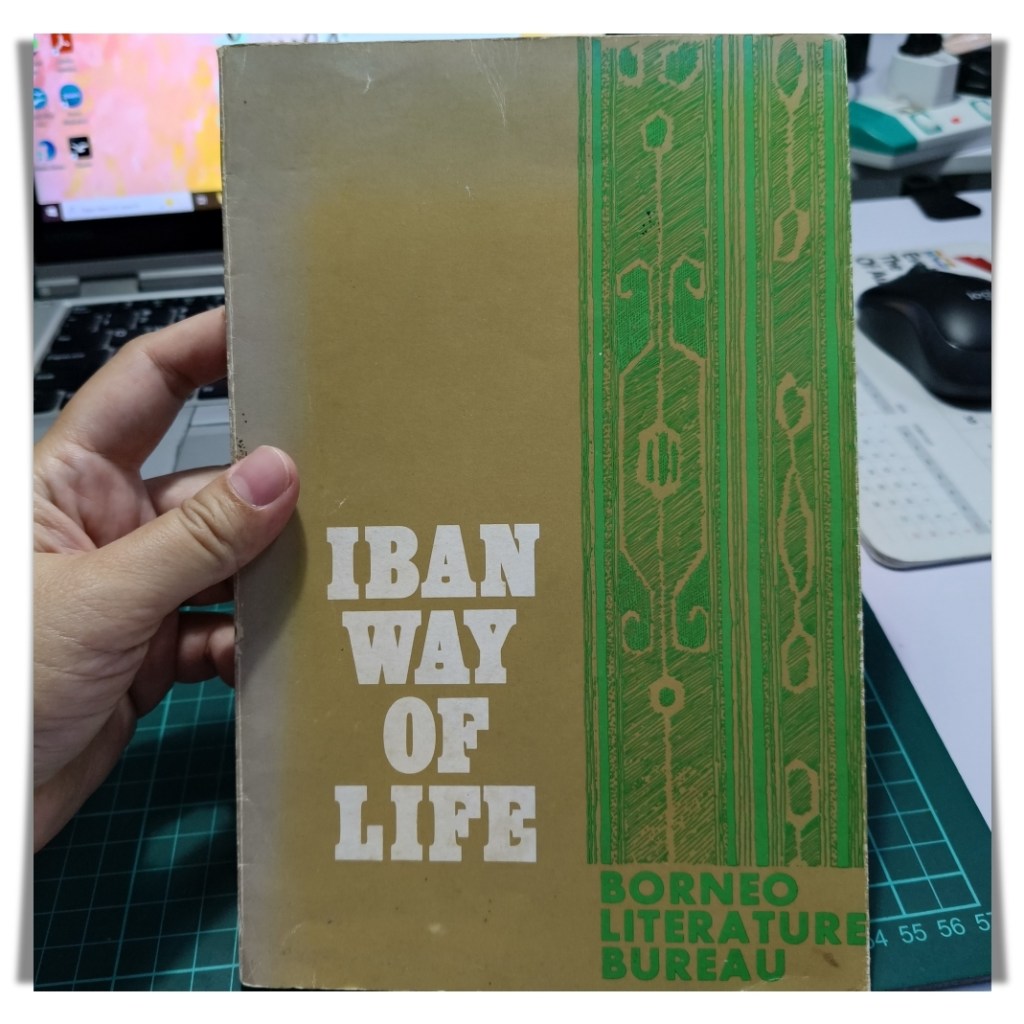
I’d buy all the books I’ve always wanted. These aren’t the ones found in chain stores, but the rare ones. The hard-to-find books that tell the history and tradition of my people. I’d look for heritage books published by the now-defunct Borneo Literature Bureau. These slim, worn books contain the voices of writers who wrote about us long before I was born. I’d buy the complete Encyclopedia of Iban Studies set from the Tun Jugah Foundation and every contemporary book that strives to record what we might forget. I wouldn’t hoard them, but I’d preserve these gems in my private collection. And I would keep them safe in a room with shelves and sunlight. A library for me and anyone else who needs to learn and remember where we came from.

Maybe that sounds selfish, but it’s a way for me to preserve my heritage, which is for the whole family and the generations after. But if I had to give it away, like if the million had to leave my hands and go to someone else, I wouldn’t give it away in cash. I’d use it to build something that would last and grow.

I’d set up a library. Perhaps more than one. In the interior of Sarawak, where villages are still without decent access to books, let alone libraries. Where stories are passed down through voices but never written. I’d create a place where kids could find books in their own language and where Iban stories are just as important as stories from other parts of the world. I’d build a place where books wouldn’t be locked behind glass but placed in the hands of the community to read and savor. And who knows, maybe a child who never saw herself reflected in school textbooks will see her village, her ancestors, and her identity printed on paper, validated in ink.

I’d make sure the internet actually works. I would stock not only novels and dictionaries but also materials that could broaden the mind, such as bilingual books, local folktales, science and art books, poetry, comics, storybooks for toddlers, and plenty of activity books. I’d make room for community events, nights of storytelling, and maybe even small poetry workshops in the future. The kind of space I never had when I was young.

To be honest, I wouldn’t give away a million dollars just to feel good about myself or tick a box labeled “generous.” I would use it to make something that is useful and necessary. I want to create one or more spaces where my Iban language can coexist with other languages. I want to help fund a place where the next generation won’t have to look so hard to find themselves.


I write about Iban culture, ancestral rituals, creative life, emotional truths, and the quiet transformations of love, motherhood, and identity. If this speaks to you, subscribe and journey with me.
The Story Behind the Iban Hand Tattoo, Tegulun

Have you ever heard of the Iban hand tattoo called tegulun? It’s one of the most striking forms of body art in our culture, yet not many people know what it really means. I found an old photo taken in 1962 from Life in a Longhouse by Hedda Morrison. It shows the hands of an Iban man with very detailed tattoos that go all the way down to his fingers. The pattern is tegulun.

In the Iban language, tattoos are called pantang or kalingai. Every tattoo on the body used to mean something. Tattoos weren’t fashion statements but they were living records of a person’s journey, courage, and place in the community. Each motif, like bungai terung (eggplant flower), ketam (crab), or kala (scorpion), meant something. For men, tattoos often showed that they participated in headhunting expeditions, or gone through rites of passage. For women, only the most skilled pua kumbu weavers were allowed to bear them.

Among women, the right to be tattooed was not given lightly. A woman known as “Indu Tau Nakar, Indu Tau Gaar”, was a master weaver who earned her tegulun through artistic and spiritual labor. With her hands, she made sacred pua kumbu cloths used in rituals such as receiving enemy heads. The tattoo on her fingers didn’t symbolize violence; it reflected her connection to the spirit world through weaving. These women were highly respected, for they were believed to hold the gift to translate dreams and visions into woven form.

The meaning of tegulun was very different for men. Those who carried it were known as kala bedengah—warriors who had taken part in ngayau, or headhunting expeditions. Someone who had tegulun on his hands was a man who had proven himself in battle. The tattoo was a visible sign of his courage and strength of spirit. It was said that every line or curve on the fingers stood for a head of an enemy that had been killed in the war.

Looking at those tattooed fingers in old photographs, one can almost feel their importance in the past. The men who bore them were not only fighters but also protectors of their culture and their way of life. They lived by a complex set of moral codes that were based on omens, dreams, and rituals. Taking a head was never an act of impulse; it was part of a ceremony tied to the safety, fertility, and prosperity of the longhouse.

One of the most well-known Iban warriors who carried tegulun was Temenggong Koh (1870–1956), a tuai serang (war leader) from Kapit, Sarawak. His fingers were covered in tegulun, each one telling a story of victory and survival. Temenggong Koh once gave his nyabur, the sword he used during ngayau, to Malcolm MacDonald, a British diplomat. The blade still bore traces of dried blood and is now displayed at the Durham University Oriental Museum in the UK.

It’s difficult to imagine that such traditions existed within living memory. Today, there are no Iban men who bear tegulun. The British made headhunting illegal after World War II. The last “licensed” expeditions took place during the Malayan Emergency and Communist Insurgency, when Iban trackers were recruited to assist the British. After that time, the custom of taking heads and the tattoos that went with it completely died out.

The tegulun is more than a reminder of war. It refers to a time when everything, from fighting to making art, was connected to the spiritual order of the world. Tattoos linked the body to the world that can’t be seen. They reflected not only bravery but also a sense of belonging. A man or woman who bore them carried the stories of their people and passed them down through the generations.

Those meanings are at risk of being lost today. Most young Ibans have only seen people with tegulun in books or museum photos. But it’s important to understand them. These tattoos show us how our ancestors thought about life, death, and the sacred balance between the two. They remind us that strength can show itself in many ways, like when you swing a nyabur (sword) or sometimes in the patient rhythm of weaving a pua kumbu.

To learn about tegulun, you have to look beyond the surface of the skin. Though the ink has faded and the rituals have ended, the meanings remain alive in memory. They are echoes from another time, reminding us that every mark and line once carried a story worth telling and remembering.

Image source: Life in a Longhouse by Hedda Morrison


I write about Iban culture, ancestral rituals, creative life, emotional truths, and the quiet transformations of love, motherhood, and identity. If this speaks to you, subscribe and journey with me.
The Pain of Dislocation | Writing My Way Back Home

There are moments in life when the ground feels stable, and other times it tilts, making you feel unsure of your footing. For me, those moments have to do with who I am, where I come from, where I live, and strange places in between. Being Iban has always been a big part of who I am, but there have been times when it felt like that part of me was invisible.

I grew up with stories of the longhouse, our folktales, and the old ways of life where dreams and rituals guided decisions. I heard the rhythm of the Iban language before I fully understood it. But outside of that space, I often felt like I was losing my identity. In classrooms filled with English and Malay textbooks, it felt like I had lost touch with my own culture. Teachers spoke of history, but it was always someone else’s story. My people’s stories were at best footnotes. I understood how it felt to be out of place without moving an inch.

When I moved to bigger cities later in life, the feeling got more prevalent. In Kuala Lumpur, I was just another face in the crowd, often mistaken for something other than Iban. It was more distinct in foreign countries. The language barrier was always there. Those around me spoke Mandarin or other languages, while I stayed quiet and tried to figure out what they were saying by watching their body language and tone. I carried silence with me on the train, in bookstores, and even in conversations at work. I had come looking for growth and new opportunities, but I often felt like I was shrinking and struggled to express who I really was. Being out of place became a daily condition.

The church was another complicated place. Faith helped me find my way, but there were times when I felt like I was giving up my roots for an identity that didn’t quite fit. The language, practices, lifestyle, and even the way people spoke about culture and tradition made it seem like there was no room for who I truly am. I sometimes felt the most alone when I was sitting on the pew with people I was supposed to belong with. The dissonance between my beliefs and my identity was truly difficult for me.

Watching younger generations of Ibans, including my children, drift away from the language and customs that shaped us has always been the hardest part. Many of them don’t even know how to speak Iban. They can speak English, Malay, or other languages, but they have trouble speaking or understanding the language of their parents or grandparents. When I see that, I feel the pain of dislocation in a different way. It’s not just that I don’t fit in with the world anymore; it’s that my culture is out of place in its own home. There is a drifting, like waves being pulled farther from shore, and I’m worried about how far it might go before it’s too late to return.

These experiences, though painful, have also taught me something important. Feeling out of place has made me want to reconnect with my roots even more. It has made me more determined to keep stories and traditions alive. It has made me contemplate how language and rituals hold memories and meaning and why remembering is important. What used to feel like absence has turned into a call to action.

This is why I return to writing. Poems, essays, and stories are more than self-expression; they are ways of keeping connection alive. When I write about the land where my ancestors lived or the river that carried their boats, I connect the past with the present. When I share cultural history on my blog, I am planting small reminders for my children and for anyone who might reconnect with their roots.

I have also come to understand that I am not only writing to preserve my culture but also to finally accept my cultural voice in my writing. My culture and identity are not distinct from my craft; they are the foundation from which it develops. The way I see the world and write about it is shaped by the Iban point of view. My unique voice possesses a texture and truth that no one else can match.

If you’ve ever felt like you are out of place, I want to tell you that that feeling doesn’t mean you don’t belong. It means that you are carrying a part of yourself that other people haven’t learned how to see yet. And maybe your role, like mine, is to bring that hidden part back into view. One story and one memory at a time.

Being out of place has become both a wound and a gift for me. It hurts to feel invisible, but it also makes you want to create, remember, and preserve. And maybe that’s the lesson: you don’t always get to belong. Sometimes, we have to keep building it for ourselves with art, words, and memories. When we build it from our core, based on our unique voice, that sense of belonging is unbreakable.


I write about Iban culture, ancestral rituals, creative life, emotional truths, and the quiet transformations of love, motherhood, and identity. If this speaks to you, subscribe and journey with me.
Why the Ibans Took Heads In the Past

A quick disclaimer before I begin. Some people may find this topic upsetting because headhunting led to conflict between different ethnic groups. I don’t intend to glorify the practices of my ancestors; I just want to share what I know, especially since many people, even younger Ibans, don’t fully understand the reasons behind it. Taking a life is wrong by today’s standards, and from a modern perspective I do not support it. But we can’t change history, and judging the past by our present lens doesn’t help us understand it. What we can do is listen and learn.

The Iban had their own reasons and beliefs for taking heads. One of the most significant was to end the mourning period, a practice called ngetas ulit. When someone in the community died, the longhouse would mourn for a period of time. During this time, certain rules and taboos were followed. A ritual that demanded a fresh head was performed to end the mourning period. The family of the deceased would consult the longhouse community, and the men would plan a ngayau (head-hunting expedition) together. After getting a head, a series of complex rituals signaled the end of grief. Killing to end mourning may sound strange today, but for the Iban it was part of a cultural process called nyilih pemati, a symbolic offering for the dead.

Another reason was the belief that antu pala (enemy skulls) had spiritual power. The Iban in the old days  believed that these skulls would bring blessings if they were taken care of. Antu pala also played an important part in the Gawai Burung (the Bird Festival), which was one of the most important Iban ceremonies. As part of this complicated ceremony, the lemambang (bard) would use the skulls in his pengap (chants) to invoke the god of war, Sengalang Burong. This festival has probably disappeared because most Ibans are now Christian or Muslim, but it still holds a place in oral tradition.

There were other uses for skulls as well. They were used in healing rituals, ceremonies to call for rain during times of drought, and as guardians to protect the longhouse or farms from enemies and wild animals. In this regard, the skull became a spiritual servant for the person who kept it. They also carried social meaning. If a man didn’t take a head, he was likely called a coward or kulup (uncircumcised), and these men were not seen as good husbands. Iban society valued courage and bravery very highly.

Some have asked why heads were taken instead of other body parts. The answer lies in old beliefs. Our ancestors believed that the head was the center of a person’s life force. The head could be clearly identified, unlike the hands or feet. In the past, families knew exactly whose head was kept, even after years of blackening from smoke. Today, those identities are no longer shared openly. Imagine getting married to someone from another tribe and then walking into a longhouse and saying, “Honey, that skull belonged to your ancestor.” We have learned that silence is a way to protect the living while still honoring the past.

So, do antu pala still exist? Yes. Some Iban families keep them, like mine. They can be kept in the sadau (the top floor of the longhouse) or hung in groups called tampun on the roof. We don’t see them as trophies but as things that deserve respect. If you don’t take care of them, they can bring bad luck, so you must abide by strict rituals to keep them safe.

This picture shows a tampun that belonged to my ancestor, Unggang Lebur Menua, an Iban warrior from the late 18th century. It has 34 antu pala that are more than 200 years old, and is now kept by relatives at Rh. Panjang Matop, Paku, Betong. It serves as a reminder of a different time, when survival, belief, and identity were connected in ways that may be difficult for us to understand now.

I hope this helped you learn more about a part of Iban history that continues to live in our collective memory.

Image source: Youtube


I write about Iban culture, ancestral rituals, creative life, emotional truths, and the quiet transformations of love, motherhood, and identity. If this speaks to you, subscribe and journey with me.

Pengarap Lama Iban | Iban Animistic Beliefs

TL;DR:

A simplified overview of traditional Iban animistic beliefs, including the Supreme God (Petara), nature spirits, ancestral souls, and mystical beings like Kumang and Keling. These oral stories, once passed down generation to generation, are now slowly being archived here from my Threads posts for easier access and deeper reflection.

Prior to the arrival of Christianity and Islam, the Iban people practiced a form of animism. It’s a complex belief system where spirits existed in rivers, jungles, animals, dreams, and even illnesses. Though most Ibans today identify as Christians, many still observe traditional customs during weddings, festivals, and ancestral rites. It’s worth noting that the Iban never had a written system to record these beliefs. Every story and ritual was passed down orally from one generation to the next. Because of this, different river regions or divisions often have slightly different versions of the same story, each molded by the voices and landscapes that keep them alive. 

Here is a short, simple summary of this complex cosmology that you can use as a reference. I’ve been actively posting about Iban culture, legends, and folklore on Threads, but now I’m slowly fleshing them out and archiving them here for my readers. 

Note: I’ll touch more about the Sengalang Burong’s family when I write about Iban omens and augury. 

Core Beliefs

Iban animism is based on the idea that there are many spiritual beings that are part of everyday life and the afterlife. These include:

  • Supreme God, called Petara / Tuhan or Raja Entala
  • Deities and spirits, called Bunsu Petara – each with their own roles i.e Sengalang Burong
  • Spirits of ancestors, called Petara Aki Ini – often called upon during rites like Gawai Antu i.e roh nenek moyang
  • Spirits of nature, found in animals, plants, rivers, and forests and also include Bunsu Antu i.e jin, iblis
  • Mystical beings from the sky realm called Panggau Libau and Gelong i.e Kumang, Keling

Dreams were (and still are) taken seriously, often seen as spiritual messages. If a deity (i.e Sengalang Burong) or mystical being (i.e Kumang) appears in a dream, it’s treated as guidance that must be followed.

Categories of Gods and Spirits

1) Petara / Tuhan (Supreme God)

  • Also known as Raja Entala
  • Creator of all living things

2) Seven Main Deities / Bunsu Petara (Who live in the realm of Tangsang Kenyalang)

These seven deities are the children of Raja Jembu and Endu Endat Baku Kansat. Raja Jembu is the son of Raja Durong and Endu Kumang Cheremin Bintang. There is more to this lineage, but for simplicity, let’s just focus on Raja Jembu’s family. These seven deities or Bunsu Petara, are often invoked in Iban poetry, like pengap and timang

  • Sengalang Burong – God of war (Sengalang Burong’s wife is Endu Sudan Beringan Bungkong. They have eight children including a daughter, Endu Dara Tinchin Temaga)
  • Biku Bunsu Petara – God of resources
  • Sempulang Gana – God of agriculture
  • Selempandai – God of creation and procreation
  • Menjaya Manang – God of healing
  • Anda Mara – God of wealth
  • Ini Andan – Female spirit doctor and goddess of justice

3) Mystical Beings (Who live in the land above the sky, Panggau Libau and Gelong)

  • Kumang, Keling Gerasi Nading, Kelinah Indai Abang (Keling’s sister), Lulong, Laja, Pungga, Selinggar Matahari, Sempurai Bungai Nuing, Tutong (Kumang’s brother) – Divine beings who help humans succeed in life, especially warriors and brave people. Kumang and Keling appeared more in dreams compare to the rest.

4) Spirits of Nature

  • Bunsu Jelu – Animal spirits
  • Antu Utai Tumboh – Plant spirits
  • Bunsu Antu – Ghosts or restless spirits, some helpful, some harmful

5) Souls of Ancestors / Petara Aki Ini

  • Honored during rituals like Gawai Antu
  • Believed to offer blessings and protection when remembered properly

Copyright © Olivia JD 2025

All Rights Reserved.

I write about Iban culture, ancestral rituals, creative life, emotional truths, and the quiet transformations of love, motherhood, and identity. If this speaks to you, subscribe and journey with me.

The Cry of the Koklir | An Iban Ghost Story

Before I share my experiences, I’d want to clarify who the koklir is and what she represents in Iban belief.

People often think of the Iban people of Sarawak as headhunters, which is a part of our history, but it tends to eclipse the deeper aspects of who we are. However, our culture is not only based on headhunting. We have a strong spiritual connection to the natural world, which is rich in stories about spirits that live in rivers, lands, mountains, and dreams. Our folklores are alive with omens, taboos, and the spirits of people who have departed. Some spirits protect, some guide, and others, like the koklir, are said to return because something in their death was left unresolved.

In Iban culture, the koklir is one of the most feared spirits. She is believed to be the spirit of a woman who died during childbirth or shortly thereafter, specifically during the vulnerable bekindu period, which lasts for forty days of healing and recuperation. Her death is known as busong mati, or a spiritually unfortunate death, and her soul is considered to become jai (malevolent). Her soul is malevolent not because she did something wrong in life, but because her death was unnatural and tragic. Her spirit doesn’t cross over to the other side in peace; instead, it lingers behind, transformed by pain and grief.

As a ritual precaution, lime thorns (duri limau) are poked into her hands and soles before she is buried. It’s a symbolic act aimed at weakening her spirit and preventing her from becoming a koklir. Some people allege that her tongue is also pierced.

Then a prayer is being offered, asking her to rest and not come back to bother the living. But if the ritual isn’t done or if the death is really violent or sudden, people say she might still come back to haunt, seek, and punish.

The koklir is believed to target men. Most of the time, you can hear her presence through a chilling cry that starts out like a hen calling her chicks: “kok, kok, kok…” and ends with a piercing, terrifying “haiiiiii waiiiiii!” Before she attacked her victim, she would scream “kokliiiiiiiiiiiiiiirrrrrrrrrr”. She sometimes takes the form of a beautiful woman, hiding her face with a tanggui serawong (woven sunhat) or a kubong leaf. Sometimes she manifests as an enturun, a shaggy, nocturnal bearcat with long claws. Some men say they’ve heard her voice in the jungle or by the river at night. Some people say they’ve seen her scratch at windows or doors with fingers that look like claws. The stories are shared quietly among men, usually late at night, and sometimes with fear or bravado.

I’ve never seen her. But would you believe me if I told you I heard her twice? And I remember it very well both times.

First Encounter

I was fourteen. It was the first day of the school break. Because my flight home was later that night, I was the only student left at the girls’ hostel at my boarding school. Everyone else had left throughout the day. The hostel was quiet and empty.

That morning, the warden told me to turn off the lights and close all the doors before I left. I said I would. After dinner, at about 6 PM, I took my bags outside and waited for my cousin to pick me up. It was getting dark already.

Before leaving, I went back in to do what I promised: turn off the lights and close the doors. I went up to the first floor, strolled through the empty corridor, and did what I had to do. The only sound was the rustling leaves blowing in the breeze. Everything else was still and quiet.

I heard something as I came back down, near the bathroom on the ground floor.

Kok… kok… kok…

It was soft and faint, exactly like a hen calling its chicks.

But this was a school compound. No nearby houses, no chickens. Just trees and a greenhouse. I stopped and listened again. I thought maybe I imagined it. I finished what I was doing and went back to the entrance. I stood there in the light of the corridor, looking out at the road. Everything else around me was dark.

Then, around 7PM, I heard it again.

Kok… kok… kok… kok…

It was slower and closer.

I felt chills and goosebumps all over my body. I was too scared to look around. I just kept my eyes on the road, expecting to see my cousin’s headlights. He came soon after that. I hastily loaded my bags into the car and drove away. I never looked back.

I didn’t see her, but I know what I heard. We believe that the koklir doesn’t harm girls or women because she only targets men. That gave me some comfort, but the sound stuck with me for years.

Second Encounter

I was still living in the same hostel a year later. I didn’t hear her voice this time, but I did hear something else. My bed was next to the door. Sometimes, I would wake up to a loud scratching sound at the door. I believed it was stray dogs trying to get in, so I went back to sleep.

However, I looked at the door one morning because I was curious. There were scratch marks, but they weren’t at the bottom where a dog could reach them. They were higher up, around chest height. That detail stuck with me. What kind of dog can scratch that high?

I didn’t say anything to anyone. I didn’t want to scare the others, especially the younger girls. But I remembered what the elders used to say: the koklir scratches at doors and windows with her long nails to find a way in.

After that, the scratching happened every now and then. I didn’t say anything about it until much later. I told the story years later in our WhatsApp group for former dormmates. I was surprised to learn that I wasn’t the only one. Others remembered the same sounds from the same door and that same feeling of unease. However, we all stayed quiet, but we were all scared.

Some people might not believe these stories. They can argue it’s merely animals, wind, imagination, or ridiculous stories from the natives. But I don’t think I made anything up since I know what I heard.

These encounters aren’t just stories about ghosts. She is a reminder of how deeply the Iban people see death and life as intertwined, how even grief has a place in our stories. As Iban people, we understand spiritual realms that involve death, grief, and the things that linger. The koklir is a reminder of women who died too young or too soon, often forgotten or feared, yet still searching for peace. She didn’t show herself to me. But I heard her cry and have never forgotten it, even after decades have passed.


I write about Iban culture, ancestral rituals, creative life, emotional truths, and the quiet transformations of love, motherhood, and identity. If this speaks to you, subscribe and journey with me.

The Ritual of Water | An Iban Ceremony for New Life

Last weekend, I found myself standing knee-deep in a shallow river in Janda Baik. The sunlight came through a canopy of trees above, casting soft streaks of light on the water’s surface. Everything felt quiet and peaceful. My kids splashed further upstream, and their laughter echoed off of rocks and trees. I stood still, closed my eyes, and let the water swirl around my legs as it flowed downstream.

It reminded me of the Iban traditional child-naming ritual. I’ve never seen it with my own eyes, but I learned about it from the elders and through reading. This ritual was held following the naming of the child and to formally “introduce” the child to the river. 

In the Iban way of life, water is more than a physical element. A body of water like a river is also a spiritual space. It gives life, but it is also a source of danger. We wash with water from the river, and sometimes, when the water is clear, we even drink and cook with it. It carries our boats to other villages, fields, and faraway places. However, it’s also where crocodiles and other dangers live. No Iban has grown up without hearing stories about someone who was attacked at the river. When a child is born, we don’t just give them a bath. We also hold a ritual to beg the river not to harm them. 

After the child is named, the bathing ritual begins. The night before the ceremony, the father informs the longhouse community of his intention. At dawn the next morning, the whole longhouse community walks to the river in a solemn procession. A flag bearer is at the front, and a man carrying a fowl follows him. Both of these men are chosen from among the respected elders. Two women walk behind them. One carries offerings and the other carries the child wrapped in handwoven pua kumbu. The rest follow, beating the gongs as they walk.

At the riverbank, the flag bearer cuts the water with a knife. The man with the fowl recites an invocation to call upon the spirits of water, earth, sky, and all the creatures that swim below the surface. He asks that the child be given good fortune, sharp vision, and safety. He calls the crocodile, the soft-shelled turtle, the barbus fish, the semah, and the tapah. He calls each one by name and tells them to regard this child as family, not food. He says, 

“If this son or grandson of ours happens to capsize and sink while he is visiting, you are the only ones who can lift him up and keep him afloat.”

It is not a metaphor but a real request, born out of fear and hope.

After the invocation, the child is bathed and the fowl is slaughtered. People make noise on purpose, like banging gongs and laughing, to drown out any bad omens. If the child is a boy, one wing of the bird is tied to a spear with red ribbon. The wing is attached to a heddle rod if it’s a girl. A bamboo basket full of offerings is then hung from a leafy pole. 

After that, they return to the longhouse and sprinkle the child with sacred water to get rid of bad omens. A feast is held and the gongs ring out to mark the ritual’s success. The child is now considered truly part of the community, and both the people and the river know it.

As I stood in that river at Janda Baik, I began to think about the rituals we’ve forgotten. What would it mean to reclaim a gesture like this, perhaps not literally but in spirit? The Ibans don’t all live in longhouses anymore. Some of us reside in cities and raise our kids as urbanites, but water still calls us. Maybe part of why we seek places like Janda Baik is because something in us still longs to make peace with the river. Rivers still take us places. They still give and take. And we too are still vulnerable to things we can’t see.

Maybe modern mothers need more moments like this, when they can recognize their fears, their prayers, and their desire to protect the people they love. We might not need to cut the water with a knife, but we can still offer a prayer, still whisper a blessing:

“We beseech you to confer on him fortune, give him sharp vision so that he will be fortunate, wealthy, and blessed with good health throughout his life. 

We can still speak to the river, and certainly we can still be heard. 


I write about Iban culture, ancestral rituals, creative life, emotional truths, and the quiet transformations of love, motherhood, and identity. If this speaks to you, subscribe and journey with me.
The Story Behind My Name | Pop Culture, Ancestral Power, and the Pua Kumbu

My first name, Olivia, was given to me by my aunt, who was an avid Olivia Newton-John fan. She loved the music and for her, the name represented something beautiful and worth passing on. So I became Olivia, named after a beautiful and talented singer. 

Growing up, I didn’t think much about it. It was just my name, four syllables, easy enough to pronounce, and slightly more trendy than the names around me. But back then it was common to see kids with names such as Donny Osmond or Cliff Richard. It was tacky, I admit, but I still take the compliment of being named after a superstar. However, over time, I began to notice how names carry stories and I realized mine was only half told. 

While Olivia came from pop culture, my second name came from something far older, deeper, and more spiritual. It was given to me in honor of a woman in my family, a great-grand-aunt who was once an early 20th-century Iban master weaver of the sacred pua kumbu (ceremonial cloth). She was not only skilled in her craft but also legendary. In our culture, women like her were known as “indu takar, indu ngar.” These were women who could receive weaving patterns in dreams from the supreme deity, Kumang, and translate them into woven cloths imbued with spiritual power. 

In days of old, the pua kumbu held a sacred role in the ritual and festival of enchaboh arung, where severed enemy heads were received. These clothes were woven by the wives or mothers of Iban warriors, guided by spiritual forces from the heavenly realms of Panggau Libau and Gelong. Upon their husbands’ and sons’ return from war, the women would spread the pua kumbu across their arms, welcoming them home and placing the enemy heads upon the cloth. (Refer to the footnote for more details). 

For Iban women, including my great-grand-aunt, weaving was more than just a craft. It was their “warpath,” parallel in sacredness and risk to the men’s headhunting expeditions. Before they could begin a new ceremonial piece, they needed to receive it in a dream and enter a specific spiritual state. One wrong move, even in how they prepared their threads, may lead to misfortune or even death. Their work carried great responsibility and risk. It required focus, discipline, and faith in the divine. 

I may not entirely understand the weight my great-grand-aunt bore, but I have always felt an echo of it. Receiving her name was an inheritance. It connected me not only to her but also to the spirit of her work and her path. 

I don’t weave cloth, but I do write and draw. Often it begins with a dreamy vision, like a found phrase or an emotion that I can’t fully articulate. There’s always that strong urge to make sense of it and mold it into something tangible. When I started my blog, I named it Olivia’s Atelier because I wanted it to be a personal and meaningful space. As Virginia Woolf once said, this is a room of my own. This is a space where I could shape something substantial based on my truths. 

Recently, I updated the blog header to reflect more of where I come from. I didn’t want anything generic or trendy but I wanted something that expressed my culture and heritage. So I chose an image of pua kumbu, the sacred textile woven by women like my great-grand-aunt. It carries more than visual beauty, with rich deep reds, blacks, and intricate patterns throughout. It holds power, dignity, and sacredness. 

To some, it may just look decorative. However, for me, it serves as a subtle way to assert my identity and heritage in this fast-moving, globalized world. 

My great-grand-aunt likely never imagined her name and legacy would live on in a digital space, passed down to a woman who lives a century apart. But I think of her often when I work, especially late at night when the house is quiet and I am writing or drawing. I wonder if this page I write or draw on is my version of the loom. 

That thought changes the way I approach my work. I don’t follow trends or write for algorithms. I build my work and portfolio slowly and with care. I try to create things that have meaning, even if they are simple. This is my way of remembering and continuing a legacy that is otherwise pushed aside by the more flashy things the crowd chases. 

I won’t mention my great-grand-aunt’s or my second name here. Some things should be kept private but rest assured, I carry her with me. She is part of my story and also why this blog exists. 

I was named after a singer whose voice brought joy to many. And I was also named after a woman whose hands transformed dreams into sacred cloth. Both of those women live inside me. They influenced how I perceive the world and the way I write or create. 

When you visit this blog and notice the patterned header, know that it holds a layer of memory and pride of a culture. It holds a legacy and strength that runs beneath everything I share. 

I have a first and a second name. One name was given; the other inherited, and both live on in everything I write and create. 

Footnote:
After returning from war expeditions, Iban warriors would spend about a week in huts away from the longhouse, cleansing themselves and preparing their “war trophies” (enemy heads). The heads were carefully skinned, the brains removed, and then smoked for several days. Once properly preserved, the warriors dressed in their finest regalia for a grand arrival during the enchaboh arung festival, where the skulls were placed into the waiting arms of their wives or mothers.


Olivia Atelier offers printables, templates, and art designed to inspire reflection, healing, and creativity. Visit Olivia’s Atelier for more.