Passing Stories Along | A Visit to BFBW Subang Parade

Books are expensive in Malaysia. Anyone who reads a lot already know this. A single paperback can cost as much as a meal for two people at times. And when you’re trying to pay your bills, parenting, buy groceries, or just get through the month, buying a new book feels like a luxury that’s easy to postpone.

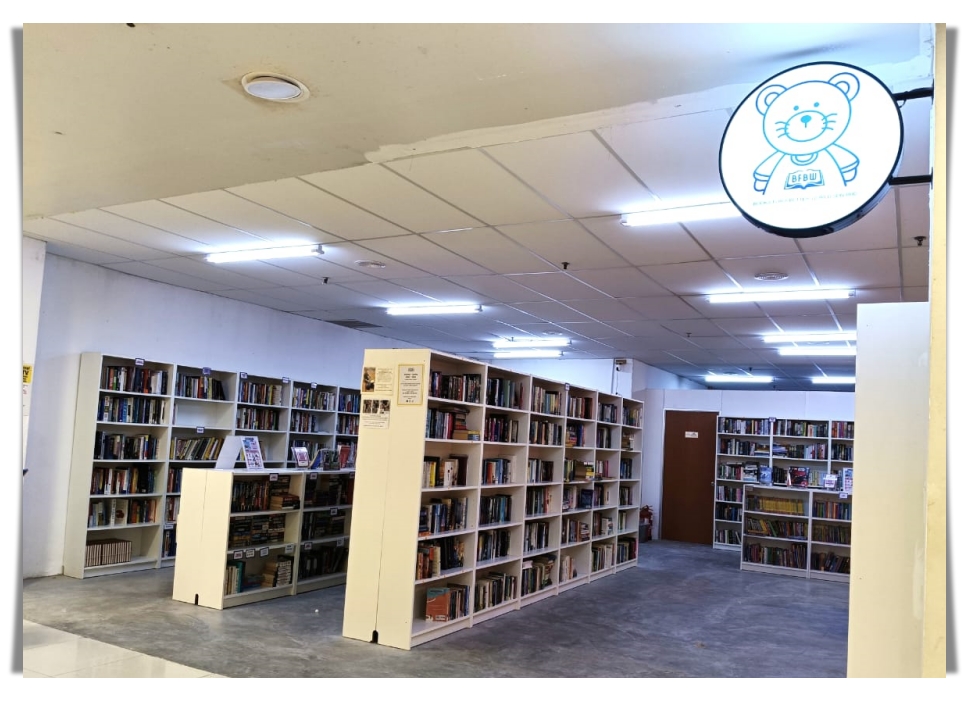
That’s why I’ve always liked used bookstores. Yesterday I went to a small, quiet bookstore in Subang Parade called BFBW – Books for a Better World. I wrote a short post about it on Threads, but the visit stayed with me. The variety of titles and the reasonably priced books weren’t the only factors. It was the mood and what the place stands for.

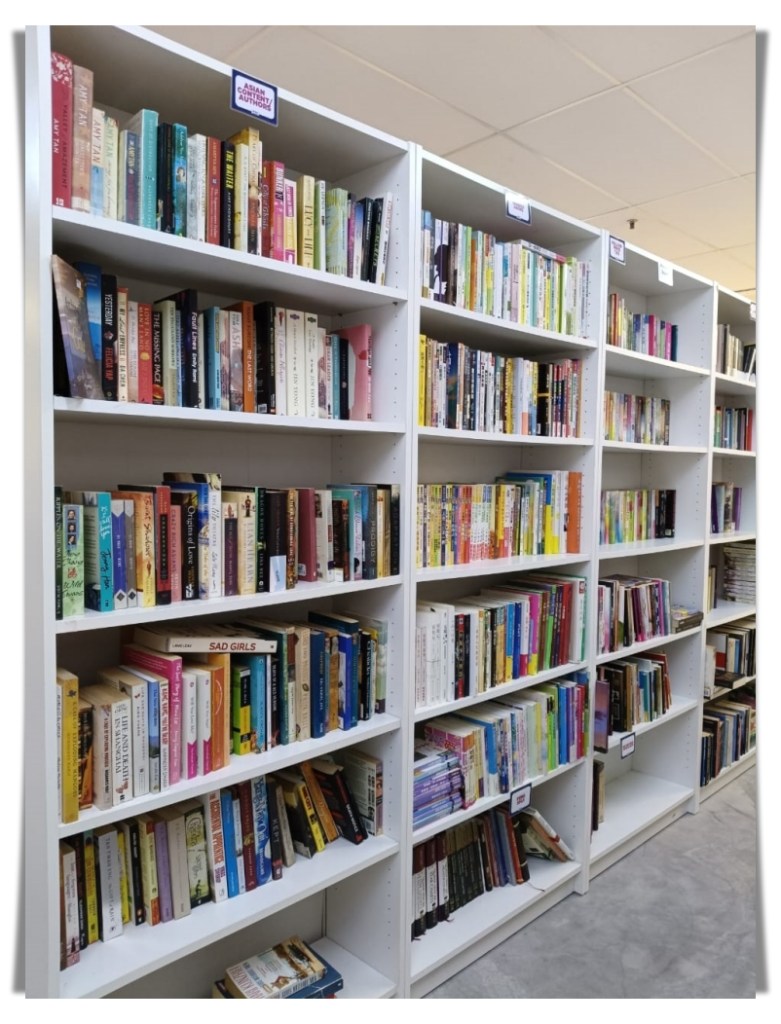
The bookstore is small. There aren’t any cozy corners or mood lighting for photos. There were just clean white shelves, a blue donation box with a cartoon bear on it, and fluorescent lights above. There were no frills in the room, and the floor was just cement. But it still felt good, simple, welcoming, and real.

What made it feel meaningful was the sense that every book had already lived a life. Each one had been read, or maybe left unread, carried in someone’s bag, or left waiting on a nightstand. They were now waiting for someone else to bring them home. That continuity, stories passed from person to person, makes used books unique and special.

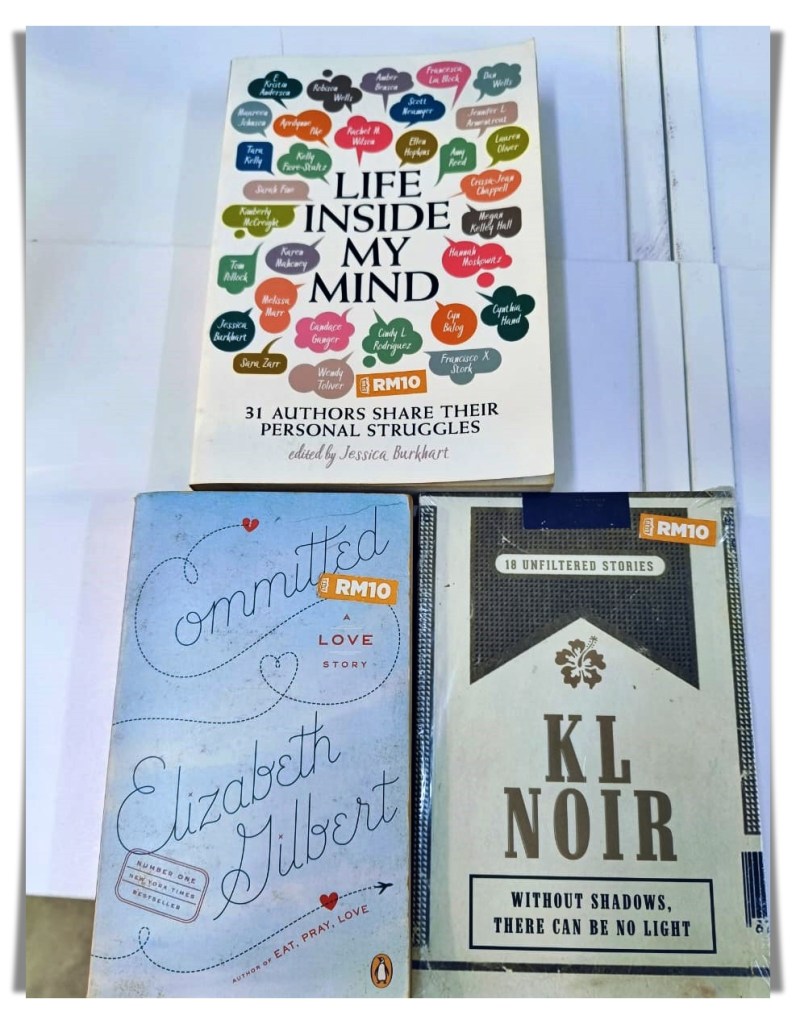
I ended up buying three books for RM10 each. One was Committed by Elizabeth Gilbert, which I’ve wanted to read for a long time. KL Noir was another one that caught my eye because of its subtitle: “Without shadows, there can be no light.” The last one was Life Inside My Mind, a book of essays by different writers about mental health. That one hit home.

These books weren’t in perfect shape. One had corners that were folded. The edges of the other one had faded. But that didn’t matter. I liked that they had been somewhere before me. Someone else had opened these pages and read them, or maybe they didn’t. It’s possible that the book was passed on without being read. It had traveled in any case.

That’s one of the little things that make used bookstores so nice. When you buy a book, you’re getting more than just a book; you’re getting a piece of someone else’s journey. It gives the book a deeper meaning that new books don’t always have.

At the front of the store, BFBW also has a donation box where people can leave books they don’t need anymore. The donated books aren’t just sold again; they’re also given to literacy programs and charities. Communities, schools, and small libraries benefit directly. It’s a simple system that supports access to reading.

While standing there, I reflected on my own bookshelves at home and the books I have kept but no longer read. Some of those books meant something to me at one time, but now they’re ready to go. I also bought books on a whim and never read them all the way through. I realized that giving them away could give them a new life.

It reminded me that sharing stories is more than just writing and publishing. It’s also about letting go and letting a book continue its journey by giving it to someone else. By letting go, we are passing on what helped us in the past or what we never got around to reading.

As a mother and a writer/artist, I often think about the kind of legacy I want to leave behind. This includes not only my own work but also the values I pass on. I want my kids to grow up in a world where they can get their hands on books. Where knowledge and imagination aren’t limited by price and where stories travel. Bookstores like BFBW make that vision feel possible.

If you live in the Klang Valley and have books that are in good shape, whether they are fiction, nonfiction, or children’s books, think about giving them away. Or take a little time to look around and pick up a few. You might find something you didn’t expect. You might rediscover the joy of reading without pressure.

I’m glad I stopped by. I left with three books and the feeling that I was part of something bigger. You are not just a reader but a link in a generous chain of people passing stories along. It really is that simple sometimes.


Olivia Atelier offers printables, templates, and art designed to inspire reflection, healing, and creativity. Visit Olivia’s Atelier for more.

A Review of The Earthquake Bird Movie Adaptation | The Book vs The Movie

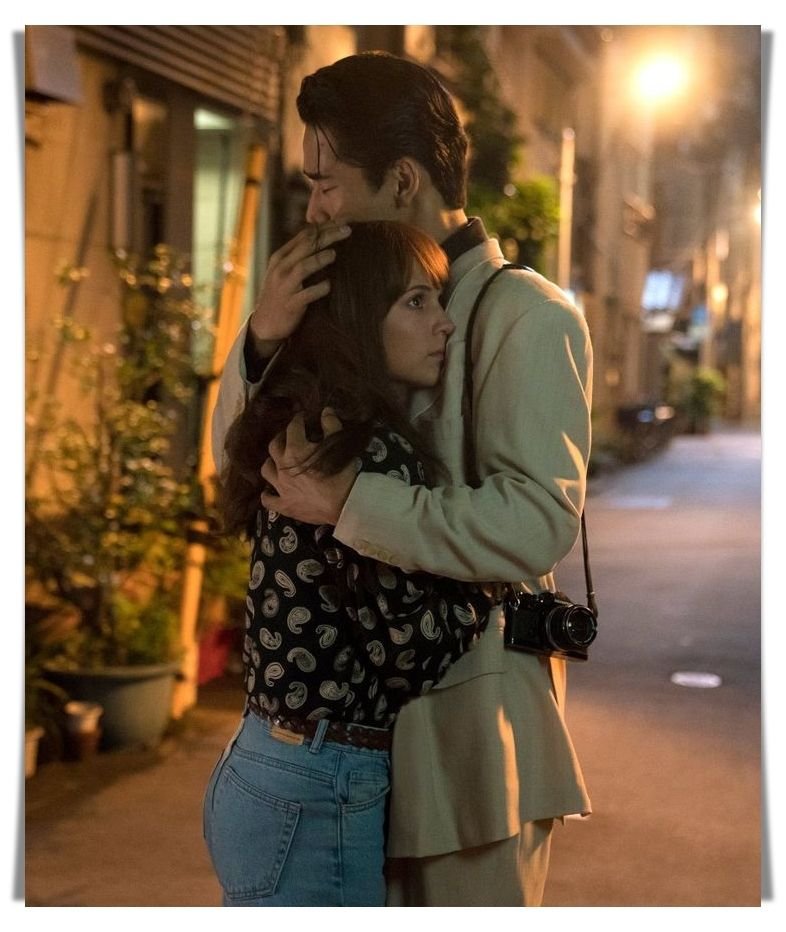
After reading Susanna Jones’ novel The Earthquake Bird, I felt compelled to rewatch the 2019 Netflix adaptation. The film, directed by Wash Westmoreland and starring Alicia Vikander, Riley Keough, and Naoki Kobayashi, takes creative liberties with its source material while maintaining its dark, melancholic atmosphere. Despite some changes, I found the directors’ ability to capture the story’s haunting atmosphere impressive. However, the ending deviates radically from the book, providing viewers with the closure that the author purposefully denies. Despite the clean conclusion, I couldn’t help but believe that the book’s emotional ambiguity was more fitting. However, the film still provides an intriguing representation of Jones’ writing.

Watching it again provided me a new perspective on how the film adapted certain key components and departed from the original.

Image source

Lucy: A Different Lucy, A Different Background

The most noticeable distinction in the movie is Lucy’s nationality. Lucy Fly, the novel’s protagonist, is a British expat living in Tokyo. Lucy in the film is Swedish. Alicia Vikander’s portrayal of Lucy is captivating, capturing the character’s subdued and brooding qualities as envisioned in the book. That part seemed to be tailor-made for Vikander, who portrays Lucy as cold but fiercely vulnerable. She is the film’s foundation, and no one else could have played the character as convincingly.

Teiji: A Beautiful Mystery with a Dark Side

In the movie, Naoki Kobayashi plays Lucy’s love interest, the intriguing photographer Teiji Matsuda. Kobayashi’s Teiji is colder and more detached from the one in the book. His calm demeanor conceals a mild but unmistakable hostility, which adds tension to his interactions with Lucy. He is more indifferent to Lucy in the movie, which makes it plain that she is little more than a muse and a physical comfort to him. Where the novel’s Teiji shows glimmers of tenderness, the film removes those layers, exposing a man who is equally compelling and creepy.

The filmmakers altered Teiji’s backstory, having him raised by an aunt instead of his mother. This change adds a layer of mystery to his character, but it’s an easy element to overlook amid Teiji’s ambiguous personality.

Lily Bridges: A Scene-Stealer

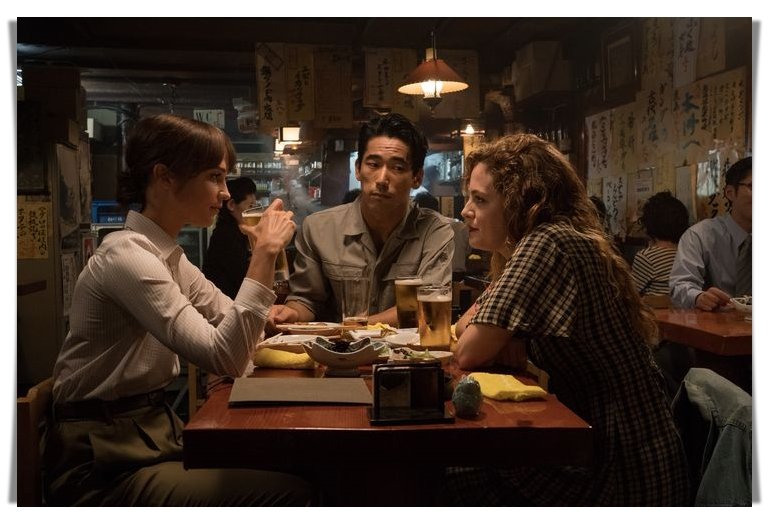
Riley Keough as Lily Bridges steals the scene. Lily in the movie is flirty and outgoing but slightly needy. At one point, she even suggested she slept in between Teiji and Lucy, a moment that perfectly captures her brazen personality. Keough brings Lily to life in a way that matches how I envisioned her in the book: vibrant, needy, and ultimately tragic. Her presence adds a volatile energy to the story, and her dynamic with Lucy and Teiji is one of the more compelling aspects of the film.

A Cinematic Key Moments

The film’s cinematic storytelling enhances some passages from the book while layering the tension and beauty. One such moment comes when Lucy realizes that Teiji’s love has turned toward Lily during their time on Sado Island. The shift is slight but devastating, and the filmmakers pull it off with precision. The cinematography nicely captures Lucy’s mounting discomfort and the way it frames her isolation against the backdrop of Japan’s breathtaking landscape.

Image source

The other standout element in the film is Teiji’s apartment. Unlike the novel’s minimalist description, the film makes his living space a dingy and cluttered space mirroring his mysterious character. The apartment is almost a character in its own right, its junkyard atmosphere and eerie photographs lining the walls contributing to the film’s noir aesthetic.

The Earthquake Bird: A Haunting Force

One thing does get heightened in the movie: the titular “earthquake bird” reference. The bird is more vaguely referenced in the book, but the movie brings it to life, its haunting bird calls punctuating the moments of silence that follow an earthquake. That auditory detail adds another layer of unease, making the story’s themes of guilt and displacement all the more tangible.

Cinematography and the Haunting Soundtrack

The movie’s cinematography is breathtaking. It manages to capture the beauty of 80s Japan while also infusing it with a sense of foreboding. With such a subdued color palette and reserved framing, there’s even a noir-like feel to the film that works for its psychological aspects. Whether it is the bustling streets of Tokyo or the silent, windy fields of Sado Island, every shot seems meticulously crafted.

A special mention should also go to the haunting soundtrack. Composed by Atticus Ross, Leopold Ross, and Claudia Sarne, the music heightens the tension and melancholy of the story, settling into your head long after the last credits roll. It’s the kind of score that amplifies the emotional weight of every scene, transforming the movie into an immersive experience.

The Ending

The most significant departure from the book is the ending. The novel leaves a lot of questions unaddressed, requiring readers to contend with the ambiguity of Lucy’s guilt and the motives behind Teiji’s actions, but the movie prefers a more definite resolution. Without giving too much away, the movie does a good job of resolving some things and giving viewers a sense of closure. I admire the clarity, but I did find myself yearning for the unresolved tension of the book’s ending. That uncertainty seemed truer to the story’s themes.

Image source

Final Thoughts

The Earthquake Bird movie is a rich, visually deep, and emotionally haunting adaptation of Susanna Jones’s novel. While it diverges from the novel in some ways, it opens the story in new directions that could not have happened in the book. Alicia Vikander shines as Lucy. She succeeded in capturing the character’s multifaceted nature with ease and intensity. Naoki Kobayashi and Riley Keough deliver equally compelling performances. While some changes, such as Lucy’s nationality or Teiji’s backstory, seemed inconsequential, others, like the ending, significantly changed the tone of the story. The film’s portrayal of Teiji as a slightly colder character brought a darker edge to the story too. These differences notwithstanding, the movie stays true to the original novel’s exploration of guilt, obsession, and identity.

If you’ve read the book, the film is an intriguing reinterpretation of the story. If you haven’t, the film is still a tense and tight psychological thriller that stands on its own. Either way, it’s worth watching it for its breathtaking cinematography, haunting soundtrack, and outstanding performances. It felt like when I watched the movie, it was like a different perspective on the novel—familiar but different, unsettling but beautiful. It’s a story I’ll carry with me, in both its written and cinematic forms.

Book Review | A Weekend with Susanna Jones’s The Earthquake Bird

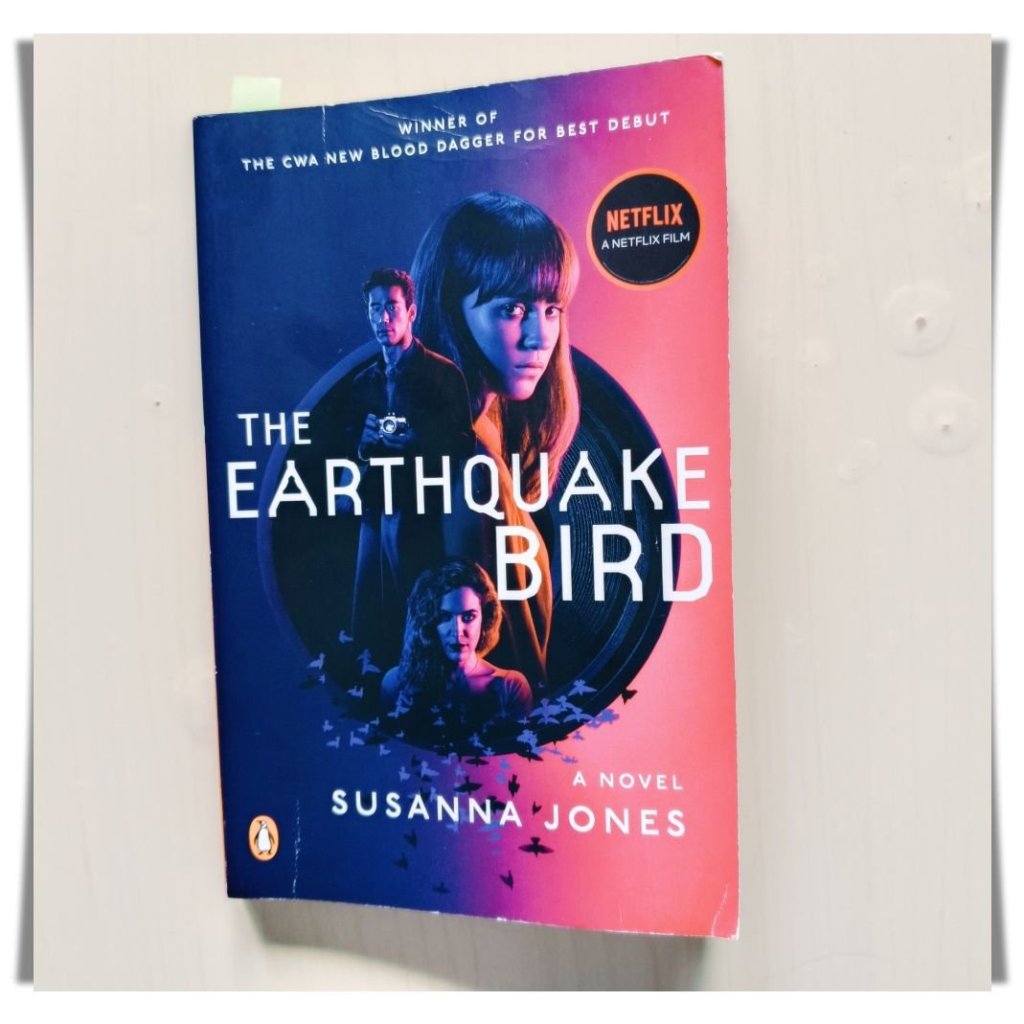
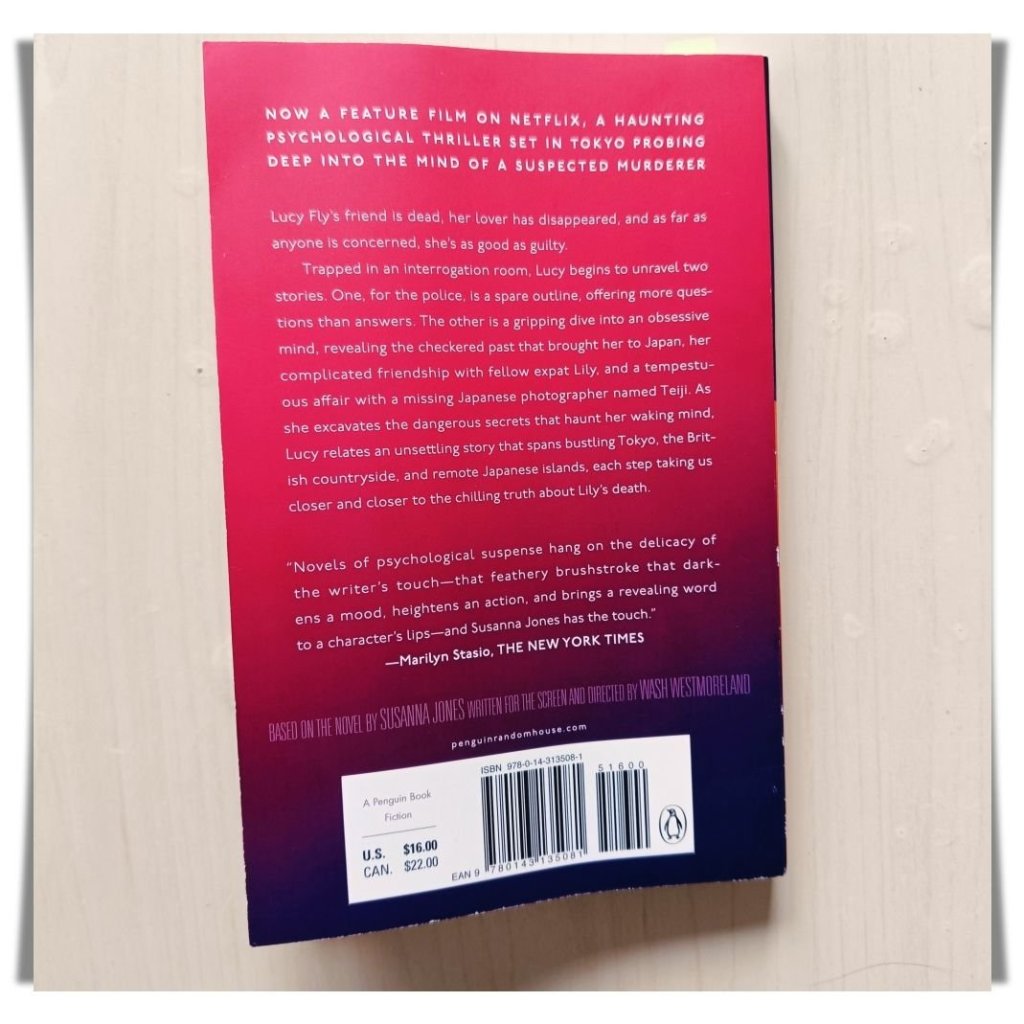
Last weekend, I finally had the chance to read Susanna Jones’s novel, The Earthquake Bird. It was a long-awaited opportunity. I watched the movie adaptation on Netflix back in 2019, and it left a lasting impression on me. I was enchanted by the haunting atmosphere, the layered characters, and the psychological tension. And that left me wanting to dig up the original source material. But since the novel was published in 2001, it was difficult to find a copy. That is, until recently. The second I discovered it, I knew I needed to revisit Lucy Fly’s story, this time in the author’s own words.

Reading The Earthquake Bird was an intense experience. The novel immerses you in Lucy’s fragmented memories and unreliable narration, plunging you deep inside her mind. As I turned the pages, I could feel her guilt, her isolation, and her complicated relationships with the people around her. The raw emotional force of Jones’s spare, precise prose lingers long after you close the book.

Plot Summary of The Earthquake Bird

The Earthquake Bird is set in Tokyo, following Lucy Fly, a British expatriate who works as a translator and whose solitary existence is upturned when she becomes the prime suspect in the murder of fellow expat and her newfound friend, Lily Bridges. Lucy is the narrator, recounting her life, her entanglement with a mysterious Japanese photographer, Teiji Matsuda, and her intricate, troubled friendship with Lily.

The novel intertwines themes of guilt, cultural dislocation, and the indistinct boundary between love and obsession. The novel unfolds through Lucy’s recounts of the events leading up to Lily’s death, but her memories are disjointed and unreliable, leading readers to wonder how much of her version of reality can be believed. With its haunting atmosphere and complex character dynamics, The Earthquake Bird is as much a psychological portrait as a murder mystery.

Lucy’s Third-Person Narration

One of the most striking aspects of the novel is Lucy’s tendency to refer to herself in the third person when recounting her past. This shall seem, at first, an odd and disorienting narrative choice. But as I delved further, it was obvious that this was a conscious mirroring of Lucy’s psychological state. Her disconnection from her own memories reflects her emotional detachment, a coping mechanism she’s developed through her traumatic experiences and unbearable sense of guilt.

Lucy’s belief that she brings disaster and death to those around her is a recurring theme. She bears the burden of past tragedies, believing she is somehow to blame. This third-person narration creates a distance between her present self and her past actions, as though she’s attempting to disassociate from the person she used to be. This narrative technique enhances the haunting quality of the novel, immersing readers in Lucy’s splintered self.

The Mystery of Teiji

Lucy’s relationship with Teiji is at the core of the story, and it is as mysterious as the man himself. Despite being his girlfriend, Lucy realizes how little she truly knows about him. She doesn’t even know his last name. Surprising moments like Teiji’s casual mention of his love for mopping floors and washing up, or Lucy’s hearing him sing, remind us that people are always more complicated than we imagine. There are facets of Teiji that remain hidden from Lucy, even after they’ve spent a great deal of time together.

This realization resonated with me deeply. It’s a humbling reminder that we never fully know someone, no matter how close we are or how long we’ve been in each other’s lives. People have depths, and their inner worlds often remain a mystery. For Lucy, this lack of understanding becomes both a source of fascination and frustration, adding tension to their already strained relationship.

Chapter 12: Grief and Betrayal

If I had to pick a favorite part of the novel, it would be Chapter 12. In this chapter, Lucy is grieving the loss of her lover while grappling with the emotional aftermath of Teiji and Lily’s betrayal. What most impressed me was the way Jones portrayed Lucy’s pain so subtly. The chapter doesn’t linger on Lucy’s heartbreak explicitly, but her suffering is all but tangible in every sentence. The emptiness that she feels, the way in which her world appears to collapse in on itself—it’s all there, woven into the fabric of the narrative.

Jones’s ability to evoke such deep emotions without resorting to melodrama is truly masterful. It made me feel Lucy’s pain as if it were my own. It’s a testament to the power of understated writing—show, don’t tell.

My Thoughts on Lily Bridges

Lily Bridges is a character that elicits mixed feelings. From the start, Lucy is wary of her. Lily’s wimpy, needy attitude irritates Lucy, and it’s not hard to see why. However, Lucy secretly relishes Lily’s need for her. For someone like Lucy, who frequently feels invisible and isolated, Lily’s dependence on her makes her feel smart and capable. This dichotomy makes for an intriguing dynamic between the two women.

But I couldn’t help but disapprove of Lucy’s decision to include Lily in her private time with Teiji. If I were Lucy, I’d be even more territorial. I would not feel good about the idea of my man getting too friendly with a female friend, especially someone I am not personally fond of. And still, Lucy’s decision to allow Lily into her world says so much about who she is. It reflects her desire for validation and her struggle to navigate the dynamic of friendship and intimacy.

A Story That Haunts You

The reason The Earthquake Bird is so compelling is because it tackles guilt and identity. Lucy’s perception of herself is that she is a natural-born destroyer, that her very existence brings harm to the people she loves. It’s a guilt that permeates all facets of her life, from her relationships to how she sees her own worth.

The novel also takes up the theme of cultural displacement. As an expatriate in Japan, Lucy sometimes feels like an outsider, caught between two worlds. This alienation only exacerbates her identity crisis, heightening the poignancy of her struggles.

Final Thoughts

Reading The Earthquake Bird was an unforgettable experience. Susanna Jones has created a haunting and provocative novel, with a protagonist of such complexity whose presence reverberates long after the last page has been turned. Lucy Fly is not a loveable character; she’s full of imperfections and fear, making her narrative even more relatable.

If you’ve only seen the Netflix adaptation, then I recommend checking out the book. Although the film impressively conveys the tone of the story, the novel is a deeper exploration of Lucy’s mind and the labyrinthine relationships that make up her landscape. It’s a story about guilt, love, betrayal, and the fragmented nature of identity—a story that lingers with you, quietly unsettling, long after you turn the last page.

I’ll be reviewing the Netflix adaptation in a separate post, where I’ll explore how the movie differs from the book and whether it captures the same depth and nuance. Now, though, I’m glad to have finally read the novel. It was worth the wait, and, I suspect, a story I’ll return to, discovering different layers and meanings each time I do so.

Why I’ll Always Come Back to The English Patient

Daily writing prompt
What book could you read over and over again?

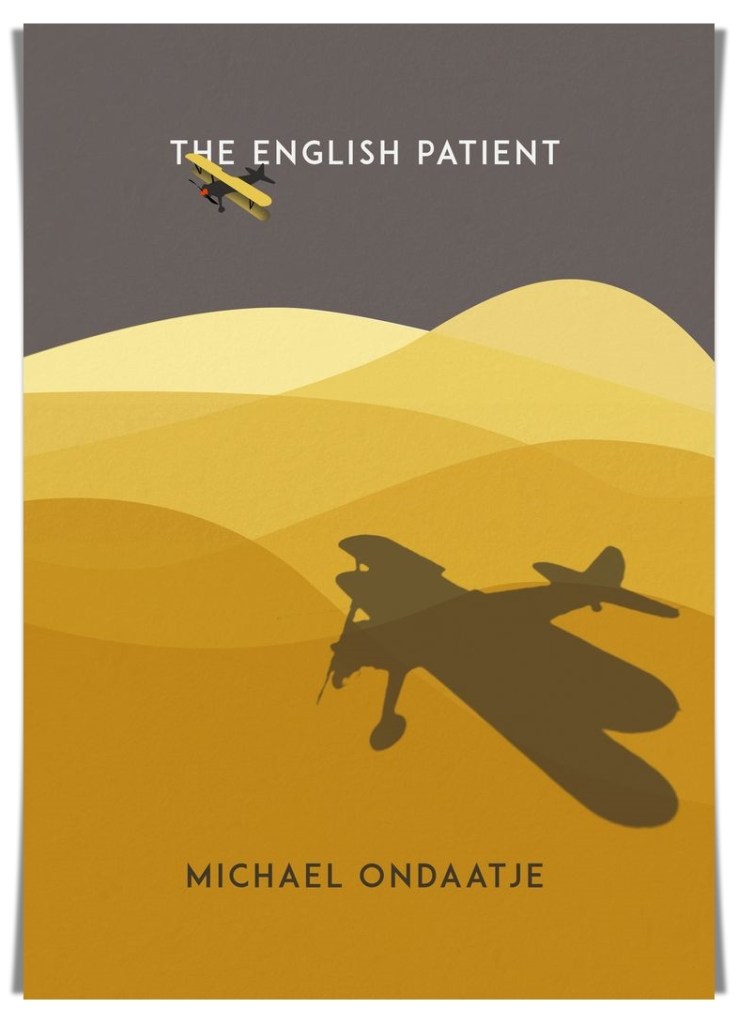
Some books become landmarks in your life. It becomes more than something you read when you return to its pages again and again, like a familiar scent or a half-remembered dream. For me, that book is The English Patient by Michael Ondaatje.

I got my copy in 1997 while waiting for my night shift to start. I was 20 at the time, working part-time while studying for my IT diploma. My shift began at 6 p.m. and finished at 6 a.m. the following day. After dinner, I went to a nearby bookshop and picked up the novel. The film adaptation was playing in cinemas at the time, but I didn’t watch it until years later. I read the book during my breaks at work, but it took me a long time to finish it.

Image source

Ondaatje’s prose was difficult. It didn’t care for neatness. The narrative was fragmented, the rhythm unpredictable—the whole narrative is a long lyrical poem. But I stuck with it, turning each page slowly, sometimes painfully. And I’m glad I did. While others found it disjointed, that was precisely what drew me in. It was too poetic for the mainstream, too fragmented for easy consumption, and too sensual for readers who prioritize plot. That’s what I enjoyed about it then—and still do.

When I went to university to pursue my IT degree, The English Patient became a silent friend. I read it during long, lonely afternoons in my hostel room as a soothing escape from the chaos of university life. Through Ondaatje’s pages, I could retreat to the worn walls of Villa San Girolamo, into the burned silence of the English Patient, and the sun-drenched memories of the Cave of Swimmers. I must have read the book ten times throughout the years. 

The story unfolds in the same way that memory does: disorganized, sensory, and half-lit. We learn about the English Patient’s past before, during, and after WWII. Of Katharine Clifton and their forbidden love. Of Hana, the grieving nurse who cares for him in the villa. Of Caravaggio, the thief turned British spy with missing thumbs. Of Kip, a gentle Indian sapper who dismantles bombs and falls in love with Hana despite their cultural differences.

The patient’s only possession is a battered, annotated copy of Herodotus’ Histories that survived the flames when his plane crashed in the desert. The crash badly burned him and caused amnesia. He couldn’t remember his name and lost his identity, but his voice led many to believe he was English. In time, we learn he is actually László de Almásy, a Hungarian cartographer and desert adventurer. Almásy’s character is loosely based on a real-life counterpart, Count László Almásy, a Hungarian aristocrat and explorer.

I remember reading passages aloud to my lover during late-night chats. We watched the movie adaptation on VCD, but I hated it. It lacked the haunting lyricism of the novel. The lushness of Ondaatje’s words cannot be translated to screen. His sentences breathe, linger, and seep in. They don’t just move the story forward. They remain in you long after you finish the novel.

I haven’t read the book in years. Maybe it’s time to read it again. Some parts of me have changed; others haven’t. I suspect the story will read differently now, the way all great books do when you return to them older and bruised with life.

There’s one passage that’s followed me for years, so much so that I placed it on my About Me page:

“She had always wanted words, she loved them; grew up on them. Words gave her clarity, brought reason, shape.”

This quote refers to Katharine Clifton, but I feel it suits me as well.

There are many other lines that have stayed with me through the years. There are too many to list, but here are a few that still haunt me:

“We die containing a richness of lovers and tribes, tastes we have swallowed, bodies we have plunged into and swum up as if rivers of wisdom, characters we have climbed into as if trees, fears we have hidden in as if caves. I wish for all this to be marked on by body when I am dead. I believe in such cartography—to be marked by nature, not just to label ourselves on a map like the names of rich men and women on buildings. We are communal histories, communal books. We are not owned or monogamous in our taste or experience.”

― Michael Ondaatje, The English Patient

“I believe this. When we meet those we fall in love with, there is an aspect of our spirit that is historian, a bit of a pedant who reminisces or remembers a meeting when the other has passed by innocently…but all parts of the body must be ready for the other, all atoms must jump in one direction for desire to occur.”

― Michael Ondaatje, The English Patient

“Moments before sleep are when she feels most alive, leaping across fragments of the day, bringing each moment into the bed with her like a child with schoolbooks and pencils. The day seems to have no order until these times, which are like a ledger for her, her body full of stories and situations.”

― Michael Ondaatje, The English Patient

“This was the time in her life that she fell upon books as the only door out of her cell. They became half her world.”

― Michael Ondaatje, The English Patient

“In the desert the most loved waters, like a lover’s name, are carried blue in your hands, enter your throat. One swallows absence.”

― Michael Ondaatje, The English Patient

“Sometimes when she is able to spend the night with him they are wakened by the three minarets of the city beginning their prayers before dawn. He walks with her through the indigo markets that lie between South Cairo and her home. The beautiful songs of faith enter the air like arrows, one minaret answering another, as if passing on a rumor of the two of them as they walk through the cold morning air, the smell of charcoal and hemp already making the air profound. Sinners in a holy city.”

― Michael Ondaatje, The English Patient

The English Patient is not a book you finish or a book you can read casually. It’s a book you carry, absorb, and savor.

And I’ll keep returning to it.

As long as I need to remember how language can ruin you.

And heal you.

And leave you haunted in the best way.

Book Review | Simple Passion by 2022 Nobel Laureate, Annie Ernaux

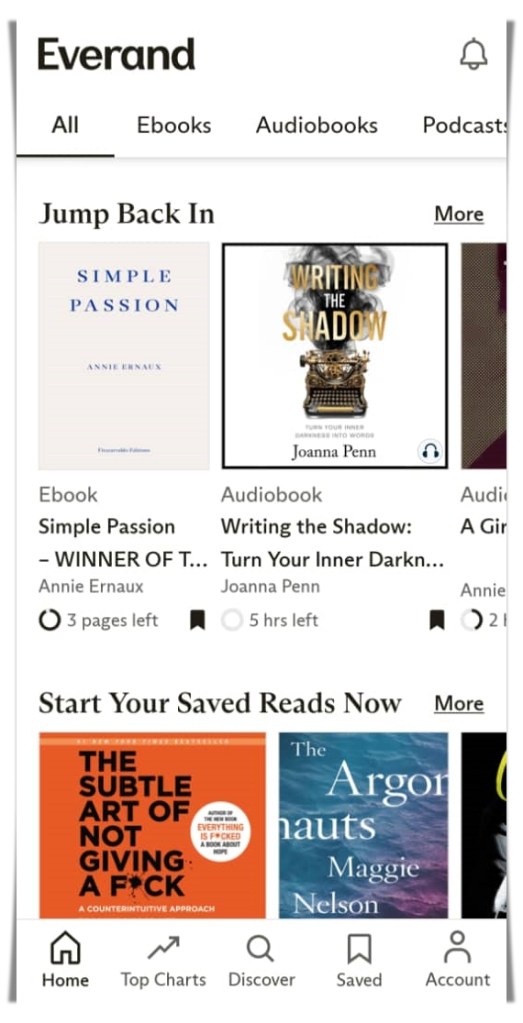
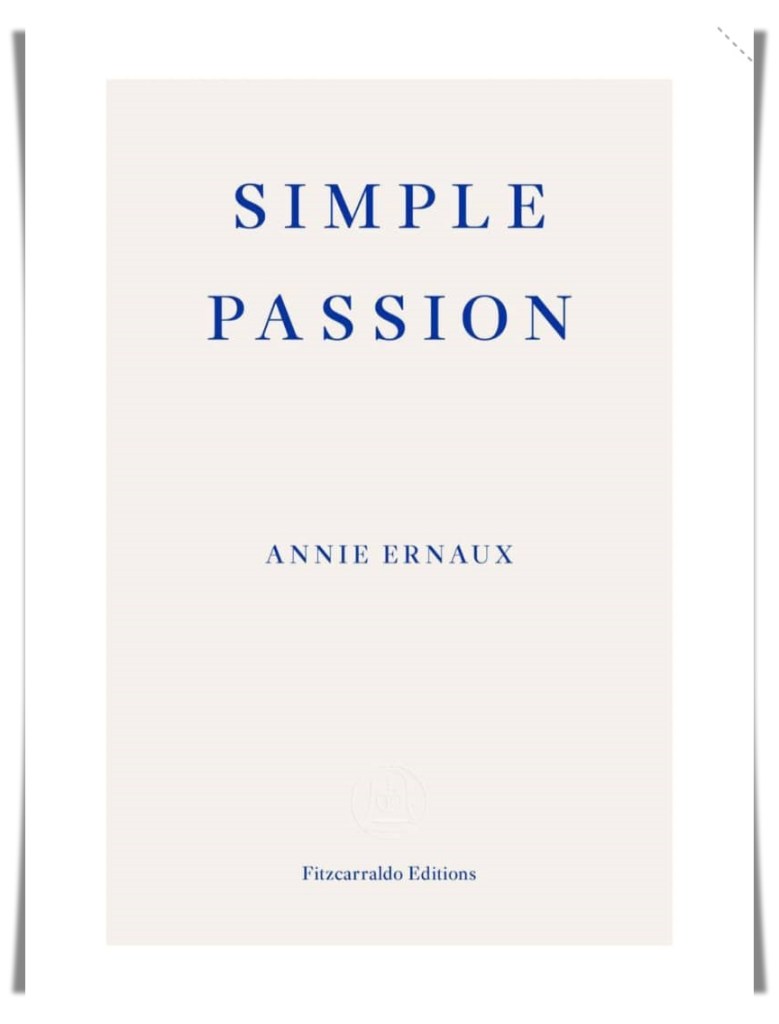
I have been wanting to read books by the French author, Annie Ernaux, since she was awarded the Nobel Prize in Literature in 2022, but I never got around to it until about a week ago. I was scrolling through my reading list on Everand and came across Ernaux’s book, Simple Passion. Since the book is short, 80 pages, I gave it a go. It took me one afternoon, in between daily routines, to finish it.

I’ve been a Scribd, and later Everand’s subscriber since 2018.

I’m blown away. Some books tell a story. Simple Passion does not. Instead, it captures her obsession with a man in its purest form. In this book, Ernaux presents a raw, unembellished account of her affair with a married man. This is an autofiction. Yes, it’s autobiographical with elements of fiction woven into the story.

The affair took place in the 80s, and I made a quick calculation. Ernaux would be in her late 40s when these events took place. Ernaux was divorced with two sons. The man was a lot younger, and I thought that was hot, but I digress.

Ernaux’s writing is fragmented, which surprised me. They bear resemblance to my (fiction) writing style. Ernaux’s narrative is not chronological. It’s like she’s jotting down memories and insights as they come to her. This rawness is what makes Simple Passion so devastatingly honest. She confesses:

I am incapable of describing the way in which my passion for A developed day by day. I can only freeze certain moments in time and single out isolated symptoms of a phenomenon whose chronology remains uncertain—as in the case of historical events.

Like I mentioned, this is my first Ernaux book. I wouldn’t say I love the language (perhaps the translation from French loses something), but I do admire the way she lays her experience bare. Ernaux wrote without using big, bombastic words and without self-pity. She stripped unnecessary details, and it’s brutal in the best way.

Her grief after her lover leaves for his home country is palpable. However, Ernaux doesn’t indulge us with the details of her feelings. She shows us instead through her actions, through her emptiness in her daily routine, and through the strange ways she tries to keep him close even in his absence.

One day, lying on my stomach, I gave myself an orgasm; somehow I felt that it was his orgasm.

It’s as if they were one entity, inseparable, even when apart.

And then there’s the bargaining. The desperate, irrational belief that she could will him back:

If he calls me before the end of the month, I’ll give five hundred francs to a charity.

She clings to the past by recreating moments as if reliving them could make moments repeat themselves:

If I went somewhere I had been to last year, when he was here—to the dentist or a staff meeting—I would wear the same suit as before, trying to convince myself that identical circumstances produce identical effects and that he would call me that evening.

Her lover did end up calling her one day, a week after the Gulf War was declared. After months of grieving for her lover, she finally got her closure. They had one last moment together, and that was the end of it. What remains now is her grief—for him and for the person she was when she was with him.

I had decided to learn his language. I kept, without washing it, a glass from which he had drunk.

I grieved with her. Not because I have lived her story, but because I have lived a version of it. I, too, have known an all-consuming love that was never meant to last. I have felt the bittersweet ache of moving forward without someone who once defined my existence. I have wondered, in private moments, what life would have been like if it had been him. If our child had been his. If he remembers me in passing thoughts, or comparing others to me. These are the kinds of things we don’t speak aloud, not even to our closest friends, but they remain, surfacing in the most unexpected moments.

One of the most striking passages in the book is this:

I do not wish to explain my passion, that would imply that it was a mistake or some disorder I need to justify—I just want to describe it.

In my opinion, this is what makes Ernaux’s writing so powerful. She does not seek redemption or understanding. She does not attempt to explain away her feelings. She simply describes them, and in doing so, she gives permission to readers to experience them in their own terms.

Ernaux did not write this book to boast about herself or her lover. She wrote it as a gift to those who have felt this same kind of passion and loss. In her own words, it’s an offering. As all great writers do, Ernaux knew that certain experiences are universal no matter how unique they seem.

I haven’t written a book about him, neither have I written a book about myself. All I have done is translate into words the way in which his existence has affected my life. An offering of a sort, bequeathed to others.

And that is exactly what Simple Passion feels like to me—an offering. It lingers in my mind even days after I turned the final page.

Note: There is a movie adaptation if you are interested. It was released in 2020. I haven’t watch it but here’s the trailer. In the novel, Ernaux described that her lover look a bit like Alain Delon which was wow.

Book Review | The Courage to Write – How Writers Transcend Fear by Ralph Keyes

I returned to writing earlier last year after a decade-long hiatus to raise my children. Writing has always been my quiet refuge. It’s a space where I could slip away from the noise of daily life. But even in solitude, I have always sought connection and often reached for books on writing. These books are my source of advice, and I also seek reassurance and inspiration from those who have walked this path before me.

Years ago, I read Bird by Bird by Anne Lamott and Big Magic by Elizabeth Gilbert; both left a lasting impact on me. These are the kind of books that feel like old friends. Their words reveal new meanings with each reread. They have been my steady companions and also my source of encouragement whenever doubt crept in.

Three months ago, while browsing a secondhand bookshop, I stumbled upon The Courage to Write: How Writers Transcend Fear by Ralph Keyes. I had never heard of him before, but the title spoke directly to a truth I knew well—fear is an ever-present shadow in the creative process. It’s impossible to resist a book that promised to explore the relationship between the creative process and fear. Without hesitation, I added it to my cart, along with another classic, Natalie Goldberg’s Writing Down the Bones. The latter is familiar to many writers, though I have yet to read it myself.

Having finished The Courage to Write, I’ve spent some time reflecting on its message and how deeply it resonated with me. I’m currently halfway through Writing Down the Bones and will share my thoughts on it once I reach the final page. For now, I’ll concentrate on Keyes’ book, which explores what it means to write in the face of fear. It is a subject that feels intimately familiar to anyone who has ever confronted a blank page and wrestled with the enormity of creation.

A Conversation About Fear

The Courage to Write is not a how-to book. Instead, it reads like a conversation, which helps all writers deal with the fear, doubt, and anxiety they all feel. Keyes takes the mystery out of being creative and shines a light on the problems most writers experience but don’t talk about. He tells us to dig deep into our self-doubt and impostor syndrome to find the courage that’s hiding there. He believes that writing is both an honor and a duty that people who have never done it often don’t appreciate.

The Pros

The Courage to Write is so engaging because it is so honest. Keyes doesn’t romanticize writing; instead, he shows it as a deeply human activity that is full of uncertainty. “Am I good enough?” is a question that his book helps people deal with. Even the finest literary giants have had to deal with this question. Drawing on the experiences of writers like Virginia Woolf, Ernest Hemingway, and Anne Lamott, he shows us that anxiety is not a sign of failure but an important part of the process.

Keyes writes in a careful, even personal tone. His ideas seem to apply to everyone, which supports the idea that while writing can be isolating, the effort to overcome fear unites all authors.

One of the best things about the book is that it changes the way we think about anxiety. Anxiety is not a problem; it’s a vital force that makes insight sharper and pushes writers to be real. Keyes says that fear pushes us to write more honestly and dig deeper. This profound view tells writers to deal with their fears instead of battling them.

The Cons

Even though The Courage to Write has a lot of good points, it sometimes goes over familiar ground. If you’ve already read a lot on the subject, Keyes’ insights might not seem very new to you. A lot of the time, the stories are about well-known issues writers had, like how Hemingway drank to drown his fears or how Woolf questioned her own worth. A lot of writers are familiar with these stories.

Also, Keyes is great at acknowledging and validating anxiety, but his answers are more philosophical than practical. This book might not be right for you if you want to find real ways to deal with procrastination, perfectionism, or the problems that writers face every day. His core message that you should embrace your fear and let it lead you is powerful, but it comes up so often that some chapters feel like they’re just different takes on the same idea.

Final Thoughts

Reading The Courage to Write feels like wandering through a dense forest. Each tree represents a different fear, and the odd shaft of sunlight reminds you of how courageous you are. It’s not a guide. It gives you hope that the journey is worth continuing on, even if you can’t see the path. This book is for people who need to hear that fear is not the enemy but a voice telling us to be braver and write more deeply and honestly.

But this book might not be for everyone, just like a vast landscape can be both comforting and overwhelming. If you seek clear directions instead of reflection, you may want more concrete advice. The Courage to Write isn’t really about getting over your fears; it’s about learning how to live with them. And maybe that’s the most important lesson in and of itself. Writing, like life, is less about conquering every mountain and more about finding what it means to be human.

Inheriting Courage From My Warrior Ancestors

When I close my eyes, memories rise like smoke from a dying fire. I can still hear the gendang’s beating and my family’s joyful chatter from Gawai. I was ten years old and surrounded by the warmth of my people. The elders shared stories of our ancestors—Orang Kaya Pemancha Dana Bayang, Aji Apai Limpa, and Nakhoda Panglima Budin Gerasi—all courageous warriors of great renown. That courage, I’ve been told, is in my blood. But what does that mean in a place so far removed from their reality?

Oplus_131072

I’ve recently been reading Xiaolu Guo’s Nine Continents: A Memoir In and Out of China. Her exploration of identity, displacement, and cultural heritage resonates deeply with me. Xiaolu often addresses issues of alienation and belonging in her works, and she has become one of my favorite authors. Her writing inspired me to think about my own journey, which led me to write this post.

Our Warrior Culture

The Iban were famed for their warrior culture, defined by war expeditions and headhunting. It was once an important aspect of our spiritual beliefs and society framework. To be Iban means to be a warrior. Headhunting was not a barbaric pastime, as outsiders may believe. It was a necessary way of life since it signified protection, honor, and a connection to the spirit realm. While the act itself faded into history, the essence of the courage has been passed down through generations.

I often asked myself, “What remains of the warrior spirit?”. Sometimes it feels like a quiet force pushing me forward. In moments of difficulty, I draw on the courageous spirit of my ancestors. Their legacy reminds me that I have the strength to persevere in the face of overwhelming odds. Perhaps it is genetic memory, the invisible link that ties me to my ancestors and passes down the legacy of courage across generations.

The Loss of Tradition

However, bravery alone cannot fill the gaps. Living in urban places like Kuala Lumpur has distanced me from the traditions that constitute my identity. When my extended family embraced Christianity in the 1950s, it marked a shift from animistic beliefs. Urban living also entails replacing the communal life of the longhouse. Many other aspects of our culture are disappearing, such as the extensive oral poetry tradition.

I am caught in a dilemma. On the one hand, I value the opportunities and conveniences of modern living. On the other hand, I mourn the loss of vibrant traditions that shaped our way of life. These losses make me wonder how we can honor the past while embracing the present.

Image source The late Temenggong Koh (left), one of the last Iban warleaders of the 20th century, before headhunting was completely outlawed by the British colony.

The Sense of Alienation

Life in the city often exacerbates this disconnection. Here, I am just a fragment of an Iban: a name that suggests a foreign land, a face that others might find unfamiliar. When people ask where I’m from, my responses may seem inadequate. How can I explain a longhouse? Or, even if I can explain it, how do I dispel their misconception that modern Ibans still live on trees and wear loincloths? How can I explain our different Gawai, or traditional festivals, when they typically only celebrate one or two holidays, like Eid or Lunar New Year? However, in the heart of this alienation, I’ve realized that identity is not static. It is a fluid interplay of past and present, shaped by our decisions and circumstances.

Strength Through Cultural Roots

Nonetheless, I remain connected to my roots. They are not always visible, but they are present. My ancestors’ courage motivates me to face my fears and embrace the unknown. The warrior spirit is not a relic from the past but rather a driving force in my life today.

During difficult times, I found myself returning to the stories of my ancestors. They endured jungles, battles, and scarcity. I remind myself of their tenacity—if they can endure, so can I.

The loud proclamation of success does not equate to strength. Perseverance and the ability to adapt without forgetting are qualities that define strength. The warrior spirit is about enduring in a world that often forces us to forget who we are.

Preserving Tradition

My original poem from Sarawak collection of poetry

Poetry has been one way for me to preserve my culture. Writing has become a means of connecting the past and present, who I was and who I am becoming. It allows me to hold onto what feels like it’s slipping away.

I aspire to one day publish my poems and leave a legacy for my children. When the time comes for them to discover their roots, I hope my words will serve as a guide, helping them understand who they are and where they came from. Writing allows me to keep the stories alive as the world around us changes.

My identity is a patchwork of memories, stories, and dreams. I am neither fully of the past nor fully of the present. But maybe that’s what it means to be Iban today: to walk on a bridge, perpetually caught between two realities.

I am part of something bigger than myself, a heritage of power, fortitude, and endurance. While I may live far away from my people’s homeland, the essence of my heritage lives on, molding my journey and grounding me in a world that is often divided.

I carry the warrior spirit with me because I am descended from people who endured. So I take a step forward, not knowing where the journey will take me, but knowing it is worthwhile. Like the warrior spirit that runs through my blood, this journey is not always easy, but it is always worth it.

My cousin’s traditional wedding.

Book Review | Waiting by Ha Jin

I bought Waiting by Ha Jin from a used bookstore some months ago. It had been sitting among the stack of books on my desk, untouched, until lately. I picked up this book to read since my unread stack was growing. I simply couldn’t quit buying new books. It took me weeks to finish it since life got in the way, but I finished reading it last night.

Waiting is one of those novels that lingers with you long after you’ve finished reading it. The book lacks sweeping romance, but you will be drawn to its exploration of human indecision and societal limits.

The story follows Lin Kong, a Chinese army doctor, who spends 18 years in limbo between two women: Shuyu, his devoted, traditional wife, and Manna, his modern, independent lover. Every year, Lin returns to his village to seek a divorce from Shuyu, who agrees but later refuses in court. The story is more than just a love triangle—it’s also about a man paralyzed by indecision.

What struck me the most about Lin was not his indecisiveness but what it showed about his personality. It became evident to me that his hesitancy was not about love but rather about his inability to confront himself. He didn’t know what he wanted, so he drifted through life, letting others’ expectations and societal pressures influence his choices. At the same time, I couldn’t help but understand him. Living in a rigid communist culture made it difficult for Lin to follow his heart. Divorce was frowned upon, personal desires were frequently sacrificed for the greater good, and external judgment had a significant impact on every action.

It’s easy for those of us who live in a freer society to condemn Lin and ask why he didn’t just decide between Shuyu and Manna. However, a closer look reveals a man trapped by society as well as his own passivity and illusions. He assumed that what he couldn’t have was what his heart truly desired, confusing lust with longing for love.

“His heart began aching. It dawned on him that he had never loved a woman wholeheartedly and that he had always been the loved one. This must have been the reason why he knew so little about love and women. In other words, emotionally he hadn’t grown up.”

Reading this made me realize how different I was from Lin Kong. I’ve fallen in love soulfully. I’ve taken chances, experienced sorrow, and allowed love to transform me. I’ve shown up in my relationships, even when it meant failing and starting over. Lin, on the other hand, never allowed himself to experience deep emotions. He lived on the surface, terrified of true vulnerability, and as a result, he never genuinely experienced love.

But I get it. I understand his fear and hesitancy. In his world, there was so much at risk. The tight restrictions of society, the dread of making the wrong decision, and the conflict between duty and desire all contribute to Lin’s personality. Lin’s story is tragic because he allowed life to happen to him instead of taking charge of his own happiness.

Waiting prompted me to reflect on deeper realities about love and marriage. Love is complex. It is not all romance. Marriage is not for the weak. It demands forgiveness, humility, compromise, and sacrifice. And sometimes the presence or absence of children may make or break a marriage.

This book offers profound insights into society, love, personal responsibility, and the delicate balance between desire and obligation. But I must be honest that it is a slow read, somewhat draggy and monotonous. However, it forces you to sit through the discomfort, just like Lin Kong did.

In the end, Waiting isn’t just about Lin Kong and his love triangle. This story is also a mirror, reflecting our own hesitations and the way we let life pass us by. The story also made me thankful for the chances I’ve taken, the love I’ve risked, and the courage to keep showing up even when things are difficult.

Do I recommend it? Yes, but only if you’re willing to live with the discomfort of indecision, the sorrow of unfulfilled desires, and the bittersweet realization that we may be our own worst obstacles.

The stack of read/unread books next to my desk.