The Hour After Midnight | Why I Stayed Awake When I Should’ve Slept

For years, I stayed up too late.

It wasn’t because I was working or I had boundless energy or I was busy chasing my dreams. The main reason was that I needed to feel like a person.

It didn’t start as revenge bedtime procrastination. That phrase only found me later, when I stumbled across an article that put a name to my nightly rebellion. It felt like intense desperation. You could say it was a craving or a desperate fight for space.

When my children were small, the days blended together in a mist of needs. I remember those years vividly and if I’m honest, it makes me shudder, but not because I feel ashamed. My daily life was full of milk-stained shirts, sticky fingers, and toys scattered like confetti across every surface. I loved my kids fiercely. Still do. But in those days, I didn’t know where I ended and they began. I gave them my body, my attention, and everything. And somewhere in that giving, I began to disappear.

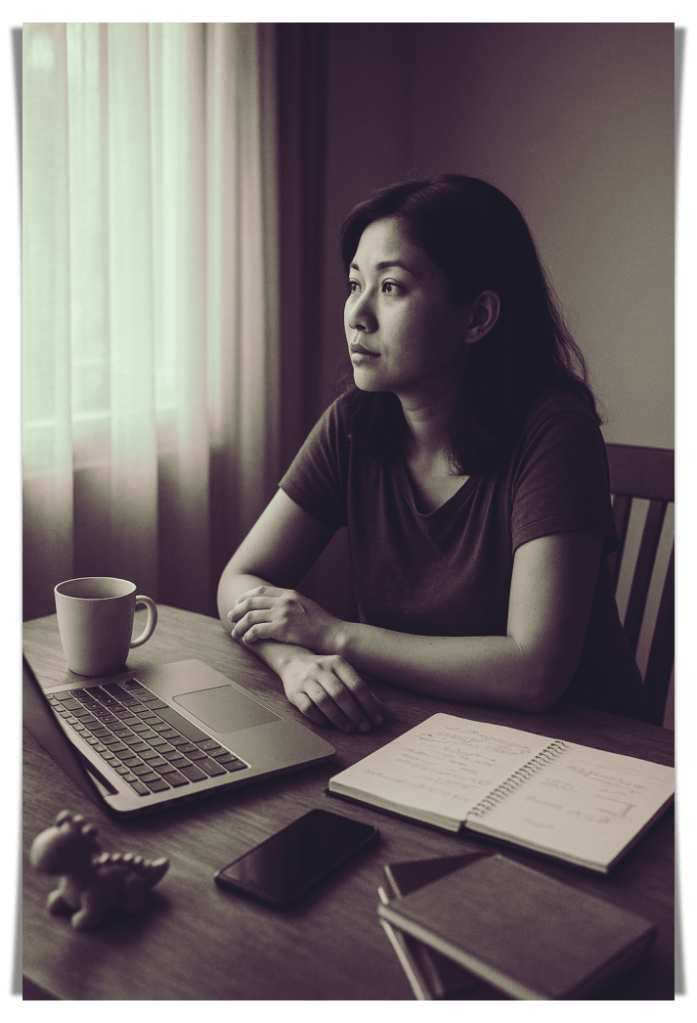
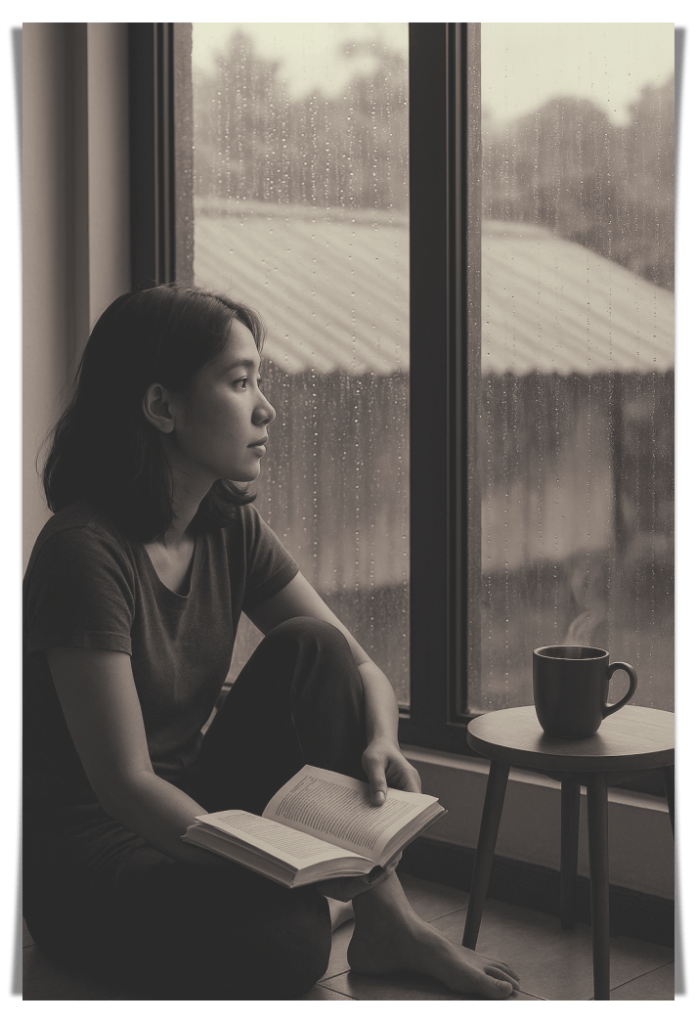
When the kids were finally asleep and when the house finally went quiet, and the dishes were done, I sat down. Just for a moment, just to breathe.

And that moment stretched beyond what I intended. I stayed up. Scrolling. Reading. Writing. Wandering through Facebook memories of the woman I used to be. Buying time I couldn’t afford, just to feel like I still existed.

I’d tell myself, “Just one more post. One more chapter. One more scroll.”

But truthfully? I was afraid that if I slept, I’d wake up and do it all over again. The endless giving, pouring out myself and forgetting.

So I kept stealing those hours after midnight.

And in the morning, of course, I paid the price.

I was more irritable. More short-tempered. More ashamed of the mother I was becoming.

The irony was painful: I stayed up to save myself, but it only made me more fragile the next day.

I never told anyone how much I resented the way my life had shrunk. How much I missed myself and how ashamed I felt for even feeling that way.

That was the case until I began writing about it.

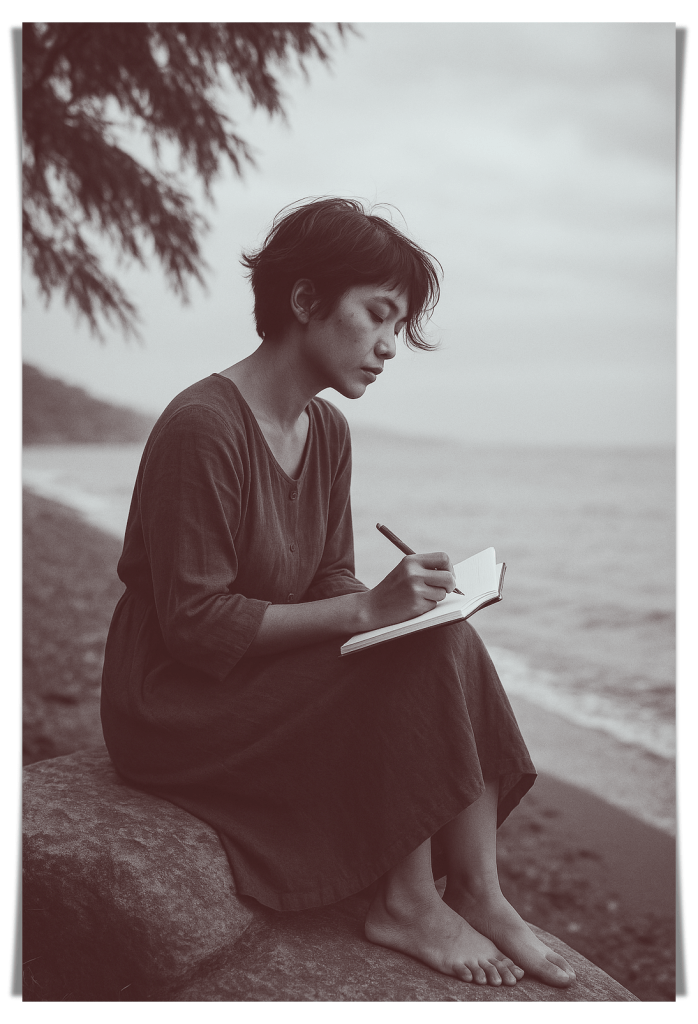
That’s how The Hour After Midnight came to life. It began as fragments and eventually evolved into a complete poem. A piece of me, speaking directly to the woman I used to be. Perhaps I still am that woman, but these days I go to bed at 12 AM or earlier. As the kids grow, I enjoy my sleep more, and the resentment has disappeared.

This poem is about a mother who gives her all and suffers in silence. It’s about a woman who craves stillness to survive her crazy life of constant giving. She was just a tired soul who wanted to feel seen.

If that sounds like you, I hope this poem wraps around you like a quiet hug. It’s more than a printable; it’s a recognition and a mirror. A gentle piece of emotional support for any overstimulated mom who needs a reminder to be kind to your mind.

This digital poem makes a thoughtful and unique Mother’s Day gift, especially for the tired mom who needs to hear she’s still enough. It’s a beautiful affirmation of motherhood for those navigating revenge bedtime procrastination, mom life burnout, and those quiet moments where you whisper, “I am enough.”

Find The Hour After Midnight in my shop Olivia’s Atelier. You’ll receive a high-resolution poem print in multiple sizes, ready to frame or gift. I hope it brings you what it brought me—a pause, a breath, a beginning.

Note: Yes, I launched my Etsy shop recently to share my poems with the world. Right now, everything in the shop is 50% off until June 2, including our featured Mother’s Day Poem Printables. They are designed as heartfelt gifts or tender self-reminders to moms everywhere. Feel free to check it out.

It’s Probably Nothing, But…

Daily writing prompt
What makes you nervous?

Answering phone calls from unknown numbers.

I know it seems crazy, but whenever my phone rings and I don’t recognize the number, my body tenses up. My mind quickly runs through a dozen worst-case scenarios. Is it a scammer pretending to be from the bank? Is anybody attempting to sell me something? Or worse, is someone calling with bad news? A loved one was involved in an accident and died? I hate the fact that my initial response is anxiety rather than curiosity or concern.

Messages from people with whom I am not close also make me nervous. Especially if they start with “Hi, can I ask you something?” and, “I need a small favor.” My stomach sank. I begin to wonder if I can say no without feeling bad. I dislike feeling trapped, even if the request is simple. The unexpected pressure makes me wary. 

Doctors’ appointments. Ugh. My blood pressure always spikes, regardless of whether it’s a routine checkup. I have White Coat Syndrome, which means I am anxious whenever I enter a clinic. I despise the antiseptic smell, the long wait, and the remote possibility that the doctor may say something I would rather not hear. Even when I feel fine, I leave with my heart hammering.

Then there are my kids’ examination results. I keep my demeanor composed, as though I’m not emotionally involved. On the inside, I harbor a plethora of anxieties. I’m not concerned about high marks; I just want them to do well enough to feel proud of themselves. But what happens before I enter the website or read the school message? It always gets to me.

So, certainly, many things make me nervous. They aren’t dramatic, but they happen in a creepy way, where your breath shortens and your shoulders tighten. I’ve learned to deal with it by reminding myself that it’s alright to be human, especially in a world that never stops demanding something from us. 

The Muse I Made to Survive

Daily writing prompt
Jot down the first thing that comes to your mind.

What comes to mind is the quiet world I live in—inside my head.

It’s difficult to describe to others, but some of my richest experiences often occur where no one can see them. Emotions surge across my mind like storms. I carry full conversations in my head, ask challenging questions, find solutions, cry, fall in love, and sometimes break a little. I do this again and again. What about outside? I simply maintain a cool demeanor. I grin, nod, and function like everyone else.

I have this depth that I don’t know what to do with. It can be a burden on some days. Because I think too deeply at times, few people know how to meet me there. Sometimes it’s not because they don’t want to but because they don’t know how—and they can’t relate to the way I process my thoughts. However, when I try to simplify myself in order to be understood, it makes me feel hollow.

I’ve always been deeply introspective. My thoughts loop, plunge, and stretch. I don’t simply feel things. I analyze them, question them, and seek their origins. Understanding me is akin to unraveling the layers of an onion skin. There’s always another layer or a different version of me waiting underneath. This multifaceted way of thinking often amazes people. This is why some people turn to me for advice and clarity. They believe I have answers or could shed light on their problems. I don’t. I just spend a lot of time thinking about things that most people miss. It often puzzles me that others don’t, because I used to believe that everyone had the same inner complexity. Apparently, they don’t.

Thus, this depth becomes lonely. It becomes too difficult to convey in casual conversation. That’s why my mind created him, this fictitious soulmate or muse who can meet me there. He listens without rushing to the next thing. He stays curious and reflects my depth, and never pulls away when things become intense or messy. I didn’t make him up to avoid reality; he exists in my mind to help me survive it. He’s a coping mechanism that I gave myself when the real world wasn’t offering what I needed.

This type of imaginative creation isn’t the same as dissociative identity disorder (DID). There are no memory gaps, no personality switches, and I never lose track of who I am. I am perfectly aware that he is not real. But emotionally, the presence I’ve given him fills what’s been missing in my life, someone who can mirror my inner world back to me with understanding. It’s not a disorder. It’s my mind doing what it’s supposed to do: giving me comfort, understanding, and connection, even if only through fictitious bonds. It’s creative survival.

In fact, what I’m going through is considered imaginative coping, the ability to use fiction consciously to navigate emotional distress. It differs from maladaptive daydreaming, which can be disruptive or involuntary. Imaginative coping is an intentional, creative approach to dealing with unmet needs, intense loss, and the longing for connection. For me, it’s been a safe place to reflect, process, and feel seen. And now I’m learning how to apply what I’ve learned from that inner world to my real life, one small, brave step at a time.

Recently, I’ve begun asking myself difficult questions. Why am I returning to this inner world over and over? Why do I seek something that I know isn’t real? Why does my grief feel heavier when I’m alone in a crowd than when I’m by myself?

The fact is, I created safety in my mind because I couldn’t find it elsewhere. In that space, I found someone who sees me, listens patiently, and reflects my soul in a way no one else has. But he’s not real, and that’s the hardest part to accept.

I know it might sound strange, and honestly, I used to worry that I was losing touch. But I’m not. I’m fully aware. I’ve just had to create what wasn’t available.

I keep coming back to him because I want to feel understood, protected, desired, and emotionally connected. And I’m gradually seeing that the way out of this pattern isn’t to destroy him, but to understand what he’s been trying to teach me about what I need in real life.

If I don’t try to meet myself fully and then try to bring those needs into the real world, I’ll continue to live halfway—half in the present, and half in a realm no one else can see. And maybe that’s okay for a while, but not forever.

Because I want more than just safety. I want presence, real touch, connection, and understanding. These things need time and patience to build.

This is the first thing that came to mind today: the beauty, and the possibility of a life lived rather than imagined.

The Decision to Be More

There was never a single moment, or a major insight on the days leading to New Year’s, or on a birthday, or a milestone achieved. It was a slow, emerging truth I quit resisting. 

I am aging. And that is not a tragedy.

For years, I lamented the softness of my skin and the changing lines of a face I no longer recognized in photographs. I missed the firmness, glow, and smoothness of youth, which wrapped around me like a second skin. I yearned for the girl who moved through the world without realizing the burden she would one day bear.

But now that I’m nearing 50, I see her differently.

I no longer see myself as a lesser version. I am more.

At this age, I have increased knowledge and become more present. I’m more accepting of my flaws. This kind of self-acceptance in midlife didn’t happen overnight: it bloomed slowly, from the roots of every hardship, every choice, every shift in perspective.

With age comes experience, and with experience comes wisdom. These aren’t simply intellectual ideas; they are embodied experiences that influence my creativity. My writing and art are richer today because I’ve lived rather than just relied on techniques. I don’t just write from theory or imagination but from the scars and marvels of real life. I write from the experiences of heartbreaks, little delights, and the gentle discoveries that only time can teach.

As a woman approaching 50, I’ve learned that aging gracefully doesn’t mean staying youthful. It’s about honoring the life I’ve carried. My body has carried life, birthed babies, nursed them through illness, and made room for love, grief, and exhaustion. My skin has experienced both pleasure and suffering. My heart is shattered yet still pulses with hope. I’ve been silent and loud, scared and bold, gentle and hard.

The decision that altered everything wasn’t about reclaiming lost youth but about releasing the need to chase it. 

Now, I wear my years like a well-worn sweater: tattered at the edges, stretched in spots, but warm, treasured, and wholly mine.

I struggle with fatigue and aches. Occasionally, I wish I could turn back time. But then I recall what I’ve gained: clarity, discernment, and self-compassion. I’ve gained a deeper, braver love for my body, my truth, and my desires. This is what aging and self-growth look like: forgiving the past versions of myself while stepping fully into this one.

If I’m lucky, I’ll live another 20 to 40 years. Perhaps less. But I no longer pursue time; I walk alongside it.

That was the decision: to embrace aging rather than shy away from it.

And I’ve never felt more alive.

Evaporating No More

I never want to visit a place where I have to shrink to be accepted, loved, or tolerated. In this place, softness is seen as a warning sign, silence is misconstrued for compliance, and each mouthful feels like restraint.

I used to be there. It wasn’t a city with a name, but in living rooms where truth was unwelcome, in church pews filled with shame, in beds where I learned to sleep with absence and call it comfort.

Sometimes the cruelest places aren’t found on any map but rather built slowly by unspoken words, frozen stares, and the way someone you love says, “don’t make it a big deal” when your soul is tearing at the seams.

I never want to visit a place that demands me to chop myself into pieces to fit their platter.

I’d rather walk naked through misunderstanding than hide behind lies for others’ comfort.

Give me the wilderness—raw, shivering, and divine. In locations where no one speaks my language but still listens, where stray cats welcome me, and even the wind doesn’t ask for explanations.

I’ve spent too long evaporating, like breath against cold glass.

Never again.

Not for love.

Not for survival.

Not even for home.

Where My Joy Lives

Daily writing prompt
What are 5 everyday things that bring you happiness?

Big and pivotal moments are not the only ways to experience happiness. It can show up in mundane things too. It can be spontaneous, simple, and unassuming. They call it happiness in the little things or the ones that you find in the folds of your daily life. Small, mundane happiness, such as this, is usually the one that matters even more. 

Here are five everyday things that bring me happiness. 

1) The peaceful moment after everyone leaves

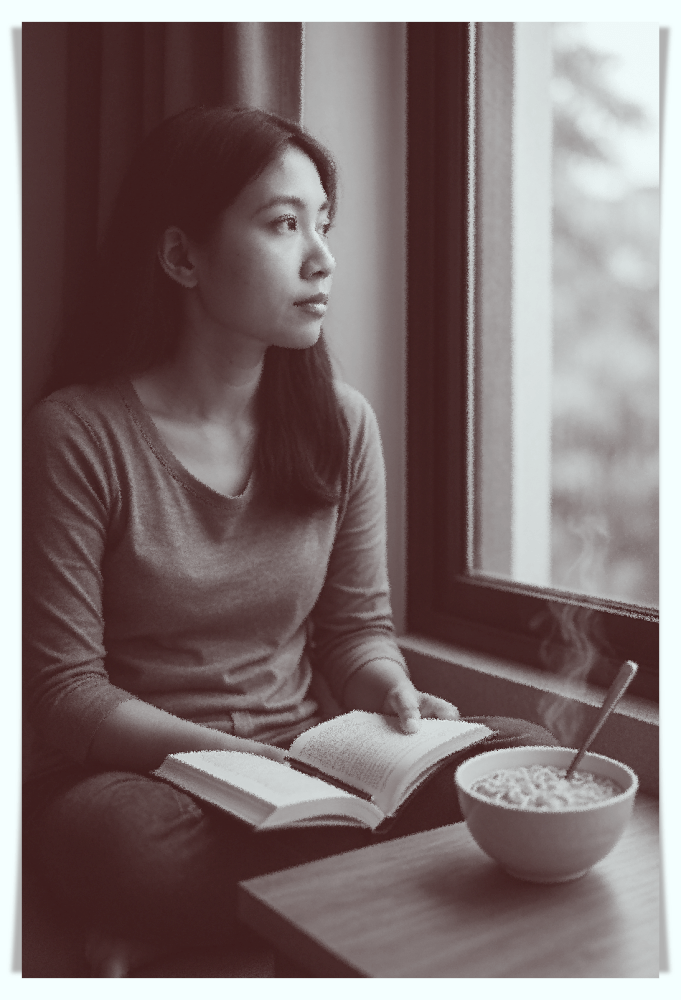
    It’s not the early morning rush that I love, but the peace that follows. If you are raising a family, you might be able to relate to this experience. My anxiety starts early in the day. I wake up at 5:30am before waking up my kids to get ready for school. I spend the first 30 minutes after waking up preparing breakfast for everyone and packing lunch for my husband. Everything is always in a rush. Once the kids have gone to school and my husband is off to work, the house slips into silence. I can finally sit with my breakfast. Sometimes planning the day, other times just flipping through a few pages of a book or writing down whatever is on my mind. It’s a moment that belongs only to me. And that peacefulness feels like an exhale I didn’t know I was holding. 

    2. Writing something true

    Writing is a way for me to make sense of my world. It’s a place where I feel safe to untangle my thoughts and pour out things as honestly as I can. Writing is undoubtedly one of the things that brings me complete happiness. It is even more profound when the words come from somewhere deeper—more honest and vulnerable. Whether it’s a poem, a story, or a blog post, writing gives shape to things I can’t always say aloud. 

    3) Walking among greenery

    I live in the suburb where trees and parks are abundant. There’s something about being surrounded by green that softens everything inside me. I walk slowly, letting my thoughts drift, and the tension I didn’t even realize I was carrying begins to dissolve. Nature has always been a balm and a way for me to come back to myself. 

    4) Beautiful sentences in a book

    I’m a voracious reader. Up until today, 12 April, I’ve finished reading seven books for this month. There is something about books and reading that’s so addictive. You know those lines that stop you mid-read? They are so breathtaking in their truth; they make you close the book for a second and just breathe them in. I live for those moments. It feels like someone is finally giving names to things I’ve felt but never said. I love underlining those sentences and returning to them later to savor them again.

    5) Meaningful connection

    We all thrive on meaningful connections. For me, it’s not about having long conversations, but those rare moments when someone truly sees me. Whether it’s with a friend, a reader, or someone who understands me without the need for explanation, those moments are truly meaningful to me. Those connections fill me up in ways that surface talk never could.

    These things may seem small, but they truly anchor me. They remind me that even on ordinary days, there’s still so much beauty to be grateful for. 

    The Girl Who Made Allies

    Daily writing prompt
    Describe something you learned in high school.

    I went to a boarding school from the ages of 13 to 17.

    There are plenty of things I could say about that time in my life, including lessons learned from teachers, moments of growth, and unforgettable teenage mischief. Living among hundreds of other teenagers means that learning is not limited to books alone. You learn from one another and sometimes you learn the hard way. 

    But if I had to pick one thing I learned that shaped me the most, it would be this: when you live far away from your family and the familiar world you came from, you must learn to survive. 

    Image source

    And I don’t simply mean doing your laundry, or budgeting your allowance, or having the discipline to study for exams. I mean learning how to survive socially. 

    Teenagers can be cruel. Such incidents can happen either unintentionally or intentionally. They might say something hurtful or make fun of you. They identify your insecurities and turn them into jokes. Maybe they think it’s harmless fun, but nothing is harmless when you’re the one being laughed at.

    In this environment, I learned very early about the importance of making alliances. Not in a shallow or cliquey manner but surrounding yourself with people you trust. You have to find a group of friends who support you and can pull you out of a downward spiral. 

    My allies helped me in surviving the hard, messy reality of growing up among other kids who were equally confused, hormonal, and emotionally immature as I was. Some kids were nice; others were not. But when you have a group of friends to fall back on, it makes life less shitty. 

    We were all going through a lot—changing bodies, volatile emotions, embarrassing crushes, homesickness, and struggles with identity. Having kind, faithful friends didn’t solve everything, but it certainly lessened the edges of the hard days. And that made all the difference. 

    I used to have many friends. This group included not only my classmates but also younger and older kids from various dorms or forms. I made an effort to stay on good terms with everyone. I kept myself out of the drama. I tried not to be a shitty person to anyone because I knew what it felt like to be on the receiving end of cruelty.

    Boys bullied me, but I wasn’t afraid of them—I even got into a few fights with them. If someone made fun of me, I fought straight back. I wasn’t aggressive, but I wanted to show them that I wouldn’t make it easy for them to have fun at my expense. They left me alone because I was someone they couldn’t easily pick on. 

    Looking back, I’m grateful for that version of myself. I was the girl who formed alliances and stood her ground. I was the girl who desired peace but wasn’t afraid to push back when necessary. 

    And I’m especially thankful to the friends who stuck by my side. They were the people who helped me get through sorrow, hormonal chaos, homesickness, and all the bizarre, wonderful mess of being a teenager. I’m still friends with many of them. I still talk to them regularly, decades after we left school. Some of them are now influential people in the community or becoming leaders. I’m so proud of them.

    That’s what I learned in high school. 

    Survival entails more than just getting through the academic stuff. Sometimes it’s simply finding out your tribe and learning how to be that person for others as well. 

    And as I grew older, I realized that what I learned in that chaotic, communal world of boarding school helped me lead life more effectively, particularly at work. I knew how to read a room, who to trust, how to set boundaries, and how to find my people in unexpected places. That early education in social survival proved to be one of the most valuable tools I carried with me into the real world. 

    Writing Myself Back Into Wholeness

    Daily writing prompt
    Describe one positive change you have made in your life.

    Image source

    “To express yourself, first you have to know yourself.” ~ Ethan Hawke

    For years, I spoke in half-truths. This was not due to dishonesty, but rather a belief that the world could not fully comprehend the depth of my emotions. 

    I used to censor myself, not because I was polite but because I was fearful. I was afraid of being misunderstood—of being too much or not enough. I spoke and wrote what I thought was acceptable. I shared what I believed was sufficient to maintain a safe distance. I was close enough to be your acquaintance or close enough to read, but never close enough to truly know me or see me.

    But eventually, something inside me shifted.

    The most positive shift in my life hasn’t been visible from the outside. It’s not a milestone or a new habit. The shift is internal and deeply personal. I was tired of telling myself lies, so I started telling the truth—to myself first and then on the page.

    I don’t write to seek validation. I write to describe how I feel, even if I don’t fully understand it. I write about things I used to feel ashamed of or guilty about, like longing, joy, or even grief. Writing became my way of breathing again, where I could process the things I was never allowed to say aloud. 

    I began to write for myself. I don’t care about approval or applause. I finally showed myself kindness by listening to the voice inside me that had been silent for too long. And in that listening, I let go of the idea that everything I write needs to be perfect. I made peace with my voice and gave myself permission to write messily with broken English and fragmented sentences. The point was to get the truth across. 

    In the past, I equated worth with perfection. If it wasn’t polished, it wasn’t worthy. But now, I see beauty in the rawness. I trust that my words, even the unpolished ones, still matter. And in letting go of perfection, I made space for something more important: honesty.

    Writing authentically is not the only positive shift in my life. I also gave myself permission to want more.

    I used to feel shame about my desires—emotional, intellectual, and physical. Especially physical. I thought craving intimacy made me selfish or inappropriate. A taboo. I told myself it wasn’t appropriate to want it so much at my age. I convinced myself my body should’ve quieted by now.

    But I’ve stopped silencing that part of myself. There is nothing wrong with having desire. It’s not something to be ashamed of. Desire is a sign that I am human— that I am still alive and that I am still curious. I finally accept that I’m a woman who feels deeply, who longs fiercely, and who no longer wants to apologize for it. 

    I also started being more honest in love. I used to hide my needs, swallow my sadness, and avoid confrontation. However, silence turned into resentment, and pretending not to feel only made me feel more alone. Now I speak my needs plainly, knowing no one can read minds. I also write about facets of love that are difficult and rarely celebrated in public. 

    And somewhere along the way, I discovered my voice. 

    My anonymous blog became my safe place. This is a place where I can write without worrying about who might be reading. I can express myself freely without worrying about receiving criticism for revealing too much or being too honest. In this space, I don’t write to offend or oppose anyone. I write to unburden and silence the inner critic that once kept me small.

    This blog is my safe space for healing. 

    And maybe the bravest thing I’ve ever done…is to let my healing speak for itself.

    The Way She Moves

    Daily writing prompt
    What’s the most fun way to exercise?

    In 2021, I started doing boxing workouts, not to compete in fights, but to regain confidence in myself. It’s been my way of regaining energy, confidence, and joy. This mini story offers a little insight beneath that fire.


    He walks with me to the gym, his hand brushing against mine every few steps. It’s enough to remind me that he’s here.

    The sun has set low behind the trees, enveloping everything in that golden hour glow I like. The city noise fades. My hoodie clings to my lower back, and my skin feels warm before I’ve even thrown a single punch. I see him eyeing me out of the corner of his eye, like he usually does.

    “You’re quiet,” I observe, glancing over.

    He grins. “Just thinking how hot you look when you’re about to ruin someone.”

    I roll my eyes but can’t control the smile that appears on my mouth. He knows. He’s seen me in the ring—gloves on, hair slick with sweat, arms sharp and fierce. He’s seen me transform into someone else. Or maybe become more of who I’ve always been, despite the weight of years, expectations, and softness I had to bear.

    We pause at a bench near the entrance. I sit and sip my water. He leans on the railing next to me, close but not touching. He’s giving me space to breathe. 

    “I used to hate this body,” I mutter softly. “I used to think it wasn’t mine. Huge, heavy, thick in the wrong places.”

    He does not interrupt.

    “Boxing gave it back to me. I no longer care about losing weight. All that matters is the fire in my blood, the energy and power it gives me. 

    He turns to face me, his eyes serious. “It shows. The way you carry yourself now. “It’s… magnetic.”

    I laugh. “Magnetic, huh?”

    “Absolutely.”

    I stand, slinging my towel over my shoulder. He leans closer.

    “Try not to knock anyone out in there.”

    “No promises.”

    And then I walk in, knowing he’s watching. I know he’ll be there when I’m done. And I know too that I’ve already won something far more important than a fight.


    And here’s a poem to accompany this story.

    Grit

    They said my body was a church.
    No, it was a battlefield—
    all pew and destruction.
    I learned to swing
    to pull breath from
    the edge of bruise,
    to let sweat baptize
    what shame could not.
    I fought like a searing fire,
    feral that dances,
    not soft or safe.

    He watches,
    as if I was the last
    honest thing
    he’d ever lay eyes on.

    Copyright © Olivia JD 2025
    All Rights Reserved.

    Becoming Celine

    Daily writing prompt
    If you could be a character from a book or film, who would you be? Why?

    If I could be a character from a book or film, I would be Celine from the Before Trilogy. Yes, I’d love to be Celine—Julie Delpy’s character in Before Sunrise, Before Sunset, and Before Midnight.

    Image source

    Those films stayed with me for many years since I discovered Before Sunrise in the early 2000s. That movie was released in 1995, a year after Reality Bites—another hit movie starring Ethan Hawke. Its sequel, Before Sunset, was released nine years later in 2004, and the final installment, Before Midnight, another nine years later in 2013.

    I adore the trilogy for its dreamy long walks, the poetic ramblings, the agonizing feeling of time passing, and also Celine’s character development. In Before Sunrise, she begins as a charming, idealistic Sorbonne undergraduate, wide-eyed and open-hearted. She was sweet and willing to talk to an American traveler, Jesse Wallace (Ethan Hawke), on a Eurail. They disembarked in Vienna to spend the night together and explore the mystery of what-if.

    And then nine years pass. 

    By Before Sunset, she has grown sharper. Her voice is steelier, and her eyes are more guarded. Life has touched and damaged her in many ways. But behind it all, she has the same curiosity, the desire to comprehend life, and what it means to belong to someone or not at all. Jesse is married and a writer now and has published a book about his experiences that fateful night nine years ago. Celine shows up at his book reading in Shakespeare & Co., watching and listening to him from the side of the room. And then their eyes met. That scene always gets me.

    “I always feel this pressure of being a strong and independent icon of womanhood, and without making it look my whole life is revolving around some guy. But loving someone, and being loved means so much to me. We always make fun of it and stuff. But isn’t everything we do in life a way to be loved a little more?”

    ― Julie Delpy, Before Sunrise & Before Sunset: Two Screenplays

    Image source

    Then came Before Midnight, another nine years later. Celine and Jesse are now in their forties and parents to twin daughters. Their conversations are no longer romantic musings under moonlight, but fueled by the reality of parenthood, aging, and the jadedness that settles into long-term love. They’re on holiday in Greece, but even the beautiful scenery can’t hide the fractures that have begun to appear. There’s tension, resentment, and emotional exhaustion.

    They take long walks and talk like they always have, but their conversation is no longer about dreams and philosophies. Now they talk about regret, sacrifice, and voids that love couldn’t fill. There’s a scene in a hotel room that feels like a slow, approaching storm. You begin to wonder, did Jesse cheat on her? Did Celine ever fully forgive him? Did they lose parts of themselves in choosing to stay?

    Despite their love, it’s evident that love isn’t always enough.

    Image source

    That’s what makes Celine feel so authentic to me. 

    Perhaps I see myself in her because I, too, often live in my head. I question everything—especially love. I pay attention to details and cherish them. 

    “You can never replace anyone because everyone is made up of such beautiful specific details.”

    ― Julie Delpy, Before Sunset

    I remember moments long after they have passed. I try to appear sensible, but I’m a huge romantic underneath it all. Like Celine, I struggle with guilt, restlessness, and the anguish of wanting something elusive. And like her, I strive to be honest, even if it hurts. 

    In another life, I could see myself in Paris. Walking by the Seine, notebook in hand, or perhaps sitting at Shakespeare & Co. with cold coffee beside me. I aspire to visit that bookstore one day. Just stand there and breathe in the pages.

    Celine isn’t perfect. She’s charmingly imperfect, impetuous, and multifaceted. But she’s also deeply present. She listens and sees people. Perhaps it’s what I admire most about her—she doesn’t run from questions. She asks, even if there are no answers.

    “I believe if there’s any kind of God it wouldn’t be in any of us, not you or me but just this little space in between. If there’s any kind of magic in this world it must be in the attempt of understanding someone sharing something. I know, it’s almost impossible to succeed but who cares really? The answer must be in the attempt.”

    ― Julie Delpy, Before Sunrise & Before Sunset: Two Screenplays

    And, if I could become her for a while, I wouldn’t do it for the romance or the cities. I’d choose it because of the way she continues to ask, feel, and try—even when the answers are ambiguous and love falters.

    That is exactly what I’m hoping for as well.

    To keep on walking.
    To keep on asking.
    To keep on becoming.