What Sparks My Admiration in Others

Image source

There are many qualities people celebrate in this world: confidence, achievement, ambition, and charm. I understand why those traits draw attention, but the things that spark my admiration are usually less noticeable, simpler, and harder to measure. I’m drawn to people who move through life in a steady, consistent way that is easy to miss. Their strength is not loud or dramatic. It does not demand attention. You feel it more than you see it, and it appears in small, everyday moments.

One quality I admire deeply is quiet strength. Some people carry difficult histories, but they never turn their pain into a performance. They don’t talk about what they have survived or how exhausting their days can be. They wake up and continue living with purpose. They make thoughtful choices. They speak gently even when life has not been kind to them. This kind of strength does not need recognition to exist. It reminds me that courage isn’t always fierce or loud. Sometimes it sits in the background, unnoticed but ever present. 

I also admire consistency. There are people who show up the same way regardless of what season they are in. They do not disappear when things become complicated, and they do not change their personality based on convenience. Their presence feels reliable, like a rhythm you can return to when everything else feels uncertain. Consistency requires emotional maturity and the willingness to take responsibility for your actions, which is why it is uncommon. When someone carries the same sincerity on ordinary days as they do on meaningful ones, it leaves an impression on me. It feels like witnessing integrity as a lived practice rather than an idea.

Another quality I value is the ability to handle emotional weight with grace. These are people who can sit through difficult conversations without becoming defensive or dismissive. They try to be honest with themselves and acknowledge their shortcomings instead of hiding behind excuses. They grow without needing applause. They apologize when they hurt anyone. They listen carefully and speak clearly. Seeing someone go through life with this level of emotional awareness feels like observing wisdom in action. It encourages me to reflect on my habits and to grow at a pace that feels true to me.

Another thing that draws me in is depth. I admire people who see the world in layers rather than quick snapshots. They pay attention to little things, like how the light moves through a window at a certain time of day, how someone’s tone changes when they’re trying to hide their sadness, or the meaning behind a seemingly ordinary gesture. They remember things that other people forget.  They ask sincere questions because they want to understand, not because they want to impress. You can tell that they are really paying attention. Being around them feels like exploring something together rather than exchanging information. I appreciate how they make room for complexity without turning it into confusion.

Authenticity is another trait I hold in high regard. I respect people who remain true to themselves even when the world pressures them to fit into narrow definitions of success, beauty, or worth. They do not pretend or shrink themselves to gain approval. They do not hide the parts of themselves that feel different. Living this way honestly takes courage, especially in environments that reward conformity. When I meet someone who seems comfortable in their skin, it reminds me to honor my path. Their presence gives others permission to be real as well.

These traits all share one thing: they don’t relate to performance. They show who they are slowly, through small actions instead of big ones. They come from character rather than image. They are lived, not displayed. I admire them because they feel human in a world that moves too rapidly for humanity. These qualities remind me of the kind of person I want to be: steady, focused, brave enough to change, and honest enough to stay true to myself.

Admiration is a gentle emotion. It comes softly, and I don’t always notice it right away. It happens when I see how someone deals with the stress of everyday life and how they cope with uncertainty. It also happens when I see how someone treats people who can’t provide them anything in return. It grows when kindness doesn’t seek attention and when strength doesn’t seek reward. It deepens whenever someone chooses integrity even when no one is watching.

When I contemplate what makes me admire something, I always come back to how simple it is. I like how people carry themselves. I admire the choices they make when it would be easier to pick something else. I notice moments where truth matters more than convenience. These are the qualities that remain with me. They might seem small at first glance, but they become meaningful when you truly see them.


I write about Iban culture, ancestral rituals, creative life, emotional truths, and the quiet transformations of love, motherhood, and identity. If this speaks to you, subscribe and journey with me.

What Beserara’ Bungai Taught Me About Letting Go

I used to think that rituals like beserara’ bungai were just old traditions that had no place in today’s world. Growing up, I believed they belonged to the past. I thought the Iban needed to leave them behind to move forward. Whenever elders talked about these beliefs, I felt restless. My world revolved around progress, education, and the principles of organized religion. I didn’t see the value of rituals, and I never took the time to understand what they really meant.

That mindset began to shift—slowly at first, then more clearly—as I read more about the Iban worldview. It wasn’t emotion or nostalgia that changed me, but understanding. I began to see that the Iban learned about life by watching the natural world. They noticed patterns in nature and connected them to how we live. For example, they saw how bamboo and banana plants grow in clusters. Each shoot is part of a single root system underground. If one shoot is unhealthy, it affects the others. When one dies, the root still supports new life. Death was not an ending but part of the cycle. This wasn’t superstition, but wisdom based on careful observation.

The bungai, the “plant-image” that represents each Iban person in the cosmic realm of Menjaya (the god of healing), began to make sense to me. I understood how it symbolized family and community. Each person is like a shoot, but we all come from the same root. When someone passes, the rest carry on, still connected. New life can grow from the same source. It’s a way of seeing life that is deeply connected and respectful of nature. The ancestors weren’t imagining things—they were describing the interconnected world they knew.

As I learned more, I started to feel a quiet pride in where I come from. I discovered that my ancestors included warriors and raja berani, people whose stories are still told in my family. I began to understand that even though I live far from my homeland, I am still part of that root system. This connection also extends to my children. They may not know all the customs or speak the language well, but the roots are still there. They are part of something that has been passed down through generations.

When I learned about beserara’ bungai, the ritual that separates the living from the dead, I felt something shift in me. This ritual is about care—not forgetting what we have lost. It helps both the living and the dead let go so they don’t hold each other back. The living need to keep moving forward, and the dead need peace on their journey to Sebayan. It’s a ritual of compassion that affirms the connection with the dead even as they journey on to the otherworld.

This understanding arrived at a time when I was wrestling with my own spiritual ties. I had been part of the same church community for many years. It shaped how I saw God, faith, and morality. But as I grew older, those teachings started to feel burdensome. I found myself questioning doctrines that encouraged separation from people who did not meet certain standards of spirituality. I began noticing the tension between fear-based expectations and the compassion-centered teachings of Jesus in the Gospels. As I continued to question, the burden of belonging to a system that no longer aligned with my conscience intensified.

Learning about beserara’ bungai gave me words for what I was feeling. I realized I was trying to protect my spirit. I wasn’t leaving faith behind—I was returning to what felt true. Jesus became the real rootstock. I wanted a faith grounded in his teachings: kindness, justice, presence, love, and compassion—not fear or guilt. I needed space to grow without feeling judged by a community that often equated questions with spiritual instability.

In a way, I’m experiencing my own kind of separation from the church rootstock. It is not a rejection of my past or of the people who have been a huge part of my life for the past two decades. It is a necessary separation so I can continue growing without feeling suffocated by expectations that no longer fit the life I am trying to build. I’m holding onto what still nourishes me and letting go of what drains me. The Iban worldview helped me understand that letting go can be a way of protecting both myself and the things I want to keep alive.

The more I reflect on it, the more I hope my children learn something different from what I learned in my early years of faith. I hope they are not afraid to ask questions. I hope they do not feel inferior in front of people who sound knowledgeable but speak without warmth. I want them to grow into a faith that welcomes curiosity, thoughtfulness, and conscience. I want them to recognize that their connection to God is direct, personal, and rooted in compassion—not fear. I want them to inherit a sense of strength that comes from understanding where they come from, both culturally and spiritually.

As I learn more about rituals like beserara’ bungai, I’ve come to understand that my ancestors didn’t divide life into “spiritual” and “ordinary.” Everything was connected. Life, death, nature, community, and spirit were all part of one whole. That way of seeing the world teaches me to live with care and humility. It shows me that letting go can be a loving act, and returning to our roots can take courage.


I write about Iban culture, ancestral rituals, creative life, emotional truths, and the quiet transformations of love, motherhood, and identity. If this speaks to you, subscribe and journey with me.
Aji Apai Limpa: The Ancestor I Wish I Could Meet

Image source

Some mornings begin with a calm sense of familiarity. The air is still cool from the night when I step outside. Dew gathers on the grass, clinging to each blade as if it has been waiting there. In Iban, we call it ambun, and I grew up believing that it is more than moisture. We believe that ambun holds memories and also the substance of our ancestors that find their way back into the living world. The elders in my family often spoke about the cycle of the soul. This belief is deeply held among the Saribas Iban, where my ancestors lived. When someone dies, their soul travels to Sebayan, the land of the dead, traditionally believed to be located at Batang Mandai in Kapuas, West Kalimantan, Borneo. Life in Sebayan mirrors life here. Souls continue living in longhouses, planting rice, raising families, and keeping the same rhythms they once had on earth.

This cycle is not eternal. The soul is believed to live and die seven times. After the seventh death, whatever remains dissolves into a fine mist that falls back to earth as ambun. The dew is especially meaningful at the end of the dry season, when families complete their planting and the land waits for water. The ambun nourishes the young paddy shoots, feeding the next generation. It is a beautiful belief, one I never questioned when I was young. I simply accepted that those who had gone before us returned quietly each morning. When I saw thick dew on the grass, I thought of people I loved who were no longer here, finding their way back to us through the rice we depended on.

I have been thinking about this belief again today because of a simple question from a blog prompt: If you could meet a historical figure, who would it be, and why? It is a straightforward question for most people, but for me, it brings up a feeling I can only describe as longing. In the history of the Iban, the figure I would choose is not distant. He is not a king, a philosopher, or someone from a faraway land. He is my ancestor. My great-great-great-grandfather, Aji Apai Limpa.

Aji was a well-known war leader of the Saribas Iban in the mid-nineteenth century. Between 1854 and 1858, he led his warriors against the advancing rule of the second White Rajah, Charles Brooke. His resistance was fierce and relentless. He died in 1858 in a battle at Sg. Langit. His bravery was not only remembered; it was immortalized in the oral traditions of the Iban. The lemambang (bards) recited his name in their ritual poetry. His courage became part of the narrative of our people, carried through chants and invocations, passed from one generation to the next.

If I could meet him, I would not meet him as a historical figure. I would meet him as an ancestor whose choices shaped the path that eventually led to me. I wonder what he was like as a person outside of battle. I wonder what he feared, what he hoped for, and what drove him to carry responsibility that heavy. The written records focus on warfare and resistance, but I imagine a man who also worried about his people, who made decisions that weighed on him, a man who had moments of doubt and understood that his actions would have consequences beyond his lifetime.

I would ask him what courage meant to him. I would ask him what it felt like to stand in front of his warriors and lead them into danger. I would ask him how he held his ground when the world around him was changing. And I would want to know what he thought about the legacy he would leave behind. There are times when people describe me as sharp or strong-willed, and I think about where those traits may have come from. Perhaps those traits were passed down from him to me, just as ambun returns to nourish the young paddy shoots without anyone noticing.

I think about the belief in Sebayan and how it shapes the way I imagine meeting him. I do not picture a physical meeting. I see it more as a recognition, something that happens inwardly through the echoes that live within us. When I feel the urge to protect my roots or speak about my heritage, I think that he might be part of that voice. The belief that the soul returns as dew makes the idea of connection feel less abstract. If ambun holds the last traces of our ancestors, we may encounter them repeatedly through the land, the rice, and the aspects of ourselves that seem older than our years.

The blog prompt seems simple, but it opens a deeper reflection for me. Meeting a historical figure means meeting someone who has shaped the world you inherited. For me, that figure is not distant or symbolic. He is the ancestor whose bloodline runs through mine, whose story lives on in my people’s poetry, and whose bravery still affects how I live my life.

When the ambun is heavy on the grass in the morning, I think about the souls who have traveled their full journey through Sebayan and returned to nourish the living. I imagine Aji among them. I think that in some small way, he is still here, still part of the cycle that continues without end. And in that sense, the meeting I long for might already be happening in the early morning, when the world is still and the dew falls softly on the ground.


I write about Iban culture, ancestral rituals, creative life, emotional truths, and the quiet transformations of love, motherhood, and identity. If this speaks to you, subscribe and journey with me.
On Cultural Erasure and the Right to Be Ourselves | We Are Not Yours to Claim and Rename

This week, a man on social media told me that all Indigenous peoples of Borneo are Malay. He spoke as if it were an unbreakable truth, and a few confident sentences could change centuries of culture and memory. He talked like someone who was certain of his place in the world and couldn’t imagine that others might have histories older than his own.

I am Iban. You can’t claim and rename my people.

That one conversation was a sign of a much larger issue. It wasn’t just a rude comment but the same old narrative that keeps playing beneath the surface of national conversations. This idea that everything in the Nusantara archipelago belongs under the Malay umbrella is not unity. It is colonization in a new form that continues to erase the cultures that make this region truly diverse.

A thesis essay titled “Cultural Genocide Against Ethnic Groups in Sarawak” discusses this gradual erasure as a form of genocide that occurs through language, law, and land instead of war. It addresses what has been happening in Sarawak and all over Borneo for decades: the gradual disappearance of Indigenous ways of life. There won’t be any violence in the news, but you can see it in how children forget their native languages and how native stories are rewritten or how they are dismissed as myths.

The first impact is on the land. Large-scale logging, oil-palm plantations, and hydroelectric projects like the Bakun and Murum dams have forced Indigenous communities to evacuate ancestral lands they had occupied for generations. For many outsiders, these are symbols of progress. For the people who lived on that land, they are the loss of a living relative. Land isn’t just property; it’s a memory, a source of livelihood, and the center of our beliefs. When it is taken, the connection between people and their ancestors, between rituals and the land, ceases to exist.

The next impact is on language. Malay and English are the main languages spoken in classrooms and offices. Iban, Bidayuh, Penan, and other Indigenous languages, on the other hand, remain in private spaces. The national curriculum rarely acknowledges them. A language is more than just words; it also embodies every aspect of our heritage. When children grow up without it, they lose not only vocabulary but also the worldview embedded in those sounds. 

The third impact is spirituality. Before Christianity and Islam arrived, our ancestors believed in a cosmology that connected people, nature, and the unseen. The adat guided balance and respect. Several elements were based on Hindu-Buddhist beliefs from the Majapahit and Minangkabau traditions, but those influences became uniquely our own, shaped by our environment. If you call these beliefs primitive, you are ignoring how sophisticated they are. Long before the word existed, they taught people about law, ethics, and ecology. The suppression of these systems has shattered more than trust; it has destroyed the bridge between generations.

The last impact lies in invisibility. Bureaucracy rarely speaks the language of the natives. Many still struggle to gain recognition of their customary land rights or even simple documents like birth certificates and identity cards. People who don’t have these papers become ghosts in their own country—unseen in census numbers and uncounted in national decisions.

Taken together, these forces create the silent machinery of cultural genocide. It’s not about individual malice but about a system that values uniformity over diversity and control over respect. When progress is measured only by infrastructure and profit, it becomes a form of forgetting.

I write this not to sow division, but to call for honesty. Respect for Indigenous tribes and their histories is not charity but a moral obligation.  When you erase a culture, you do not create unity. You create emptiness. Real harmony happens when differences can exist side by side, without one overtaking the other.

If you have mixed roots and feel like you’re torn between two identities, know this: you’re not a poser. You are the result of two or more heritages coming together. You have the strength of several worlds inside you. You have every right to learn your ancestral language, honor both sides of your heritage, and talk about it with pride. You can still reach your roots and the journey begins with curiosity and grows through community.

And to those who continue to insist that “everyone is Malay,” listen up: you are not defending tradition; you are performing a modern version of the same colonial mindset you claim to oppose. Claiming and renaming others is not leadership. It’s theft. It is a refusal to accept that different roots can live together without merging into one trunk.

The Iban, Bidayuh, Kenyah, Penan, Lun Bawang, Melanau, Kelabit, and countless other groups are not extensions of a larger race. We are nations within a nation, with histories that predate borders. We have our own gods and deities, our own literature, our own rituals and way of life. We don’t need anyone to save us from ourselves.

So take care of your own culture and let us take care of ours. Guard your own identity and let us stay as ourselves. You don’t have to tell us what to believe, how to speak, or how to conduct our affairs. Preserve your own heritage and quit trying to claim ownership of what doesn’t belong to you.

This moment in our history calls for courage. We need courage to listen, fix what has been distorted, and return whatever is rightfully ours. We don’t need anyone’s permission to exist. Even when others pretend to forget, we remember. We will continue to speak, to write, to sing, and to exist in our own rhythm. We are not lesser branches of your tree. We are forests in our own right.


I write about Iban culture, ancestral rituals, creative life, emotional truths, and the quiet transformations of love, motherhood, and identity. If this speaks to you, subscribe and journey with me.

The Risks I Haven’t Taken Yet

When we talk about risks, people often think of something brave or daring like skydiving, quitting a job to travel, or moving to a new country. Those are great choices, but the kind of risk I think about isn’t loud or exciting. It’s quiet, personal, and deep inside me.

The first risk I want to take is to be honest and tell the truth. Not the polite kind that makes things easier, and not the one that hides behind metaphors to avoid being judged. I want to be honest about how I feel and what I believe, even if it makes people who think they know me uncomfortable.

For a long time, I’ve written about love, faith, culture, motherhood, and identity. Writing has always helped me remember and make sense of things. But I’ve also noticed how often I hold back. I choose my words carefully. I filter and rewrite. I tell my stories in ways that feel safe because I’m afraid of being misunderstood or seen as disrespectful. I was taught to value peace, and I learned early that honesty was not always as safe as obedience. But as I grow older, I realize that silence can also be a form of dishonesty.

I want to talk about how faith changes, how love doesn’t fit into neat boxes, and how I’ve changed as a person after years of trying to please everyone. I no longer want to hide behind my writing. I want my voice to sound like it belongs to someone who has lived, made mistakes, and learned from them. Of course, the risk is that people won’t like what they read. But that’s a risk I’m finally willing to take, because what I write now is not for approval—it’s for truth.

The second risk is more physical. I want to get a tattoo.

It might sound simple, but it means a lot to me. I’ve wanted one for years, but I hesitated because of my religious beliefs. For a long time, I thought it was wrong. I thought my body should remain unmarked. Over time, though, my faith changed. It became simpler, gentler, and more personal. It no longer revolves around rules or fear; it revolves around love and truth. And part of that truth is that I want to mark my body in a way that tells my story.

When I finally get a tattoo, it won’t be something trendy or meaningless. It will be something that ties me to my heritage. I won’t use traditional Iban motifs that were meant for men, because I deeply respect the cultural and spiritual meaning behind those designs. But I’ve thought about creating something inspired by them—perhaps the tali nyawa spiral from the bungai terung, which represents the rope of life, or a design based on the buah engkabang, a forest fruit from Borneo with wing-like shapes that symbolize growth and resilience. Both carry meanings that reflect my life, my culture, and the changes that have shaped me.

I also like the idea of tattooing the coordinates of my parents’ longhouses—one for my father and one for my mother. Two longhouses in two different villages, both by the rivers that have run through my family’s history. It feels like mapping where I come from, a way to connect with the places that made me who I am. It would remind me of my roots and, in a strange way, serve as a promise that I will never lose them.

And to be completely honest, the practical side of it gives me comfort too. If I ever died far from home without identification, the coordinates would at least tell someone where I belong. It sounds morbid, but the thought brings me peace. It feels like a way of saying, “If you find me, bring me home.”

I plan to get the tattoo when I turn fifty. That gives me time to think, refine the design, and make sure it feels right. It will also mark a milestone: fifty years of living, growing, and learning to live on my own terms. The tattoo will not just be art on my skin; it will be a story written in ink, one that connects my body, spirit, and heritage.

These two risks—telling the truth and marking my skin—feel deeply connected. Both are about claiming ownership of who I am. Both are about letting go of the fear of how others might see me. I no longer want to live quietly in the background, trying to make everyone happy. I want to speak with honesty and carry symbols that reflect the life I’ve lived and the ancestors who came before me.

Risk might not always mean danger or being careless. It could be as simple as having the courage to live in a way that is true to who you are. That’s the risk I want to take.


I write about Iban culture, ancestral rituals, creative life, emotional truths, and the quiet transformations of love, motherhood, and identity. If this speaks to you, subscribe and journey with me.

What Most People Don’t See

Most people think I’m soft by nature. They think that gentleness is something I was born with. When people read my poems or see my drawings, they often describe them as whimsical, calm, tender, or peaceful. I don’t correct them. It is true in a way, but not the whole truth.

Softness was not something that came naturally to me. It took me years to realize that it can exist with pain. It took even longer to choose it on purpose. I learned it through exhaustion, heartbreak, and slowly putting myself back together after each disappointment. My softness is not passive. It’s a choice I made like a defiance against the hardness that threatened my heart once.

When I was younger, I thought survival meant staying guarded. I thought that being kind would let the world take advantage of me, so I learned to keep my feelings to myself and not talk as much. I became observant and cautious, studying people before deciding if it’s safe to let others in. I had that habit for years without understanding how difficult it was to break.

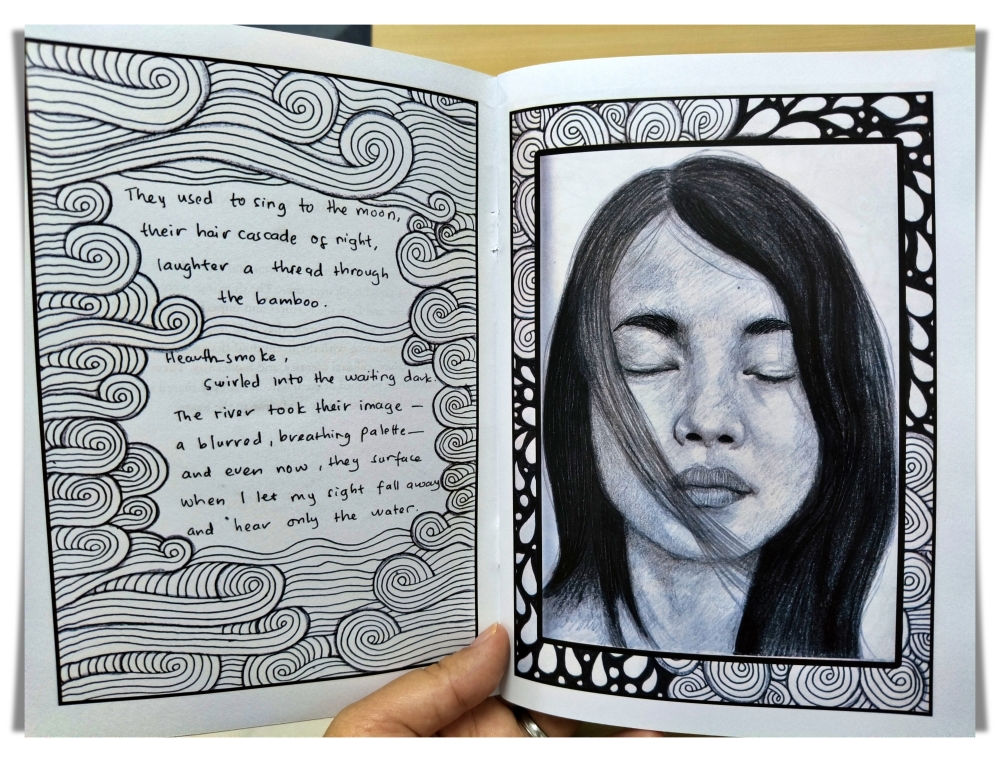
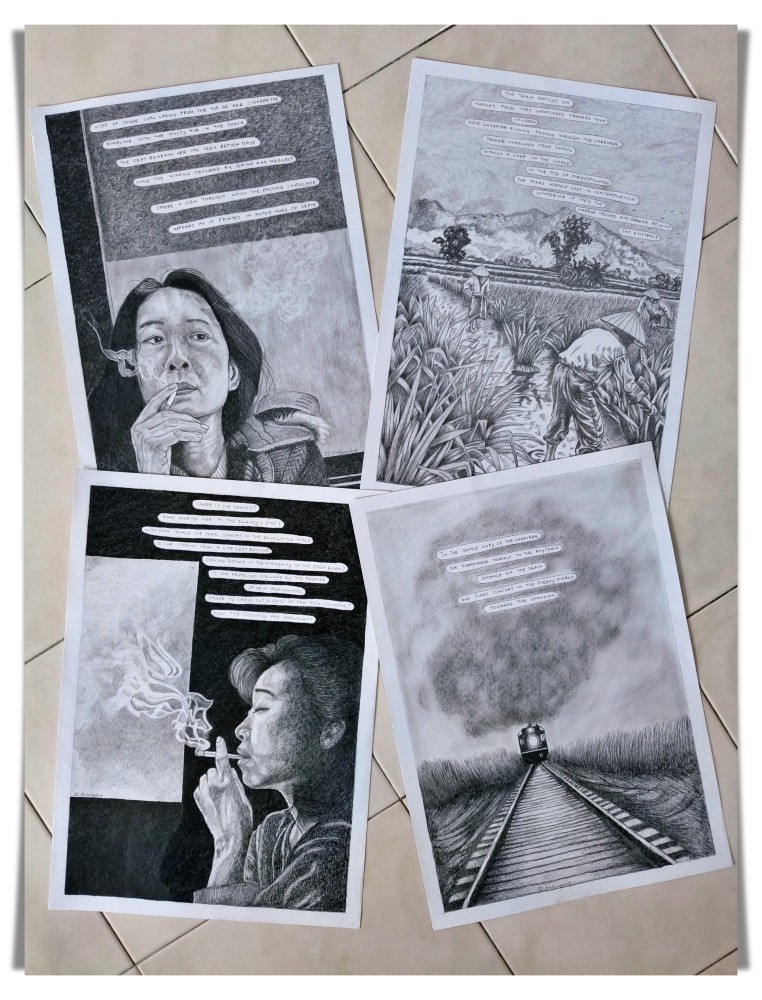
Art eventually taught me that erecting walls doesn’t always keep you secure. Sometimes it comes from creating something that is honest enough to show who you really are. I find peace when I write, draw, or pair my poems with drawings (“poetry art”). The page doesn’t judge or demand that I do well. It only needs me to be present. That silent conversation between me and the page taught me that being gentle can be strong. It could mend what silence had only kept concealed.

Still, I often feel like I don’t really belong anywhere. I was born into an Iban culture that is rich and layered, but the world I live in now moves quickly and values things differently. I write mostly in English, think partly in Malay, and dream in Iban, a language that doesn’t belong in the world I live in. Every day, I move between these spaces, trying to find balance between them. I can see both the person I used to be and the person I’ve become in these two mirrors, but never both at the same time.

This in-between space is where I create from. It’s where the poems and art begin. I write about rituals, rivers, tattoos, and stories from my ancestors since they are all part of who I am. I draw and write about love and longing because they are a part of the world I live in now. My art is an attempt to bring these two worlds close enough to touch. Even if it’s just for a moment, each poem or drawing is a small way to feel like I belong.

Many people ask me what makes me want to keep creating. The truth is that I create art to feel grounded. Writing helps me return to myself when I start to drift too far from the person I want to be. It reminds me that I still have something to say, even if I don’t say it out loud. Every time I write, I rediscover that softness and strength are not opposites. They are two parts of the same language, which I am still learning to speak fluently.

I’ve learned that belonging doesn’t always mean having a fixed place or community. It could mean accepting that your identity is still changing. Or it could mean carrying your culture and memories in your work, even if those around you don’t always see where they come from. It could also mean finding peace in creating without expecting approval from others.

Most people don’t know these things about me because I rarely share them. But they exist in everything I create. The older I get, the less I feel like I have to explain myself to everyone or to gain approval from anybody. I just need to keep making work that feels honest and can stand as a small reflection of where I’ve been and who I’m becoming.

Softness or gentleness doesn’t mean you don’t feel pain. It is the space that remains vulnerable and courageous despite it. And belonging, for me, will probably always be in that space between the languages I speak, the places I’ve lived, and the stories I continue to tell.


I write about Iban culture, ancestral rituals, creative life, emotional truths, and the quiet transformations of love, motherhood, and identity. If this speaks to you, subscribe and journey with me.

Why Malaysians Can’t Debate and What Literature Has to Do with It

I have been thinking about this sentence for days: Literature is vital to the development of civilization. It sounds lofty and almost too academic, but the truth of it becomes painfully clear when you look at what’s going on around us right now. In Malaysia, social media has become a chaotic place where people shout at each other, often without understanding what they are shouting about. The topics change every week, from the Israel-Palestine conflict to alcohol to race to religion, but the pattern stays the same. The loudest voices get the most attention, and the most aggressive ones dominate the space. It doesn’t feel like engaging in conversation and more like moral warfare.

Every time you scroll through Threads or Facebook, you see another argument about who’s right and who’s wrong. There are a lot of insults, accusations, and name-calling in the debates. Malaysian netizens have been calling each other kafir, Yahudi Laknatullah or Zionist sympathizers, pemabuk, tak sedar diri, and poyo just for saying something that doesn’t fit into the dominant narrative. The moral superiority that oozes from these posts is exhausting. Many Malays—though NOT ALL—seem to think that their views are the most righteous and anyone who questions them is automatically condemned. This behavior is so common that it is now seen as virtuous.

Seeing all of this happen has made me deeply weary. There are times when I want to say something, stand up for those who are insulted, and fight against racism and hypocrisy. But I never do. I stop myself every time I want to type a response. I know that trying to reason with people who don’t want to understand is a waste of time. I also know that entering a discussion driven by anger will only drain me. Still, I can’t help but think about why our public discourse is so shallow and why we as a society seem incapable of having difficult conversations without turning them into battles. I think the answer has to do with our relationship with reading and literature.

Literature teaches us how to think, to see beyond ourselves, and how to listen to others even when we disagree. It teaches patience, builds creativity and empathy.  Reading widely and deeply helps people learn to see things from multiple perspectives at the same time. They understand subtleties. They acknowledge there are no absolutes in life. In a society that values literature, debates are chances to learn and grow. But in a society that lacks interest in literature, discussions turn into shouting matches. Without the habit of reading, people struggle to form coherent arguments. They react with their feelings, not their brains. Instead of engaging, they attack. They want to be validated, not told the truth.

The lack of reading in Malaysia is not a new issue. We all know the statistics. In 2024, Malaysia ranks 6th among nine Southeast Asian countries in a survey by CEOWORLD magazine, with an average of only 5 books read per year. There are Malaysians who proudly say they haven’t read a book since school. Many bookstores close down, and libraries stay empty. People who do read often stick to light, motivational books that make them feel good without challenging them.  Literature that makes us think, makes us uncomfortable, and makes us question ourselves is deemed boring or irrelevant. When we lose the habit of reading such works, we lose something crucial: the ability to think beyond our experience. And when that happens on a large scale, it affects how a nation speaks, argues, and grows.

The decline of reading is not only a cultural issue; it is a civilizational one. A society that stops reading is easy to manipulate. It forgets how to ask questions, or how to separate truth from propaganda, and how to think for itself. That’s when people start using emotional slogans and moral policing to show who’s in power. We can see this now in how some Malaysians use religion and race as weapons to silence others. The line between being morally right and being self-righteous gets blurry. People get hooked on how good it feels to be right. They use religion to protect themselves and their identity to attack others. In that environment, there is no room for contemplation or compassion. The only thing that is left is the sense of supremacy or dominance.

I often think about how literature could change this landscape. One novel or poem can’t solve racism or fanaticism, but it can help. It can make us pause and remind us that every opinion comes from one individual with a story. When we read stories from perspectives different from ours, we are forced to see the world in a wider frame. That is the beginning of understanding. Civilization moves forward not through arguments or viral posts, but through the slow work of broadening our minds.

I have learned how to use my frustration to write. Instead of arguing online, I write essays, poems, and reflections about the things that are important to me, like memory, stories, experiences, identity, culture, and belonging. I write from my Iban perspective because that’s how I see the world. I know that my writing won’t go viral, and I’m okay with that. I do work that may seem trivial to others, but it is important to me. It is my way of preserving a voice that might go unheard in the noise of bickering Malaysia.

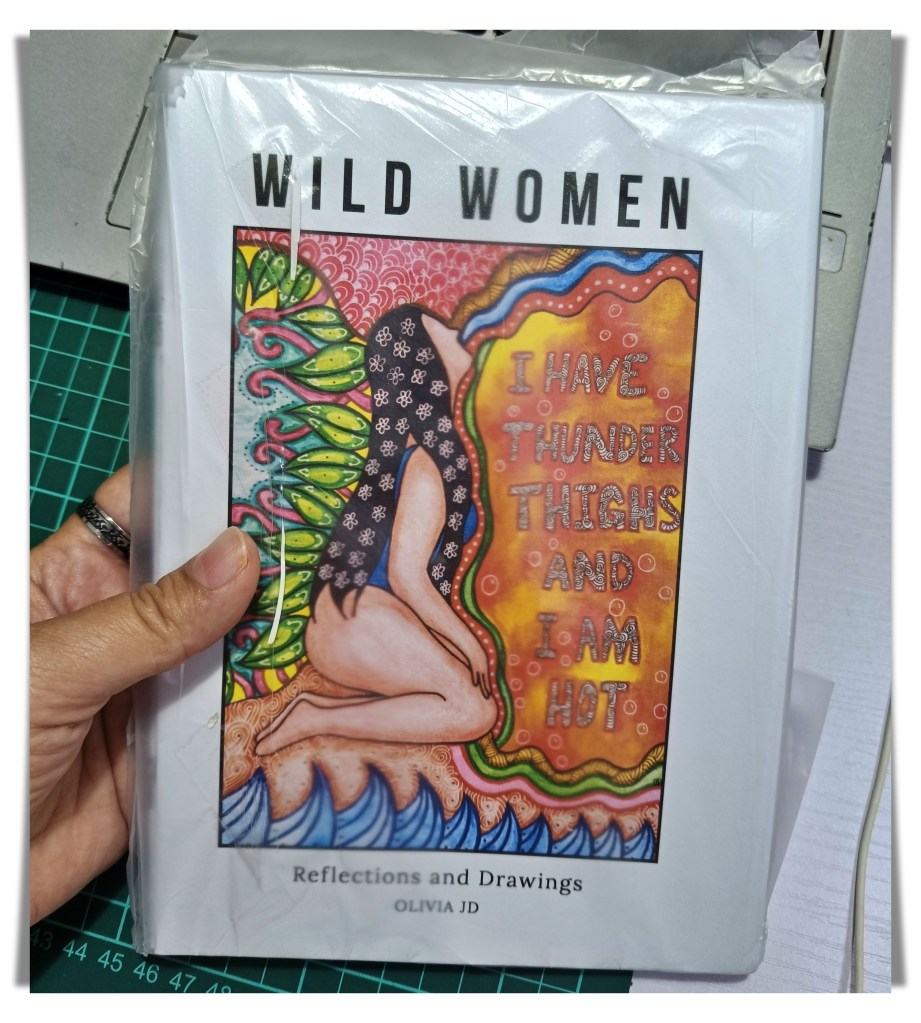
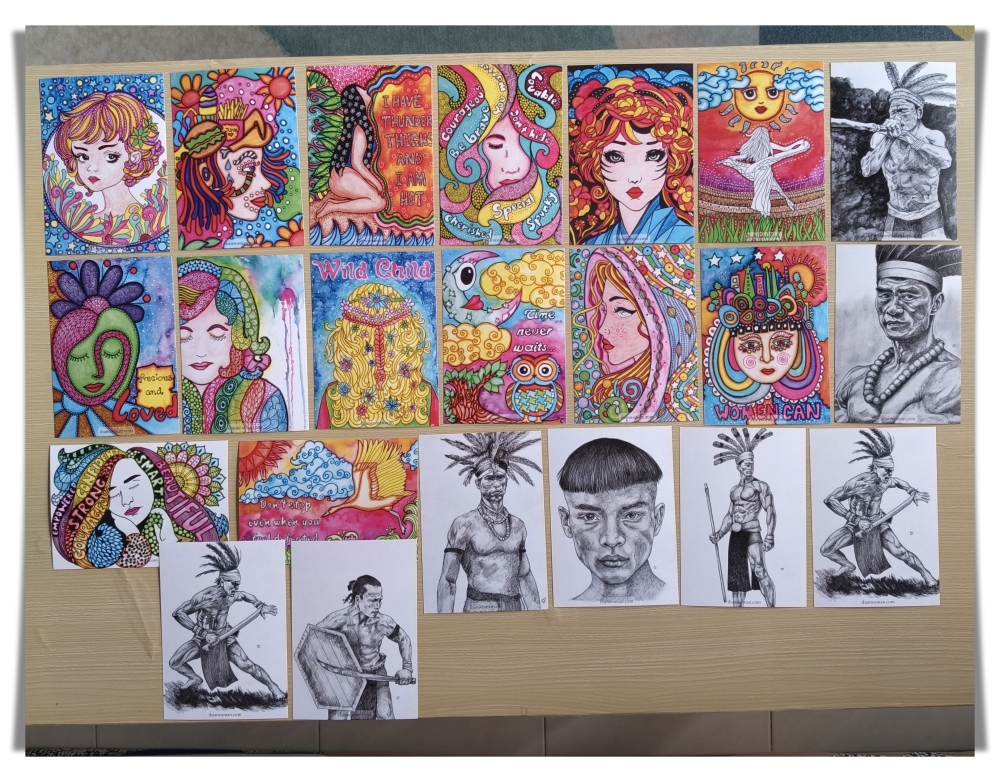
Some days I wonder if my work matters. Even though I’ve published some art-related books, exhibited my art a couple of times, been featured in a newspaper and a magazine and two radio interviews—I’m still relatively obscure. I don’t belong to any literary groups. I only have my blogs and a small space on social media. It might not seem like much. But the more I think about it, the more I realize that literature starts right here: in small feats of expression and the bravery to write the truth even when no one is paying attention. Civilization does not develop solely from great orations. It grows from regular people who choose to share their stories, write down their thoughts, and share what they know. My poems and essays may not reach many people right now, but they carry pieces of history, language, and culture that should live on.

Choosing not to argue online doesn’t mean you’re weak. I choose to protect my peace and integrity on purpose. I don’t want to give up insight for outrage. If you have to lose your dignity to win an argument, it’s not worth it. I want to put my energy into something that will last. For me, writing is a way to get that energy back. It lets me deal with the world without getting stuck in its noise. It reminds me that silence, when it comes from being aware, is not the same as being absent. It is a form of strength.

The past week has reminded me that Malaysia is still struggling to mature in its discourse. Racism, feeling morally superior, and needing to control others through shame all show how weak our collective thinking still is. But I also think that change starts with small steps. Anyone who reads with an open mind helps make that change happen. Every writer who doesn’t give up helps society become more thoughtful, even if it takes a long time.

Literature is not entertainment for the elite. It is the basis of empathy and the record of human complexity. It is also the space where we learn to think beyond survival. Without it, civilization loses its soul. We might still have cities, technology, and institutions, but we wouldn’t have the inner structure that allows a society to reflect and grow. That’s what I see happening around me now: a country that is loud but empty and full of opinionated people but sadly, uninformed.

I don’t expect everyone to understand why I write or why I stay quiet when things are crazy. I do it because I believe that words have a slow power and they move differently. Words help us to remember who we are and who we could be.

I hope that when the noise dies down and the arguments stop, what is left is not anger. I hope what is left is the persistency of those who kept writing and reading. Literature may not change everything, but it is still the soul of civilization. Without it, we lose not only our stories but also our ability to envision a wiser, kinder world.


I write about Iban culture, ancestral rituals, creative life, emotional truths, and the quiet transformations of love, motherhood, and identity. If this speaks to you, subscribe and journey with me.
The Skill I Want to Learn | Remembering My Roots

When I first read the prompt, “What skill would you like to learn?” I hesitated. My mind didn’t wander to something new, like playing an instrument or taking up pottery. Instead, it returned to what has recently taken up the most of my heart and time: immersing myself in my people’s stories. I’ve been documenting my family history, translating Iban folktales into English and Malay, and researching the animistic beliefs that influenced how my ancestors lived in the past. It may not seem like a skill in the traditional sense, but it needs patience, dedication, and a consistent commitment to learning.

This kind of learning doesn’t feel like adding something new to my life; it feels more like uncovering something that was always there. I now realize that remembering is a skill in and of itself. It requires listening, interpreting, and writing in a way that stays true to the original voice while still making sense in today’s language. It is a craft that requires me to sit with pieces—sometimes just a phrase, a half-remembered childhood folktale, or a story told from one elder to another—and give them structure without losing their meaning.

In the past couple of years, I’ve been interested in customs, dreams, and oral traditions that were once a big part of the Iban’s daily life. Our ancestors believed that dreams weren’t just random things our brains conjured but guidance or warnings from the spirit world. To learn about these beliefs is to learn how closely they were tied to nature, animals, rivers, and things we can’t see. It’s not easy to translate stories like this. Each word has layers, and when you put them in a different language, each layer can change the meaning. I’m learning how to translate not just words but also worlds.

This process has shown me that preservation is an active skill. You can’t just admire a culture from afar or talk about heritage in general terms. To preserve heritage, you have to write it down, understand it, and pass it on. I know that these stories could disappear at any time if no one bothers to pass them on. It feels like weaving: taking loose strands and tying them together to make something strong enough to last.

I think often of my children. I picture them reading these writings one day and seeing parts of themselves reflected back. They might read about how brave their ancestors were or the rituals that used to guide community life. This could make them feel both wonder and a sense of belonging. That hope keeps me going. I don’t want them to get just bits and pieces. I want them to have a living archive that they can go back to when they feel rootless or want to know more about themselves. In this way, writing is both a gift and an inheritance.

This learning also helps me understand my own role in the chain. I’m not just preserving stories for the future; I’m also standing in the middle, receiving them from the past. There is humility in this position. Sometimes the stories seem too big for me to tell or too sacred to put into words. Sometimes I feel like I’m not qualified, like I’m trespassing on something I don’t fully understand. I feel like an imposter. But then I remember that this is also part of the task. Even if you’re not sure, simply paying attention is a form of dedication.

There are also challenges. To translate, you need to do research, compare things carefully, and sometimes spend a long time staring at a confusing sentence. Writing family histories requires being careful and accurate when deciding which details to include and which to leave out, as well as how to honor different voices in the same story. It’s not glamorous to learn these skills, but they make me more patient and give me more respect for those who came before me.

I’ve also been thinking about how I write. As someone who doesn’t speak English as their first language, I’ve had a hard time developing a consistent style. I wonder if my words will ever sound as smooth or polished as those of people who grew up with the language. But the more I write, the more I see that my culture and heritage are not barriers but strengths. They give me a writing voice that is shaped by the rhythms of the Iban language or by the oral storytelling traditions. These are the things that set my writing apart from a lot of other people who write about the same things. I could only come into my own when I embraced who I truly am: an Iban woman rich with cultural memory and life experience.

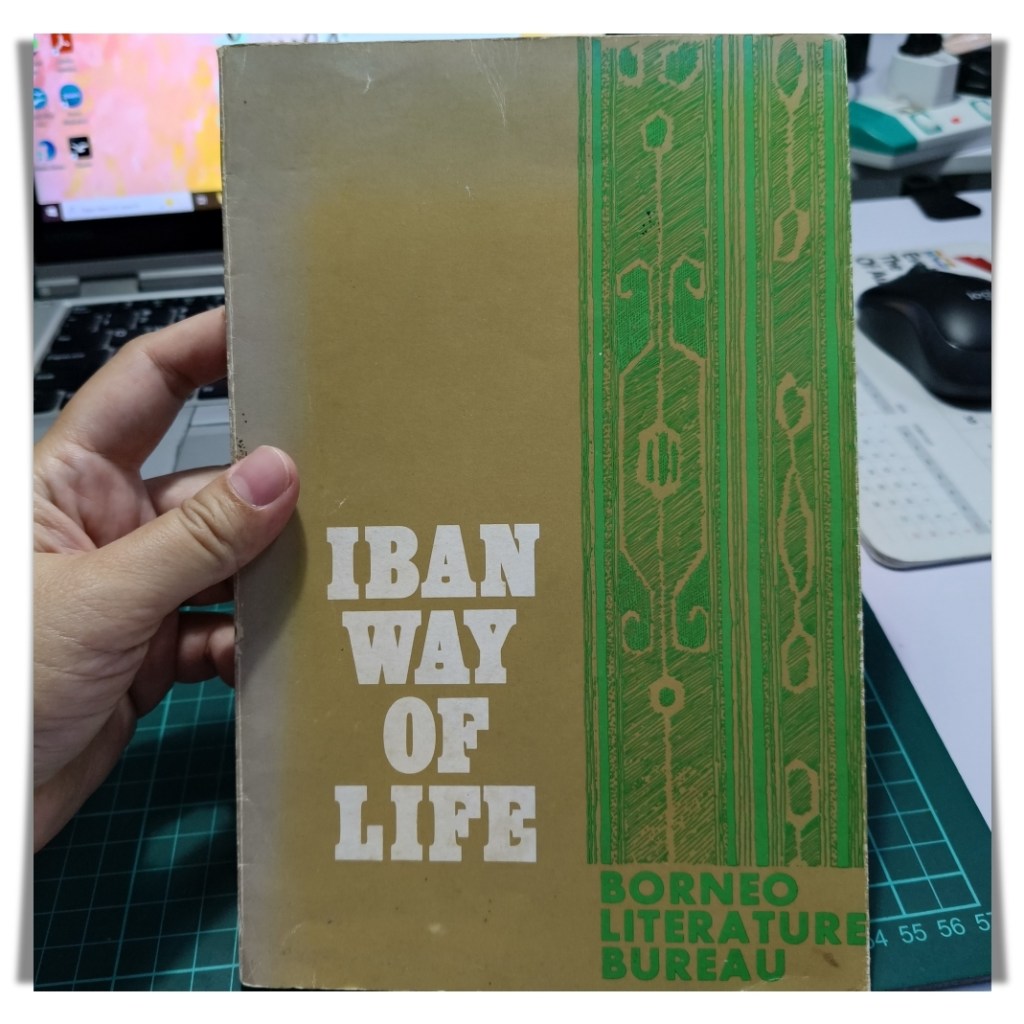
I’m also thankful for the resources that make this work possible. Old books, articles, and museum archives have been lifesavers for me because they have helped me learn things I couldn’t have found on my own. There are many people who worked hard and spent time writing down and putting together our culture into words. I wouldn’t be able to keep writing if they didn’t do their part. This gratitude keeps me focused and reminds me that I am part of a much bigger effort to keep culture alive.

If I had to sum up what I’m learning, I’d say that three things stand out. First, the ability to really listen to what is said and what isn’t said. Second, the ability to translate not only between languages but also between different meanings. Third, the skill of preserving, which means having the courage to hold memory in your hands and carefully write about it for the future generations. And now, maybe a fourth: the ability to trust my own writing voice, even when it sounds different than the ones expected.

So when I answer the prompt, “What skill would you like to learn?” my answer isn’t easy to show. I want to keep learning how to remember things. I want to get better at writing authentically, listening closely, honoring my culture, and sharing what I can while I am still here. These skills may not make a lot of impact, but they are important. They might not get a lot of praise, but they could keep a culture alive.


I write about Iban culture, ancestral rituals, creative life, emotional truths, and the quiet transformations of love, motherhood, and identity. If this speaks to you, subscribe and journey with me.
I’d Rather Be Doubted Than Silent

Not too long ago, someone flagged a piece I wrote. There was nothing mean in that piece, and I didn’t break any rules. Can you guess what the reason is? Because it was too well written for a non-native English writer. Ridiculous! But someone really thought it didn’t sound like it came from me.

I didn’t respond publicly. I didn’t start a thread or reply to her accusation to defend myself. I didn’t even remove the post. What I did do was let the shame sink in. Today I want to write about it. I don’t intend to reopen a wound but I want to acknowledge the silent damage that stays with you when someone tells you that this can’t be yours. 

Writing has been a part of my life since I was a child. I wrote in journals, on pieces of paper, and as letters to myself. I write as naturally as I breathe. Sometimes as letters to myself. Sometimes raw. Sometimes lyrical and poetic. Sometimes with confidence or insecurity. They are all mine. Always. So when someone flagged my post for sounding too polished, I was in disbelief. Like it was some kind of a joke. I didn’t quite know how to describe it. Because if I dug deeper, I knew it wasn’t about that particular post, but what that skepticism implied—that my voice, my lived experience, my hard work, and my growth couldn’t possibly be real. 

That I, as an Indigenous woman, mother, artist, and non-native English writer/speaker, couldn’t write with depth, nuance, or clarity without cheating. That if my writing sounded confident, careful, or flawless, it had to be fake or AI-generated. 

The fear that comes from that is weird. It doesn’t rage or roar loudly. It feels like something petty that you should quietly let go. However, it lingers in the shadows of your next sentence. Should I simplify this sentence? Should I cut the metaphor? Should I get rid of this em dash or that Oxford comma so it doesn’t sound AI-ish? 

Should I water myself down to avoid suspicion?

I hate that I have those thoughts right now. But I know I’m not the only one. I’ve seen it in other writers as well, especially those who write from the margins: obscure and unknown. Or in those who write in a language that is foreign to them. I’ve seen it in the ones who tell hard truths through rhythm, restraint, and image. Or those who write not to impress, but to stay alive. We’re often told to write honestly but punished when we do it well. We’re told to share our stories but questioned when our pieces are too good. We are told to write in our voice, but only if that voice sounds a certain way. 

There are too many gatekeepers who claim to be defenders. People who think they’re protecting literature when they’re really just reinforcing old hierarchies in place. 

They think people like me who didn’t grow up with English can’t produce good stories or poems. That if I do, God forbid, that must have been AI generated. That’s bloody censorship. It’s not imposed by platforms but by what they internalize. Prejudice. Don’t write like that. That sounds too good to be written by you. 

Some of us shrink before we even begin. 

I’m done dumbing myself down. I never write to impress anyone. I use it to express my truth. And the truth is that it has taken me years to find the right words. Years spent with memories. Years spent revising, rewriting, and returning to the page—not to make it sound perfect, but to sound like the real me. 

If that voice has become sharper, it’s because I’ve earned it. If it sounds clear, that’s because I’ve been carrying fog for too long. If it rings true, it’s because I wrote long hours struggling with myself to put truth into words. 

To the ones who doubted me: I won’t name you, but fuck you, paloi ko ya, and remember this—every time you silence a writer who has finally found her voice, you aren’t protecting integrity. You’re only showing how little you believe in growth, change, and acceptance. People grow, even those of us you didn’t expect to. 

Sometimes I can still feel the sting of that rejection. But I won’t feel ashamed anymore. And this voice you hear now—shaped by memory, motherhood, culture, and survival—is real. I’d rather be doubted than stay silent. 


I write about Iban culture, ancestral rituals, creative life, emotional truths, and the quiet transformations of love, motherhood, and identity. If this speaks to you, subscribe and journey with me.
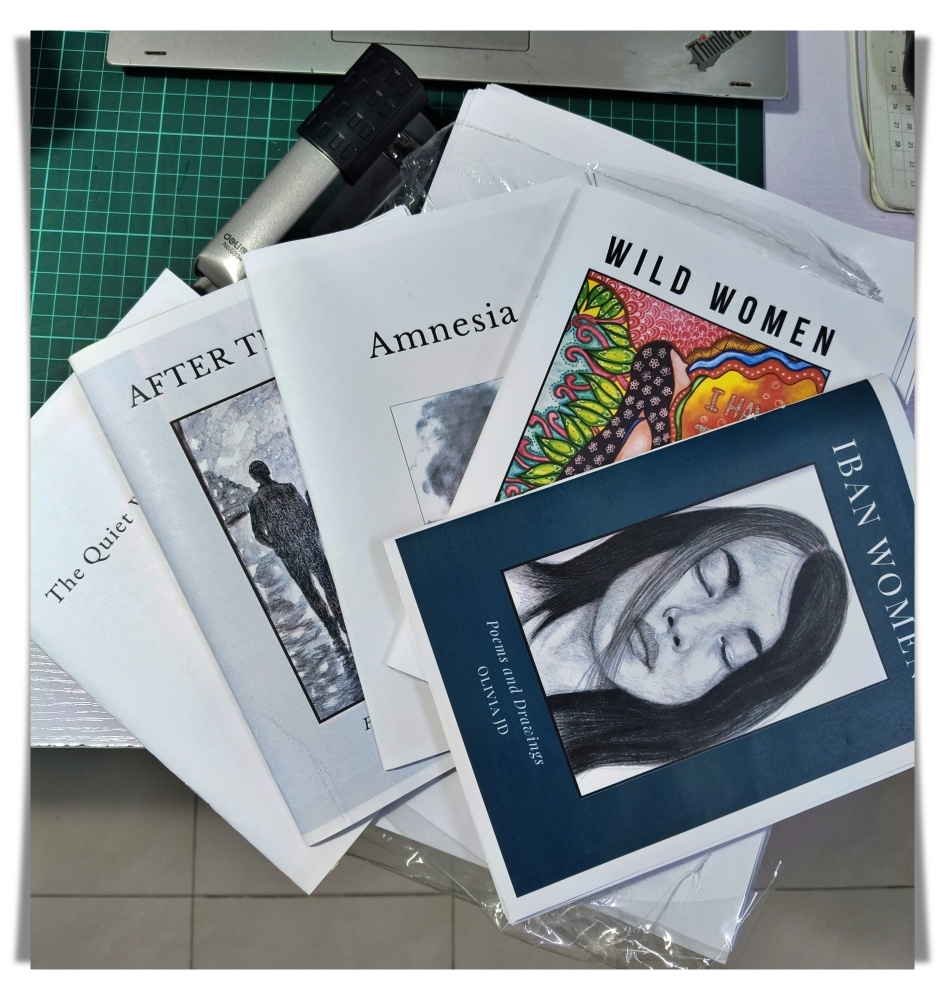
The Farthest I’ve Been From Home

I always feel like I have to do more. Write more, draw more, make more, improve more, and perform more. There’s always something I haven’t finished. A file I haven’t uploaded, a design I need to tweak, a poem I must refine, a post I need to write, a plan I need to make. The list goes on for days and weeks, and even when I finish one thing, another takes its place before I can breathe.

I wake up thinking about it. I go to bed, still mentally rearranging tasks. I convince myself I am being responsible. I convince myself that I’m doing what I love. I tell myself that this is what I have chosen. But to be honest, most days all I want is to be done. I’m done with the expectations. I’m done with continually showing up. I’m done with the excessive urge to be productive. Everything seems to be extremely tiring, and I’ve almost reached the limit of what my mental, emotional, and physical state could cope with. 

Most days, all I really want to do is read in bed in the afternoon. I want to let myself fall asleep while a book slips from my grasp. I want to wake up when I want to, not when the alarm goes off or someone needs me. I want to stop feeling guilty for taking a break. I want to stop seeing time as something I owe to others. 

It sounds easy, right? Not at all, because I’ve built a life where I have to earn my rest. I keep telling myself that I don’t deserve to stop until everything is done. I’ve always believed that slowing down was a sign of weakness and that being worn out was proof that I was accomplishing enough.

Maybe it’s aging or the weariness of parenting. Maybe it’s the silent accumulation of years spent prioritizing the needs of others. However, these days I don’t dream of escape or achievement. I want silence. I want weightlessness. I want the freedom to stop carrying everything for everyone all the time. Sometimes I think the farthest I’ve ever been from home isn’t an actual place, but rather this version of myself that feels I must earn my rest.

Even when I traveled far, like when I lived in other countries, stayed in new cities, or walked streets where no one knew my name—I still carried the same urge to prove my worth. I wish I could go back and tell the younger version of myself that you don’t have to fill every moment. Your life doesn’t have to be a performance. You’re allowed to exist without having to produce or create anything. You’re free to just be. 

The truth is, I’m struggling to believe it now. I can’t convince myself that it’s okay to read in bed anytime I want, and I doze off when my eyes feel heavy. I’m struggling to believe that everything I’ve built won’t fall apart if I do nothing for a few hours. Because if I never feel free in my creative life, what good is it?

I experienced that same heaviness after lunch today. I guess it stems from sheer exhaustion. 

I looked at my to-do list. I looked at my computer. And then I looked away. I carried a novel and jumped into bed. I let the afternoon go. I could always write and draw something new tomorrow. They all could wait. And right now, I need to read. And sleep. 


I write about Iban culture, ancestral rituals, creative life, emotional truths, and the quiet transformations of love, motherhood, and identity. If this speaks to you, subscribe and journey with me.