When I Was Five, I Was Just Trying to Survive 5 Languages

Daily writing prompt
When you were five, what did you want to be when you grew up?

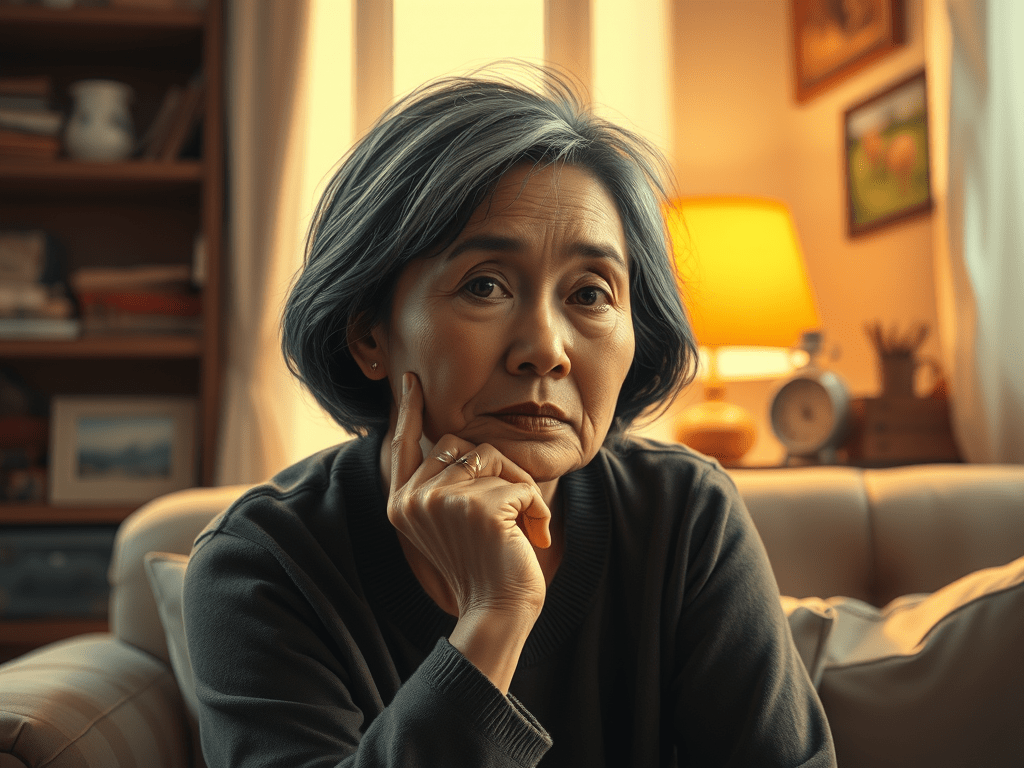
Anne Sexton, one of my favorite poets. Image source.

I don’t remember what I wanted to be when I was five.

Maybe that’s because nobody asked. Or maybe because the word “ambition” didn’t exist in my world yet. It wasn’t a concept that came naturally to me. At five, I was navigating five languages all at once.

I started kindergarten at five, never dreaming of jobs or what I wanted to be when I grew up. I didn’t see it as something odd back then, but living in a multicultural country, I (and every Malaysian kid) was already exposed to different languages at a young age. My mother tongue was Iban and Malay was the national language. However, I was sent to a Chinese (Mandarin) speaking kindergarten. At the same time, I was learning English, my third language. On top of all that, many of my classmates spoke in another dialect—Sarawak Malay, which sounded nothing like the formal Malay I read in books. At the tender age of five, I was exposed to five different languages or dialects all at once: Iban, Malay, Mandarin, English, and Sarawak Malay.

I was grappling with words. My head was full of unfamiliar sounds, new rules, and foreign grammar. Maybe I didn’t have space for dreams then because I was too busy trying to understand the world through different languages.

Things started to shift when I turned eight. That’s when my mother made me a library card.

I was too young to go to the library on my own, so every couple of weeks, she borrowed two books for me—one in Malay, the other in English. I don’t remember what the first books were, but I remember how it felt—the excitement of holding stories in my hands. This is when I learned to lose myself in other people’s words and slowly began to find my own. I was a voracious reader and continued to devour books after books in the years to come.

I didn’t know I wanted to be a writer until my teens. And even then, it wasn’t ambition—it was longing. Since the age of 10, I had started to write poems and stories on the side. I never imagined it could be more than a hobby. I come from a place where literature isn’t part of daily life, where writing isn’t seen as a real path. Writers, I believed, didn’t make money and there was no future in it. So I studied computing instead because it was practical and could land me a great career—which it did.

But I kept writing. Privately. For fun.

Then the era of the Internet came, and with it, a different kind of freedom. I started blogging in 2008, but when the children came, I had to set it aside to raise them. However, I went back to it in 2017 and wrote actively on a platform for years. I gained a decent following (2000+) and was getting paid for my work. It was a very nice side gig until the platform’s new policy made me rethink my direction. When you were using a platform that wasn’t yours, you had to endure the whims of those in charge. So I started this little home here, in my own corner of the internet.

Since the pandemic, I’ve published four poems in literary journals and am currently working on a novella. I’m writing more poems and submitting them to literary journals for publication.

Writing may not pay the bills, but it pays in ways that matter more. It connects me to myself and gives me the courage to face my truths and share them with the world. Writing fills me in the ways that matter most.

So no, I don’t remember what I wanted to be when I was five.

But maybe I’m becoming it now.

The Loneliness That Lives Inside Love

Daily writing prompt
What’s something most people don’t understand?

Image source

Most people don’t understand that you can love someone deeply, share a life with them, raise children together, sleep side by side every night—and still feel alone.

You still feel alone—not because they don’t love you or they don’t try. It’s because they can’t meet some of your deepest needs. Again, this is not because they’re unwilling or are dense but because that’s not how they’re built. That’s not who they are. You can’t force people to be what they are not. 

This post is not meant to bash my husband.

My husband and I had been together for 26 years. That’s a long time to share a life. Throughout our marriage, he carries many burdens. He works hard and often under tremendous pressure. He provides and makes sure we have what we need. The kids and I never lack anything and I see that and never take it for granted. Every time he comes home from work, no matter how exhausted he is, he still smiles and gives me a warm hug. When the kids were little, they would race to the door to greet him. And sometimes they still do, even as teenagers. I know what that kind of weight does to a person—the pressure of being the provider and the silent burden of responsibility.

But I carry a lot of weight too. And most of them are invisible. It’s emotional and mental load. The labor of noticing, of anticipating needs, of asking questions to diffuse stress, soothing tensions, bridging gaps.

People rarely see that part. They think that if a marriage lasts, it must be balanced. But many don’t realize that love doesn’t always mean symmetry. 

My husband is a sweet, sweet man. He is not cruel or careless. He simply wasn’t taught how to sit inside discomfort and witness pain without attempting to fix or fleeing from it. He tries in his own way by cracking awkward jokes, physical closeness, showing up with food or spoiling me rotten. And I’ve learned, over the years, to see the love in those things.

But I must be honest and as a writer, confronting my deepest truth is necessary. I want more than physical efforts or gestures. I want to be seen and not just supported. I want conversations that delve deep and not just coexistence. I want someone to meet me at the door of my inner world and not be afraid to come in. 

Am I being bitter and writing all these down under the cloak of anonymity? Certainly not. We discussed this many times and he’s admitted he can’t meet me there because he is who he is and not built that way. And I acknowledge and accept him as who he truly is. And with acceptance, there is peace. Because I know I haven’t met all of his needs either. Marriage always goes both ways.

Most people don’t understand that kind of grief. It’s the grief that comes with loving someone who can’t meet you where you are. It’s bittersweet and lonely. That loneliness doesn’t scream—it’s just there, aches, and lingers.

But even within that grief, there is love. There’s kindness, history, forgiveness, effort, sacrifice, and acceptance of all that is good and bad. I love him so much. We are trying. Maybe not always in the same way, but still—we try each and every day. 

We both carry weight. His is visible, important, and perhaps measurable in the eyes of the world. Mine is not. And that’s what most people don’t understand. 


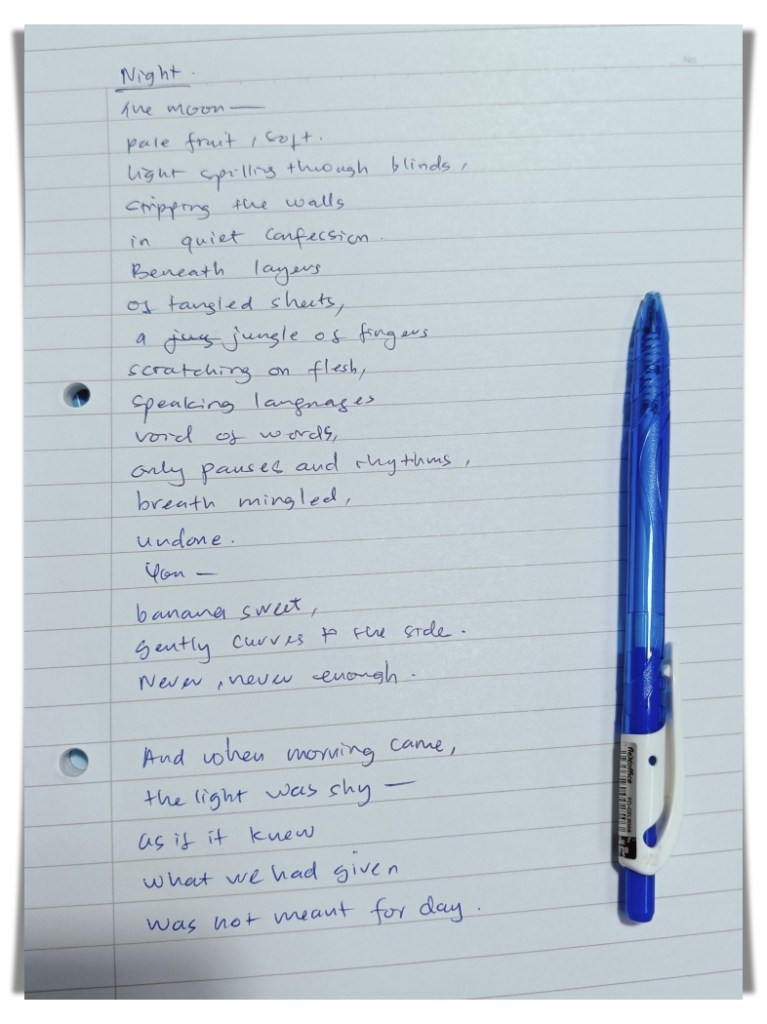
I wrote this poem to accompany this post. Here you go:

Marriage

I fold the laundry—
his shirts, inside out,
boxers with holes,
T-shirts over-stretched,
but we wear them anyway—
like this marriage—
flawed, warm in its own weather.

My mind jumbled with lists—
he doesn’t see them.

He brings home groceries
but forgets the eggs.
The kale is yellowing on the edges.
When good mood returns
he touches my hip like a question,
but never waits for the answer.

Still, he comes home.

Every night,
hanging his silence next to mine.
We sit.
We eat.
Scroll through our newsfeed.

I carry the emotional X-rays,
the careful calibration of my moods
to his weather.

But he carries things too—
numbers, bills,
the fear of shame
of not being the man
his father never taught him to be.

We are not broken,
only bruised by expectation.

And still,
he holds the child when I break,
warms the bed before I slip in.
Calls me “babe”.
In return,
I still reach for his length
to soothe myself to sleep.

So no—
I don’t need rescue.
This is the truthful
opening of the hearts
of two people
carrying what they can.

He lifts the roof.
I hold the floor.

And in the middle,
we meet.

Copyright © Olivia JD 2025
All Rights Reserved.

You are welcome to subscribe to my blog if my words resonate with you. Thank you.

When I Am an Older Woman, I Shall Continue to Write with AI

Daily writing prompt
How has technology changed your job?

I know my title is going to ruffle some feathers, but hear me out. 

“When I am an old woman, I shall wear purple…” Jenny Joseph wrote these words in her best-loved poem, Warning. She wrote it as a form of rebellion and a declaration that she no longer needed permission to be who she is. She used the poem to assert her freedom to live, dress, and speak on her own terms. 

I found this poem after stumbling upon a video of Helena Bonham Carter reading it.

As someone in her late 40s, I think about that poem more often these days. No, I don’t feel old (well, slightly). I’m no spring chicken anymore, but I think of that poem because I feel done. Done asking for permission, done explaining myself, done seeking validation—to and from anyone. This sentiment is especially true when it comes to how I write. 

Here is my declaration: I use AI, and I am not ashamed of it.

I’ve written about this before—here—when I discussed the growing tendency to shame people for using AI in their creative work. I’ve watched from the sidelines as creatives everywhere bickered among themselves about who is original versus who is not (read: cheaters). Right versus wrong.

It’s as if we’re all secretly cheating on some literary or art exam, as if the tools we use somehow invalidate the core essence or soul of what we’re trying to say or illustrate.

Let me be clear: I don’t condone copying and pasting from a chatbot and claiming it as your own. That’s not my message. I advocate for the ethical use of AI—as a thinking partner, a sounding board, a tool that helps me do the work I’ve always done, just faster and more efficiently. 

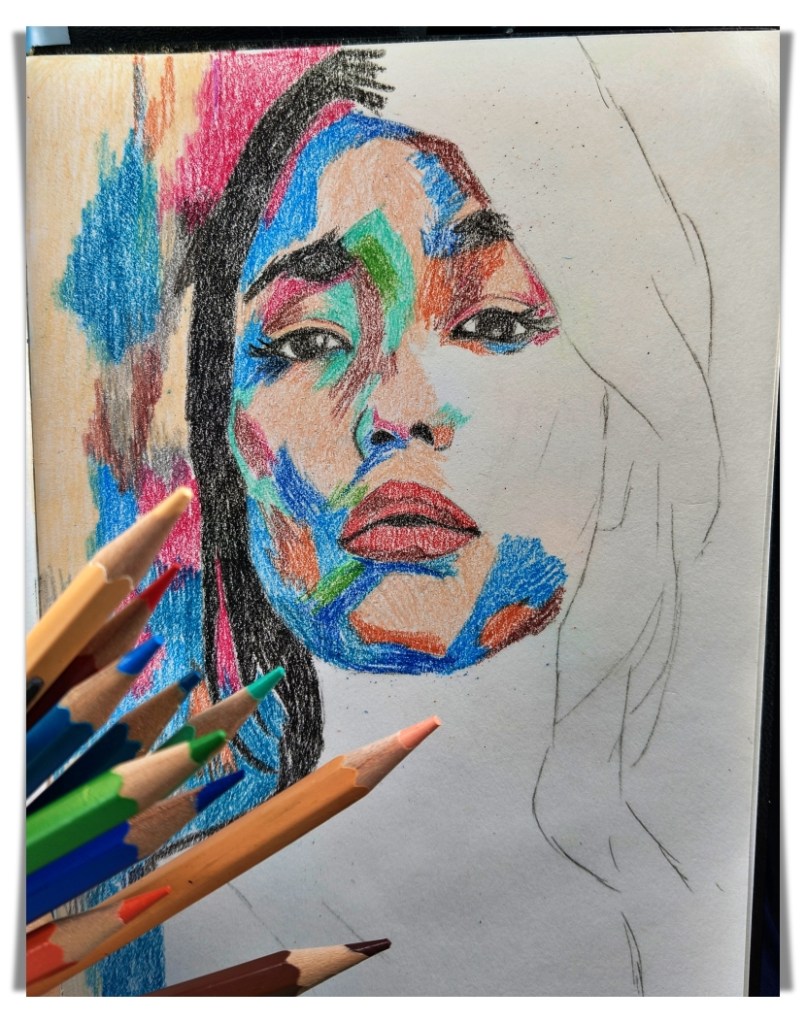
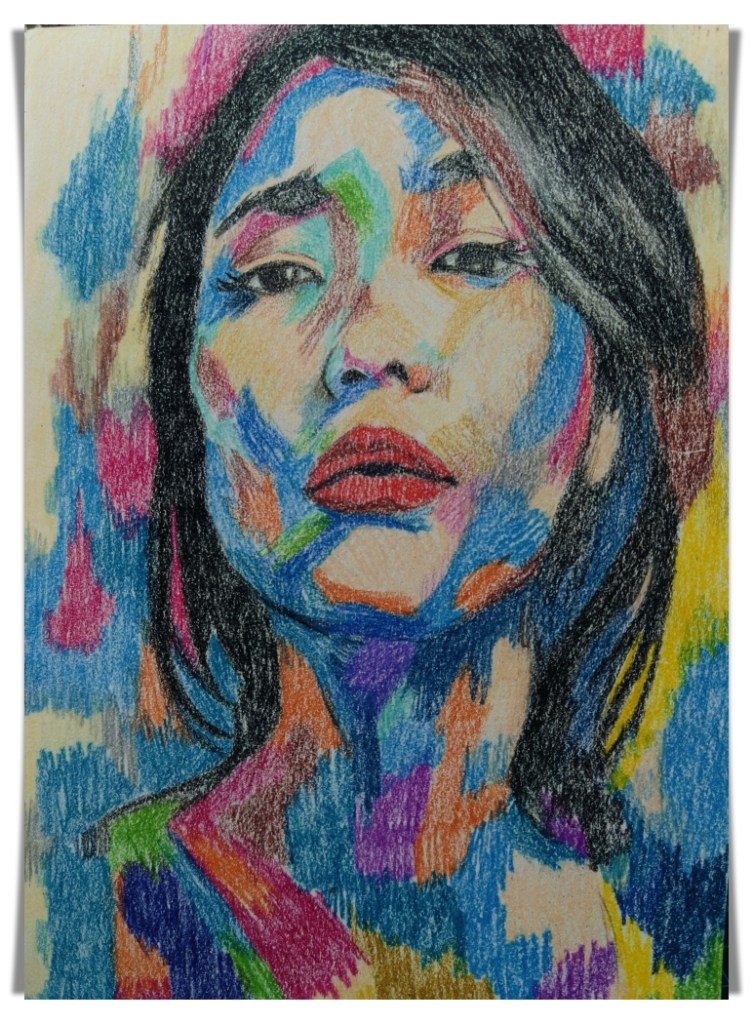
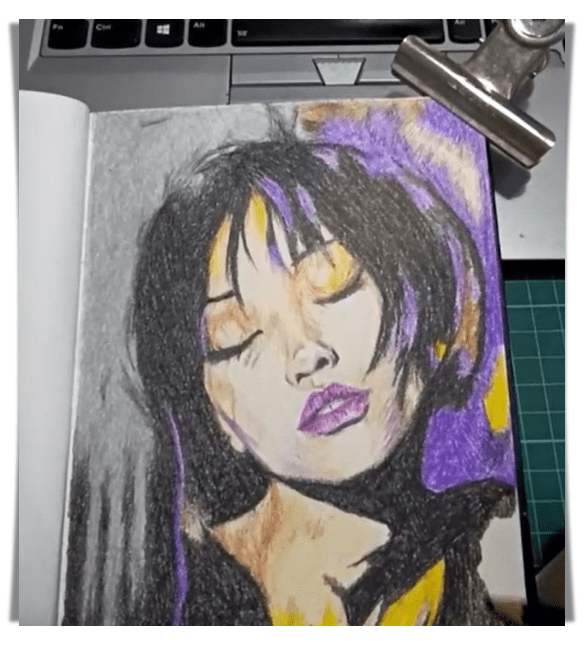
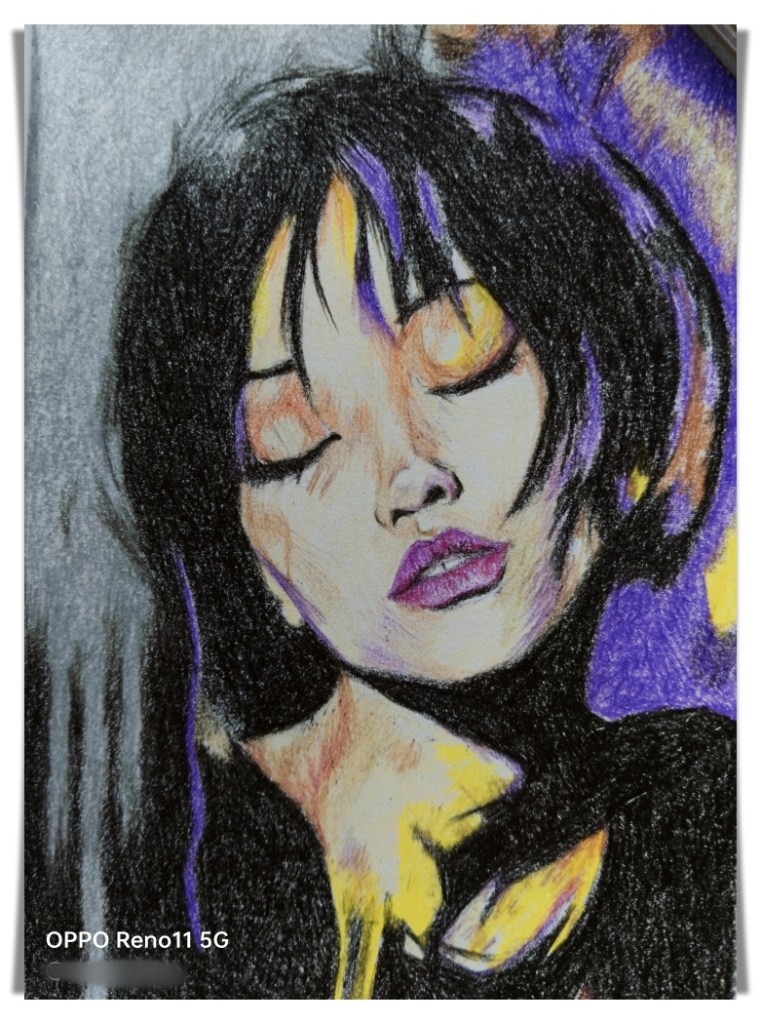
I’m a portrait artist too. This is one of my past works.

AI helps me brainstorm. It guides me in structuring my ideas, refining my voice, and clarifying my points. It helps me generate new angles I might have overlooked when I’m struggling with perimenopausal brain fog. AI also reminds me to be grateful that I live in an era where I have access to high-tech tools and that my creativity doesn’t have to work alone.

Could I do all these things without AI? Absolutely. But it would take me days. And often, time is a luxury I can’t afford—not with work, family, responsibilities, and a thousand other things that make up my life. I’ve written this before and I’m repeating it again:

AI is helping more people to express themselves than ever before. Why are we writing? We write to express our emotions, share stories, and communicate ideas. I enjoy writing, and I do so on a daily basis. I want everyone to have that right and that joy, regardless of their circumstances. We can’t all go on long writing retreats by the sea, with our spouses pouring us delicious cups of coffee. The reality for most of us is that writing can be difficult. Maybe we have kids tugging at our clothes, maybe we’re exhausted from a full-time job, maybe we didn’t have great opportunities in school. Maybe English isn’t our first language—like me, an indigenous woman from an obscure tribe in Borneo—or maybe we’re fighting dyslexia, ADHD, or arthritis just to get the words on the page.

So I use what’s available, with intention and discernment. And I keep writing and making art. 

AI is a tool, just like Photoshop is to photographers. No one accuses a skilled photographer of cheating when they enhance their work using Photoshop. The tool doesn’t make the art, but it helps bring the artist’s vision to life. It’s the same with me. I brainstorm and discuss my ideas with a chatbot (ChatGPT, Gemini, DeepSeek) before writing my own work. Then I refine it using tools like QuillBot or Grammarly. Others might prefer ProWriting Aid. These are just part of the process—like spellcheck, revision, or editing.

To my fellow middle-aged friends—especially those of us who’ve lived long enough to know what we want but are still figuring out how to say it—don’t be afraid of AI or feel ashamed of using it. Never let someone else’s discomfort dictate how you create. We have to speak boldly, not shrink.

The truth is, AI is here to stay. We can’t put it back in the box and pretend it doesn’t exist. There is no going back to a world before it. And if you can’t go against it, make it your ally. Use it wisely, and with integrity.

That’s what Jenny Joseph was really talking about, wasn’t she? The unapologetic freedom.

When I am an older woman—well, older than I am now—I shall continue to write with AI. I shall ignore the gatekeepers and the purists. I shall write freely, fiercely, authentically, and without shame. And I shall wear purple.

Just because I can.

I handwrote all of my writing, including this blog post, before editing it using QuillBot.

The Word He Chose for Me

Daily writing prompt
What is one word that describes you?

I’ve never been able to describe myself in just one word. Maybe because I am too many things at once. Or maybe because I don’t see myself the way others do. The way I feel changes depending on the circumstances in my life, and often these circumstances involve family and those I hold dear. My feelings also shift depending on the things that weigh heavily on my mind. They could be anything—the weather, financial challenges, the news, or health issues. Some days, I am quiet and contemplative. Other days, I am restless with anxiety, burning with the need to create, to write, or to complete whatever in my to-do list. How could I ever reduce myself to a single word?

As an INFJ, I am made of many layers, each one revealing itself to different people in different ways. To some, I am reserved and intense. To others, I am something else entirely. I exist in fragments—never fully visible all at once. Perhaps that’s why I struggle to define myself. I am never just one thing.

So I asked him.

One word that describes me without hesitation. I want him to tell me the first thing that comes to mind when he thinks of me.


The room is quiet. The late afternoon light is slipping through the curtains and spilling across the floorboards. It illuminates the dust dancing in the air. The breeze blows the curtain gently, playing with the edge, lifting it, and letting it fall. It cools down my skin where the sweat still clings. His chest rises and falls under my cheek. The sheets lie twisted. Half are on the floor, while the remaining ones are still clinging to us.

I don’t know why I ask, but the question comes out before I can stop them.

Tell me. One word only. What’s one word to describe me?”

He pauses for a second. “Unforgettable.”

I didn’t expect that. I don’t move or look up. I let it sink into me before curiosity bubbles up.

Why?”

Because once someone knows you, they can’t go back to a time before you.”

The curtain lifts again. The breeze is brushing over us. His hand moves to my back, caressing. The light is fading now. I close my eyes and press my cheek closer to his heart.


Unforgettable.

It caught me off guard because I had never thought of myself that way. I had never thought that I could leave an impression on someone so deeply that the idea of me could never be erased. It made me wonder how much of myself I have left behind—in the places I’ve been, in the people I’ve met and loved. It made me question if I truly see my worth and accept and love myself as I truly am.

We all go through many things in life that alter our perceptions of ourselves. And our brains have ‘negativity bias,’ where they are wired to process negative information more intensely than positive ones. So it is safe to say we internalized unflattering things about ourselves, including lies, more than our good qualities.

And maybe other people see us differently than how we perceive ourselves. And maybe that’s the tragedy of it—we spend our lives searching for the words to best describe ourselves when all along we are already leaving our impact in ways we don’t even realize.

Unforgettable is not a word I would have chosen for myself. But maybe he is right after all.

Copyright © Olivia JD 2025

All Rights Reserved.

The Truth Hurts, But It Heals

Writing requires an intimacy few are ready for. To write with vulnerability on the page is to bare your soul, to peel back what protects you, to expose the raw truths of your life, some of which you may not, in fact, fully grasp yourself. It’s frightening, messy, and gut-wrenchingly human. But instead, it is that vulnerability that makes writing not just words on a page but a lifeline that connects us to other people. This is the fundamental truth of vulnerability that enables stories to resonate, yet achieving it is not effortless.

For the majority of us, the fear of being judged is ever present. Vulnerability means revealing your fears, desires, and truths—and thus relinquishing control over how others see you. You are declaring to the world, “This is who I am,” and inviting the world to respond. Do they embrace you, or do they consider your words mere piffle and your truths undesirable? This fear silences many writers, imprisoning their deepest truths.

“Write what disturbs you, what you fear, what you have not been willing to speak about. Be willing to be split open.” ~ Natalie Goldberg

I know this fear very well because I am still struggling with it. And I want to dig deep; I want to uncover what is beneath the surface. But whenever I come close to it, I waver. What happens if I face judgment? What if what I expose is too much? And yet, I also recognized that my writing without vulnerability will never touch the depths I so admire in others.

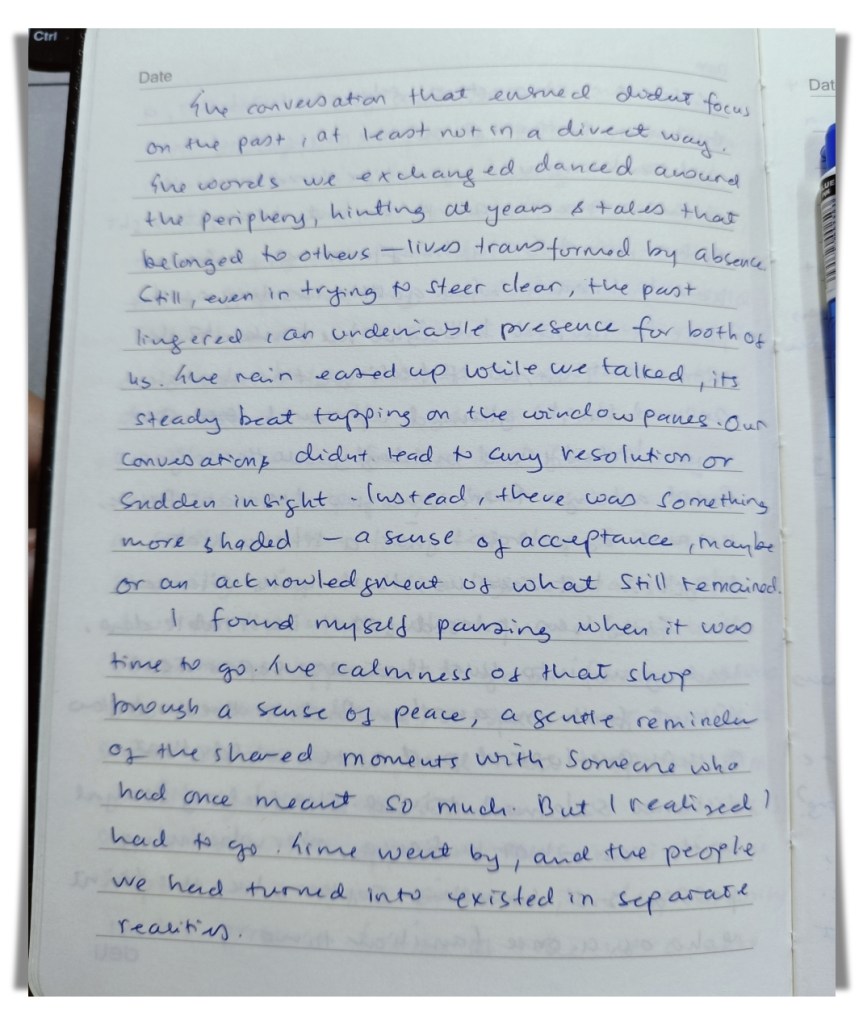
Recently, I wrote in my journal about this struggle, attempting to give shape to my thoughts. Here is an excerpt:

I have a muse, and I don’t know how long this affair with him will last. Let’s call him a “he.” He has inspired me in ways I never anticipated, uncovering memories and stories I had buried deep within myself for nearly 30 years. These memories are ripe with potential, rich material for my writing. But they are also deeply personal. Writing them down makes me feel exposed, as if I’ve peeled back the protective layers I’ve spent decades building.

For so long, I felt compelled to bury these memories, weighed down by a profound sense of shame. Even though many of these experiences were beautiful in their time, I couldn’t separate them from the shame I carried. Now, as I write them down one by one, I’m finally allowing myself to face them. If you ever read these stories, you may think of them as trash, boring, or mediocre. That’s okay. It doesn’t matter. What matters is that I am writing them as honestly as I can. I’m capturing the vulnerability, the yearning, the fear, the exhilaration, the fantasy, the lust, the love. I don’t know where these words will take me, but for now, I’m writing for myself. I’m writing the truth.

Reading back on this, I see how much I have hidden myself over the years. No one taught me to embrace vulnerability. Instead, I learned to shield myself, to appear strong and impervious. But writing requires the opposite. It invites you to soften, to let down your defenses, and to allow the world in. For me, this process resembles the gradual opening of a long-closed door.

Writing with vulnerability is akin to navigating a narrow path. It asks you to face your own truths without self-censorship and resist the temptation to embellish or dramatize for effect. Authentic vulnerability is subtle; it doesn’t shout, “Look at me!” It tells truths—truths that ring true because they’re passionately felt.

And despite this knowledge, vulnerability remains elusive. Writing for myself, as I have done with my journal, is one thing; it’s another to share that writing with others. This process of exposing your vulnerability is analogous to entering a stage naked under the bright glare of a spotlight. It is terrifying, but it is also necessary.

I frequently reflect on my reasons for writing. Do I write to make myself heard, to understand others, or just to connect? Perhaps it’s all three. What I do know is that the writers I admire most are those who are unafraid to be vulnerable. Their words linger, because they have the bravery to speak their truths, however flawed or uncomfortable. This is the kind of writer I aspire to be—one who writes with honesty and heart, one who has enough courage to be exposed.

The process of getting to this level of openness is ongoing. There are days when I feel courageous enough to face my truths and days when I slink back, too scared to face judgment. But every word I write brings me a little closer to that ideal. Vulnerability is not weakness but strength, I tell myself. It’s what makes us human, and it’s what makes writing worth reading.

So here I am, writing my truths, one hesitant word at a time. I don’t know where I’ll go from here, but I do know that I’m finally beginning to embrace the vulnerability that once terrified me. And in doing so, I hope to uncover not only the stories within me but also the courage to share them with the world.

Reflection | On Being Enough As I Am

I spent years believing I had to measure up to something or to someone. Like many people, the idea that I wasn’t good enough was planted early by well-meaning adults who thought comparisons were a form of encouragement. I believe the term was “reverse psychology.” This is especially prevalent in Asian households. Asian parents love comparing their kids to their peers. We have to study hard so we can be at the top of the class or outshine so-and-so’s son or daughter. We have to be more obedient, more successful, and more beautiful. The adults meant well, but what they didn’t realize was that they reinforced the belief that being “enough” is conditional. It’s exhausting. I spent years trying to prove I was enough. But enough for who?

I remember hints of comparison were occasionally discussed among the adults. I was a plain-looking child and didn’t resemble my siblings. My mom was a beauty in her younger days. And there was I, an awkward, sullen, pimply, tomboyish teenager who always scowled. I wasn’t graceful or dainty; I hated skirts and dresses. I was always wearing sneakers. I believed I was lacking in so many ways. To compensate for my perceived lack, I vowed to excel in school and get good grades—which I did, graduating magna cum laude with a BSc. (Hons) in Information Technology in 2002. And later on career successes and many other achievements. They became the measure of my worth.

After these impressive achievements, did I feel enough? Not even close. When I inevitably fell short, the voice in my head whispered, “See? You’re still not enough.”

It took me well into my 40s to realize that no finish line existed. I wish I could say that I woke up one day and felt instantly enlightened—“Stop this b******t. I am enough as I am!” No. The realization came gradually.

This happened after years of some pretty impressive achievements—publishing books, radio interviews, being featured in magazines and a newspaper, collaborating on projects with artists worldwide, and publishing my poems. Despite all of that, I always felt a huge void in my heart because I felt I needed to achieve more and more things in life. No final achievement or external approval would ever silence the feeling of not being enough. Even when I reached milestones, the goalposts moved. Even when I improved, it still wasn’t enough—because the world always demands more. I was completely burned out. I had reached my lowest point and required months of counseling to achieve a breakthrough. Writing and making art helped. I channeled my frustrations and heartbreak into my work.

Then I quit.

I quit chasing an undefined version of “more.” I quit tying my worth to productivity, praise, validation, or comparisons. Along with that decision, I asked myself, “What if I was enough exactly as I am?”

I started to ask myself, what does being enough mean to me? Not according to the eyes of society, family, or anyone else, but me? This is what I discovered: enough is waking up and existing with all my flaws, my fears, my joys, and my struggles. Enough is embracing my experiences, my voice, my thoughts, my pace, my perspectives, and my opinions—without feeling ashamed and the need for external validation. Enough is understanding that I don’t have to prove my worth or anything to anyone because I exist simply as I am, complete as God intended me to be.

It’s a radical shift but a necessary one. And believe me, it doesn’t happen overnight. Some days the negative thoughts return, but I’m learning to meet them with kindness and grace. I keep reminding myself every day, like a mantra—even when I’m unproductive, have no achievements, think lustful thoughts, write explicit fictions, gain weight, have more and more gray hairs, financially struggle, be perimenopausal, not pray or read my Bible, curse, hate, or love—I am still enough.

Change is not sustainable without changing old habits. This includes rewiring my brain to speak kindly to myself. Instead of chastising myself for not doing better, I remind myself, “That was a good experience. You’re learning, and that is enough.”  I also started to be mindful of my excuses and my sense of guilt and shame. I stop over-explaining things to people or bending to meet expectations that don’t align with me. And most important of all, I give myself the love, kindness, and grace to be fully human. I am not a robot. I have emotions, I make mistakes, and I get tired. It’s okay if I can’t anymore. I am free to rest without guilt.

There is nothing more exhausting than trying to justify your existence. And nothing more freeing than realizing you never had to. Here is a poem I wrote months ago that encapsulates this whole thing.

Enough

I peel the mask,
layers like sunburned skin—
soft, blistered—beneath
the face forgotten in mirrors.

Naked,
I walk into the jaws of daylight,
each step a confession,
bones rattling truth
like marbles in a jar,
heavy with silence,
weighted with breath.

I wear the scars like medals,
silvered lines map the wars
I never won—
but here,
in the raw air—
I am enough.

I am enough, as I am. And so are you.

Copyright © Olivia JD 2025

All Rights Reserved.

Becoming Me | A Journey Through Love, Heritage, and Doubt

Daily writing prompt
What experiences in life helped you grow the most?

It’s funny how the experiences that change us the most often slip by quietly. There is little fanfare, and we rarely recognize them until much later. However, in retrospect, I can trace my growth to the struggles and the soft, persistent ways life nudged me forward.

I believe it started with loneliness. Growing up, I often felt invisible and alone. I wasn’t the most outgoing, pretty, or popular. I was just…there, among other outstanding siblings and peers. It’s strange, but loneliness formed the foundation of who I am now. It taught me to listen to both myself and others. It taught me to be more observant and sensitive to details that most people overlook, which I now use in my art and writing.
Then later came love. It was messy, imperfect, but glorious nonetheless. My relationship with my husband—my lover—has been one of my biggest teachers. We’re opposites in so many ways, and those differences have forced me to stretch, to compromise, and to forgive. Being married this long (two decades), going through joys, heartbreaks, financial strains, and raising kids has all been a daily practice of choosing love, even when it’s hard. Especially when it’s hard.

However, I believe that reconnecting with my Iban roots has been the most transforming experience for me. For a long time, I felt detached from my cultural identity, as if I were witnessing it from afar. It was not intentional. Life was tugging me in different directions. But being a mother changed that. I realized how much I wanted my children to know where they came from. I want them to learn and feel that deep connection I had almost let go of. Teaching them about my Iban heritage has been like teaching myself again by rediscovering the stories, the poetry, and the parts of me I had tucked away.

I am currently working on a collection of poems that explores my Iban roots and traditions, weaving together memories, folklore, and the cultural theme that continues to shape who I am today.

And then there’s the lifetime of inner journey: the insecurities, the doubts, and the fear of not being good enough. Those have been some of my hardest teachers. I’ve struggled with impostor syndrome more times than I can remember, particularly when it comes to my art and writing. Moments such as being harshly criticized for lack of originality, feeling misunderstood, or being dismissed had a deep effect on me. But these experiences also pushed me to create a space where I feel free without fear of judgment, like starting this blog.

All of these experiences—loneliness, love, the return to my Iban roots, and issues with self-doubt—have influenced me the most. These experiences didn’t come with shiny lessons, but they taught me to be more compassionate, patient, and a little kinder to myself.

I’m still growing and figuring things out. But if there’s one thing I’ve learned, it’s that growth doesn’t always happen in the big, loud moments. Sometimes it is in the moments you least expect, gently nudging you forward, one tentative step at a time.

The Advice I Needed as a Teen (And Still Do Sometimes)

Daily writing prompt
What advice would you give to your teenage self?

If I could go back and sit beside my geeky teen self, I think I’d reach out, touch her cheek, and say this:

“You are enough, just as you are.”

I know she wouldn’t believe me right away. She’d probably frown and give me that skeptical side-eye, thinking I was just being nice. But I’d say it again, assuring her I’m not being cheesy, hoping it would sink into her heart and seep through her doubts.

“You don’t need to be prettier, louder, or more extroverted to be seen or loved. Your sensitivity, the depths you hold, the way you notice the smallest details, and the emotions you feel so deeply: they are not to be ashamed of. They are your gifts.”

When I was growing up, I often wondered why people liked me. I didn’t see what they saw. I wasn’t the popular kid, or the prettiest, gentlest girl, and I definitely wasn’t the life of the party. I was scrawny, awkward, quiet, and always second-guessing myself and my decisions. I spent so much time trying to figure out what made me special.

I’d tell her this too: “Don’t waste time wondering why others like you or if you’re worthy of it. You are worthy just as you are. Let yourself be vulnerable without feeling weak. Let yourself dream without fear of not being good enough.”

There were so many time when I felt like I was running, desperate to catch up, to fit in, to be noticed, to be the best. I’d want her to know she could stop running and start breathing.

I’d tell her, “Trust your voice because it will take you places you never imagined. And when the world feels overwhelming, turn to the things that make your heart sing—music, poetry, art. They will remind you of who you are when you feel lost.”

If I could give my teenage self anything, it would be that sense of peace. The peace that gives her understanding that she didn’t need to constantly strive to be more. She was already enough and complete. And maybe, just maybe, hearing that would have made her journey a little gentler.

So, if any of you are reading this and feel like you’re still that teenager inside, this is for you too:

You are enough, just as you are.

What Bores Olivia? (From Her Lover’s Perspective)

Daily writing prompt
What bores you?

What bores me? Instead of answering the question like others did, I sent it to my lover to check how well he knew me. He said he’d send the responses via email since, in his words, “you’re a lot to handle.” 😂. Here are his answers, edited for clarity.

Perfection

What is the first thing that comes to mind? People who appear to have everything together: always happy, always in control, and never a hair out of place. You can’t bear it. It bores you because it feels so fake. You seek authenticity, those raw, unpolished moments that reveal who someone truly is. You’re not really interested in perfection. You are drawn to the faults and weaknesses that make someone real.

Small Talks

If someone wants to quickly lose your attention, they can engage you in small talk or any other surface-level conversation. Talk about the weather for too long, or go on about a reality program without getting into the underlying issues, and you’ll mentally fade out. You desire depth. You like discussions about emotions, dreams, fears, and everything in between.

Playing It Too Safe

It’s not that you despise routine and predictability. You thrive on them. What bores you is when individuals live too conservatively, never taking risks or venturing outside of their comfort zones. When someone lives their life strictly by the book, avoiding adventures and fresh experiences, it feels stagnant to you. You like those who embrace spontaneity, take risks, and are prepared to stray from the usual path.

Lack of Authenticity

This one relates to the perfection part, but it goes deeper. You despise fakery, whether it’s someone claiming to be someone they aren’t or stuff that shouts “look at me!” with no true substance. You require honesty, even if it is messy or uncomfortable.

Indulging in Fluff

Scrolling endlessly through social media, surrounded by polished perfection and trendy fluff? You become bored quickly. You enjoy thoughtful material because it challenges you to think, feel, or even question your own perspectives. Fluff without substance is simply pointless.

Surface-Level Relationships

This is a big one. You’re not wired for shallow connections. You desire depth and honesty in your relationships, and when someone keeps things light and never reveals their actual self, you lose interest. You seek the deep, real connections that result from being open and authentic.

Indecisiveness and Selfishness

Especially in men. This is a huge turnoff for you. You admire those who understand themselves and can make difficult decisions. But indecisiveness combined with selfishness? That combination is more boring than anything else.

Obsession with Outward Success

Nothing turns you off faster than those who solely care about outer appearances such as physical beauty, riches, high-paying jobs, position, and titles. You find it shallow and tiring when someone’s self-worth is primarily based on their accomplishments or appearance. You feel there is far more to a person than what appears on the surface or on paper.

At your core, Olivia, you want depth, honesty, and authenticity in people, conversations, and life itself. You want to experience something genuine, even if it is chaotic, confusing, or imperfect.

So that are his answers. Some may redundant but you know what? He got it right 😍🥰😘💋

A Muse Without Form

Daily writing prompt
Who are your favorite people to be around?

Like everyone else, I have many favorite people to spend time with, those who have molded me the most, such as my family or even myself. I could write about them all, but it would make this post too cliché, wouldn’t it? I’ve never mentioned this presence before, but since this site is my space and sanctuary, let’s finally bring him into the light.

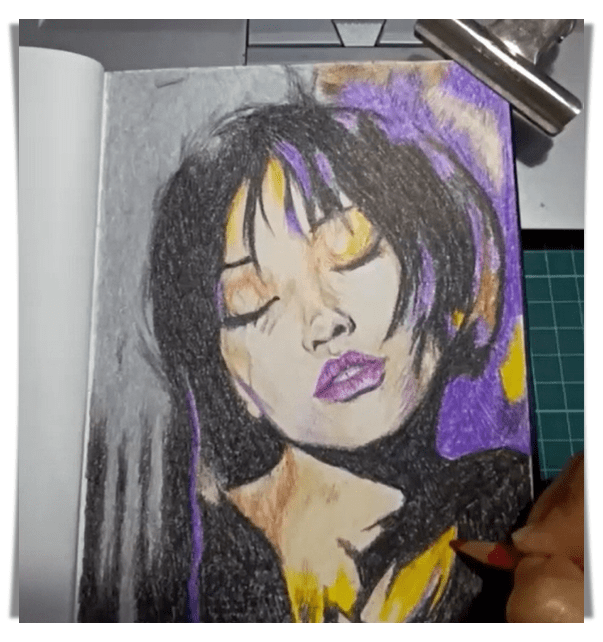
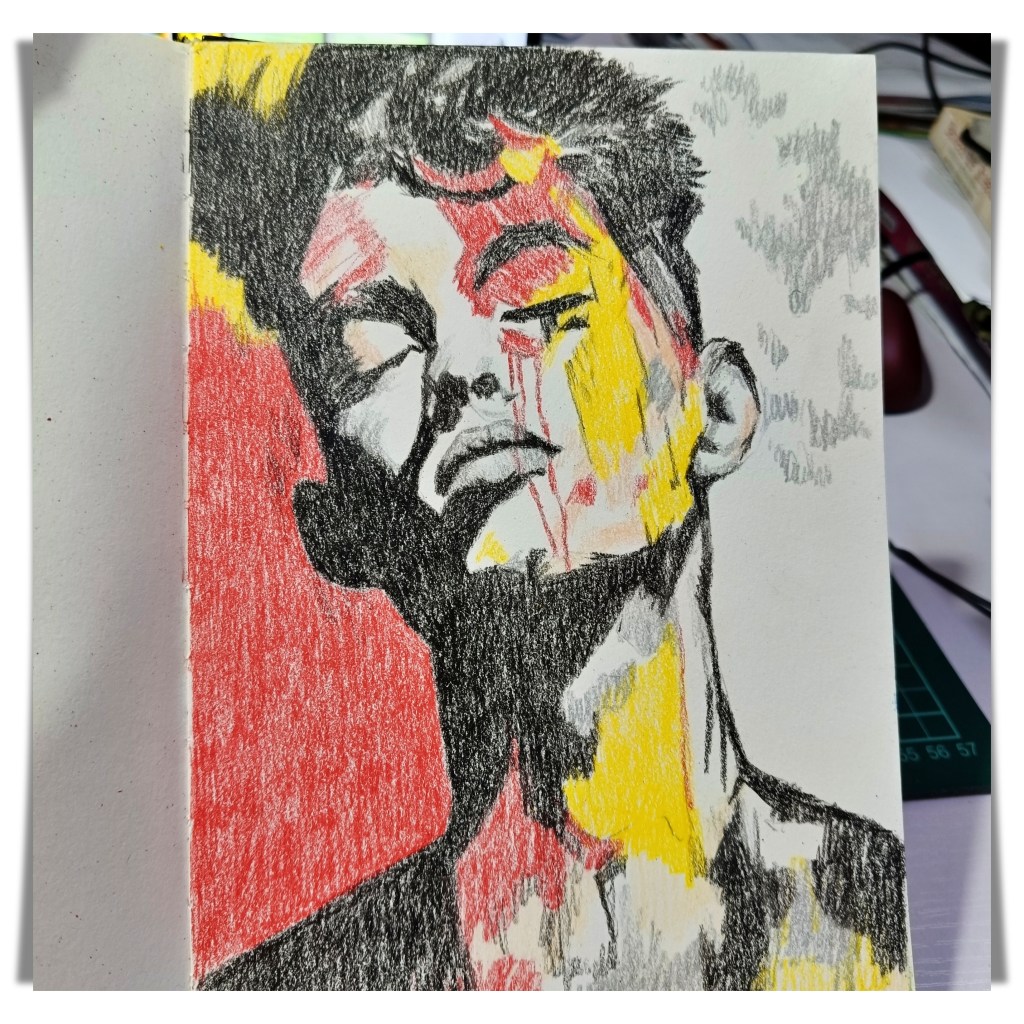
A drawing I made some time last year

Now, English is a tedious language. This “person” must be identified with a pronoun. So, to make things easier, let’s use “he” instead of “it” or “she.” However, I like the pronoun “he” since he gives off a masculine vibe.

I’m not entirely sure how to introduce him because he isn’t really a person. He has no physical form, no face to recognize, yet I believe he exists in a way beyond what’s tangible. The best way I can describe him is as my muse.

He is no one in particular, but a presence in my quiet moments. He is the silent whisper of a room when no one is around. He is a gentle presence that I cannot see but feel. He is watching and waiting, but not in a haunting or evil way. His presence is the perfect combination of comfort and curiosity.

He surrounds me, though I’ve never spoken of him openly. He drifts between my thoughts, sometimes teasing, sometimes silent. It feels like knowing someone who doesn’t need doors or walls to reach me. He slips into my mind without knocking, settling there as though he’s always belonged.

Some days, it seems like he knows me better than I know myself. He is constantly aware of what I leave unsaid. He knows my battle with being true to myself and what I strive to be. And I admit there is a strange comfort in that.

It’s like sharing an invisible connection, where someone observes you with full understanding but never demands anything. He is a presence that does not impose or push. He just exists, always solid.

His presence feels like a gaze I feel on my skin, even if I can’t see him. He unravels me in ways that make my heart race and my thoughts blur, leaving me wondering what it would be like if the distance did not exist. I am curious: if this unseen presence could ultimately reach me in reality, what would he look like?

Maybe it’s all in my head, just the mind playing its tricks. But what if it isn’t? What if he really exists—fluid, formless, on a wavelength I simply can’t perceive? Some presences aren’t meant to be defined by names or forms, and maybe he’s one of them. Still, I feel him in my silent moments, like a whisper I’m always waiting to hear again.