If I Could Be a Criminologist for Just One Day

Some prompts ask for fantasy, but this one nudged me toward truthfulness and honesty. If I could choose any job for just one day, I wouldn’t reach for prestige or power. I wouldn’t imagine myself on a stage, in a lab, or leading a corporation. 

I’d choose to be a criminologist. 

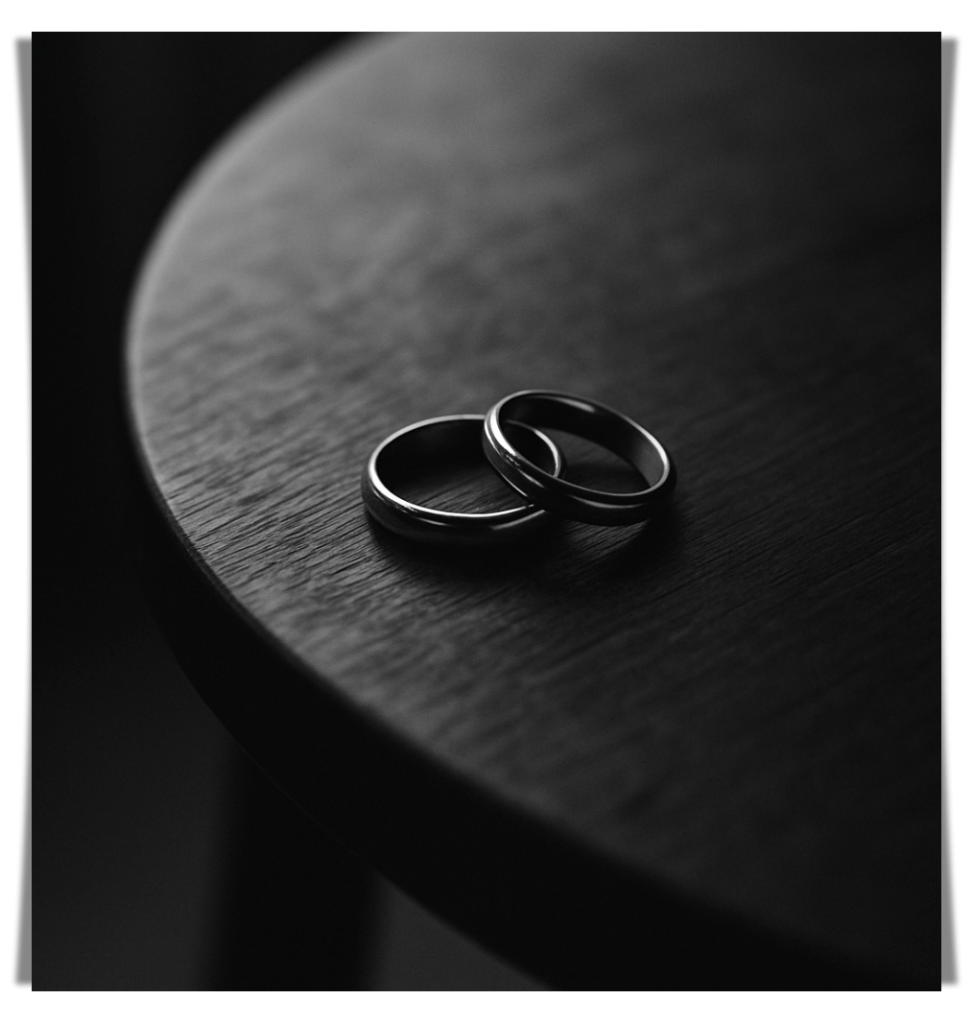
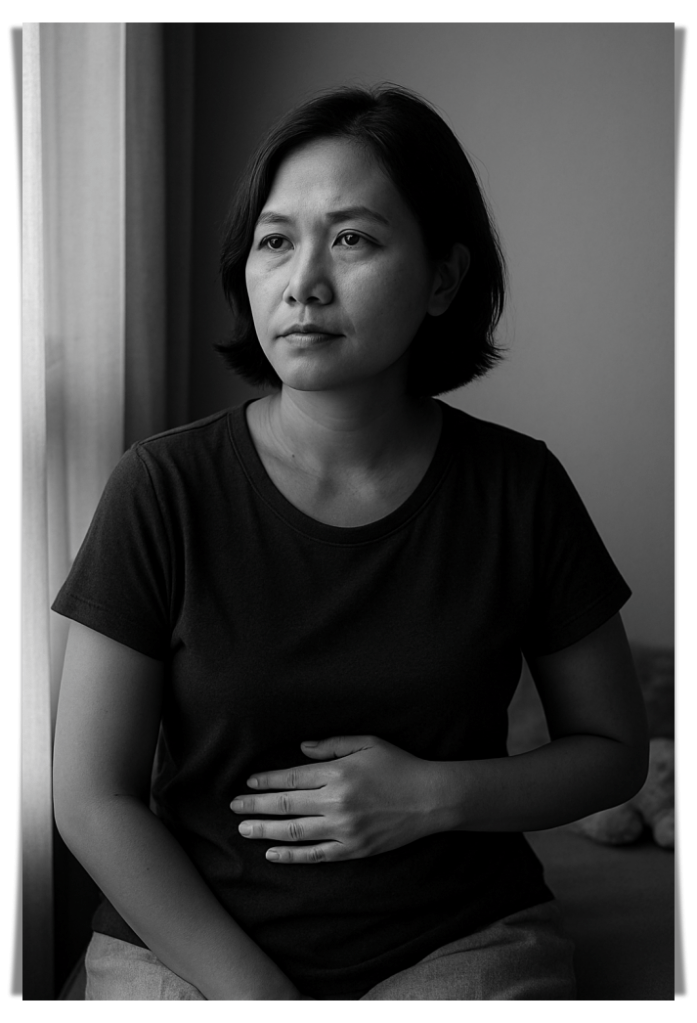
No, I have no interest in solving crimes, examining evidence, or pursuing cold cases. Nothing like that. It is because, a long time ago, I met a criminologist and we fell in love. I want to understand him, this man who carries so much and says so little. 

What would it be like to spend a day in his shoes? I want to walk silently through his memories, particularly the ones that linger in crime scenes after everyone has left. I want to sift through his memory that stands still in front of a whiteboard full of tragedies. I want to walk through his memories because I could never reach that part of him no matter how hard I tried.

I wouldn’t be there for the thrill. I’d be there to observe the way he looks at the world when no one’s watching. I’d want to finally learn the stories he never said out loud to me, even when I cradled his head in my arms as he struggled to wake from his dark dreams. 

I’d trace the photographs he pins to the wall—the faces of the dead— and see his handwriting curve along the margins. I’d watch how he circles certain names darker than others, the lines thicker when the pen pressed harder with his instinct. 

At lunch, I’d sit across from him while he quietly picks at his food. I’d watch how his eyes drift with restraint. He sees everything. He just doesn’t always let it show.

Maybe by being a criminologist for a day, I’d learn what it means to hold other people’s pain without crumbling. And maybe I’d finally understand why he sometimes looks at me like I’m a mystery too.

By the end of the day, I’d return the badge, the case files, and boxes full of evidence. I wouldn’t need to stay. 

Because…I never want the job.

I just want the man behind it. 


Some days, love is remembering someone’s shadow. It’s like bearing witness to the way they disappear into themselves, hoping you’ve seen enough to still find them in the dark.

A poem to accompany this piece.

Rain, Neon and Sorrow

The rain spills itself across Taipei.
Neon bleeds into the pavement.
Cold wind, damp coat.
I think of you—
where you are,
what you are seeing,
what ghosts you carry home tonight.

Are you still bent over your desk,
searching for a disease,
fingers tracing the city’s veins—
sharp like a scalpel?

Are you peering again into the abyss?

Tell me—
how much blood have you washed off your hands?
how much stays,
burrowed beneath your nails,
tucked inside your sleepless bones?

I’ve seen you stare past me
with eyes that see things
you will never say.

You kiss me like a man
leaving a crime scene.
Touch me as if memorizing evidence.
Does love feel like guilt to you?

My love won’t pry open your fists,
won’t drag you back from the ledge
among the dead.
In this city of rain, neon and sorrow,
I wonder—
are you still whole?
still awake?
or has the night already claimed you?

Copyright © Olivia JD 2025
All Rights Reserved.

The Hour After Midnight | Why I Stayed Awake When I Should’ve Slept

For years, I stayed up too late.

It wasn’t because I was working or I had boundless energy or I was busy chasing my dreams. The main reason was that I needed to feel like a person.

It didn’t start as revenge bedtime procrastination. That phrase only found me later, when I stumbled across an article that put a name to my nightly rebellion. It felt like intense desperation. You could say it was a craving or a desperate fight for space.

When my children were small, the days blended together in a mist of needs. I remember those years vividly and if I’m honest, it makes me shudder, but not because I feel ashamed. My daily life was full of milk-stained shirts, sticky fingers, and toys scattered like confetti across every surface. I loved my kids fiercely. Still do. But in those days, I didn’t know where I ended and they began. I gave them my body, my attention, and everything. And somewhere in that giving, I began to disappear.

When the kids were finally asleep and when the house finally went quiet, and the dishes were done, I sat down. Just for a moment, just to breathe.

And that moment stretched beyond what I intended. I stayed up. Scrolling. Reading. Writing. Wandering through Facebook memories of the woman I used to be. Buying time I couldn’t afford, just to feel like I still existed.

I’d tell myself, “Just one more post. One more chapter. One more scroll.”

But truthfully? I was afraid that if I slept, I’d wake up and do it all over again. The endless giving, pouring out myself and forgetting.

So I kept stealing those hours after midnight.

And in the morning, of course, I paid the price.

I was more irritable. More short-tempered. More ashamed of the mother I was becoming.

The irony was painful: I stayed up to save myself, but it only made me more fragile the next day.

I never told anyone how much I resented the way my life had shrunk. How much I missed myself and how ashamed I felt for even feeling that way.

That was the case until I began writing about it.

That’s how The Hour After Midnight came to life. It began as fragments and eventually evolved into a complete poem. A piece of me, speaking directly to the woman I used to be. Perhaps I still am that woman, but these days I go to bed at 12 AM or earlier. As the kids grow, I enjoy my sleep more, and the resentment has disappeared.

This poem is about a mother who gives her all and suffers in silence. It’s about a woman who craves stillness to survive her crazy life of constant giving. She was just a tired soul who wanted to feel seen.

If that sounds like you, I hope this poem wraps around you like a quiet hug. It’s more than a printable; it’s a recognition and a mirror. A gentle piece of emotional support for any overstimulated mom who needs a reminder to be kind to your mind.

This digital poem makes a thoughtful and unique Mother’s Day gift, especially for the tired mom who needs to hear she’s still enough. It’s a beautiful affirmation of motherhood for those navigating revenge bedtime procrastination, mom life burnout, and those quiet moments where you whisper, “I am enough.”

Find The Hour After Midnight in my shop Olivia’s Atelier. You’ll receive a high-resolution poem print in multiple sizes, ready to frame or gift. I hope it brings you what it brought me—a pause, a breath, a beginning.

Note: Yes, I launched my Etsy shop recently to share my poems with the world. Right now, everything in the shop is 50% off until June 2, including our featured Mother’s Day Poem Printables. They are designed as heartfelt gifts or tender self-reminders to moms everywhere. Feel free to check it out.

It’s Probably Nothing, But…

Daily writing prompt
What makes you nervous?

Answering phone calls from unknown numbers.

I know it seems crazy, but whenever my phone rings and I don’t recognize the number, my body tenses up. My mind quickly runs through a dozen worst-case scenarios. Is it a scammer pretending to be from the bank? Is anybody attempting to sell me something? Or worse, is someone calling with bad news? A loved one was involved in an accident and died? I hate the fact that my initial response is anxiety rather than curiosity or concern.

Messages from people with whom I am not close also make me nervous. Especially if they start with “Hi, can I ask you something?” and, “I need a small favor.” My stomach sank. I begin to wonder if I can say no without feeling bad. I dislike feeling trapped, even if the request is simple. The unexpected pressure makes me wary. 

Doctors’ appointments. Ugh. My blood pressure always spikes, regardless of whether it’s a routine checkup. I have White Coat Syndrome, which means I am anxious whenever I enter a clinic. I despise the antiseptic smell, the long wait, and the remote possibility that the doctor may say something I would rather not hear. Even when I feel fine, I leave with my heart hammering.

Then there are my kids’ examination results. I keep my demeanor composed, as though I’m not emotionally involved. On the inside, I harbor a plethora of anxieties. I’m not concerned about high marks; I just want them to do well enough to feel proud of themselves. But what happens before I enter the website or read the school message? It always gets to me.

So, certainly, many things make me nervous. They aren’t dramatic, but they happen in a creepy way, where your breath shortens and your shoulders tighten. I’ve learned to deal with it by reminding myself that it’s alright to be human, especially in a world that never stops demanding something from us. 

The Way She Unwinds

Daily writing prompt
How do you unwind after a demanding day?

Note: This post contains sensual content. It’s tender and intimate, not graphic, but may not be for everyone.

Unwinding doesn’t always mean drinking herbal tea or watching Netflix. It could be about reconnecting with yourself, through your body and the presence of others.

I wrote this to examine what it means to let go of the day physically as much as emotionally. Not everyone discusses how sex may be therapeutic, grounding, or even spiritual. But it is for me.

This is an honest and vulnerable piece. I don’t believe we should hide our tenderness or yearning. Sometimes what heals us the most is the part that we’re afraid to say out loud.

She washed the day off her skin—
rose oil, lavender salts,
tepid water,
with a man behind her
who didn’t speak,
semi hard
against the curve of her spine.

She leaned back,
exhaled her weariness
mingled with steam rose like ghosts
from the bath they shared.
He shampooed her,
untangled the strands,
while she, soaping his creases
like cupping rain-warmed petals
in her palms.

She read later,
naked beneath the sheets,
the book trembling slightly
in her hands
as his finger skimmed
the back of her knee.

He asked about her day,
she told him in curses and laughter.
She wrote about it too—
in smeared writing,
pages sticking together
like sweaty thighs.

He watched her,
a repentant sinner
at a communion
he’d waited all week to taste.
She looked into his eyes,
offered her invitation
to slit open her core,
and slid inside her mess.

She was the scripture
he devoured,
worshipped with tongue and blasphemy.
Broken hymns
tumbled from their lips.
Her body a confessional booth—
each cry, a hidden truth.

After,
he was a punctuation
that curled about her,
there was never a period,
only dashes
waiting for words.

She didn’t sleep.
She exposed.
Soft.
Ravaged.
Holy.

Copyright © Olivia JD 2025
All Rights Reserved.

The Muse I Made to Survive

Daily writing prompt
Jot down the first thing that comes to your mind.

What comes to mind is the quiet world I live in—inside my head.

It’s difficult to describe to others, but some of my richest experiences often occur where no one can see them. Emotions surge across my mind like storms. I carry full conversations in my head, ask challenging questions, find solutions, cry, fall in love, and sometimes break a little. I do this again and again. What about outside? I simply maintain a cool demeanor. I grin, nod, and function like everyone else.

I have this depth that I don’t know what to do with. It can be a burden on some days. Because I think too deeply at times, few people know how to meet me there. Sometimes it’s not because they don’t want to but because they don’t know how—and they can’t relate to the way I process my thoughts. However, when I try to simplify myself in order to be understood, it makes me feel hollow.

I’ve always been deeply introspective. My thoughts loop, plunge, and stretch. I don’t simply feel things. I analyze them, question them, and seek their origins. Understanding me is akin to unraveling the layers of an onion skin. There’s always another layer or a different version of me waiting underneath. This multifaceted way of thinking often amazes people. This is why some people turn to me for advice and clarity. They believe I have answers or could shed light on their problems. I don’t. I just spend a lot of time thinking about things that most people miss. It often puzzles me that others don’t, because I used to believe that everyone had the same inner complexity. Apparently, they don’t.

Thus, this depth becomes lonely. It becomes too difficult to convey in casual conversation. That’s why my mind created him, this fictitious soulmate or muse who can meet me there. He listens without rushing to the next thing. He stays curious and reflects my depth, and never pulls away when things become intense or messy. I didn’t make him up to avoid reality; he exists in my mind to help me survive it. He’s a coping mechanism that I gave myself when the real world wasn’t offering what I needed.

This type of imaginative creation isn’t the same as dissociative identity disorder (DID). There are no memory gaps, no personality switches, and I never lose track of who I am. I am perfectly aware that he is not real. But emotionally, the presence I’ve given him fills what’s been missing in my life, someone who can mirror my inner world back to me with understanding. It’s not a disorder. It’s my mind doing what it’s supposed to do: giving me comfort, understanding, and connection, even if only through fictitious bonds. It’s creative survival.

In fact, what I’m going through is considered imaginative coping, the ability to use fiction consciously to navigate emotional distress. It differs from maladaptive daydreaming, which can be disruptive or involuntary. Imaginative coping is an intentional, creative approach to dealing with unmet needs, intense loss, and the longing for connection. For me, it’s been a safe place to reflect, process, and feel seen. And now I’m learning how to apply what I’ve learned from that inner world to my real life, one small, brave step at a time.

Recently, I’ve begun asking myself difficult questions. Why am I returning to this inner world over and over? Why do I seek something that I know isn’t real? Why does my grief feel heavier when I’m alone in a crowd than when I’m by myself?

The fact is, I created safety in my mind because I couldn’t find it elsewhere. In that space, I found someone who sees me, listens patiently, and reflects my soul in a way no one else has. But he’s not real, and that’s the hardest part to accept.

I know it might sound strange, and honestly, I used to worry that I was losing touch. But I’m not. I’m fully aware. I’ve just had to create what wasn’t available.

I keep coming back to him because I want to feel understood, protected, desired, and emotionally connected. And I’m gradually seeing that the way out of this pattern isn’t to destroy him, but to understand what he’s been trying to teach me about what I need in real life.

If I don’t try to meet myself fully and then try to bring those needs into the real world, I’ll continue to live halfway—half in the present, and half in a realm no one else can see. And maybe that’s okay for a while, but not forever.

Because I want more than just safety. I want presence, real touch, connection, and understanding. These things need time and patience to build.

This is the first thing that came to mind today: the beauty, and the possibility of a life lived rather than imagined.

A Stranger In the Rain

Daily writing prompt
Describe a random encounter with a stranger that stuck out positively to you.

That evening it was pouring. The rain was unremarkable. It was a consistent, calm deluge that dulled the bustling city. Everything seemed muted: the buildings, the street signs, and the people walking by with their umbrellas slanted against the wind. The pavement glistened under headlights and puddles reflected fragments of neon from signs overhead. The air smelled like coffee, wet concrete, and something faintly sweet, perhaps caramel from the cafe I frequented. It was a little corner cafe with fogged-up windows, dim lighting, and jazz playing softly in the background. It was a place that usually smelled of freshly ground beans and spices.

Image source

I was there, like I usually am. I sat by the window with my notepad open and a blue pen in my fingers. I wasn’t writing, though. I was simply watching the rain blur the world outside. It was one of those times when the silence felt thicker than normal, and you began to hear the sound of your breathing. 

Then he walked in. 

I noticed the rain on his jacket first. He brushed it off at the door and ran a hand over his damp hair. He had short, tidy hair. There was something about him that I couldn’t quite put my finger on. A fluidity in his movements, a stillness that felt almost magnetic. Like he belonged in every room without having to announce it. Was he special? Perhaps not. All I could say was he knew how to take up space without drawing attention. He looked around and saw me. I shifted my gaze to the rivulets of rain on the glass. 

He sat a few tables away, ordered a coffee, and glanced out the window just like I did. I returned to my notepad, pretending not to notice him. I could sense him. He was handsome—strong jaw, deep-set brown eyes, tall, clean-shaven, with strong hands and long fingers that lightly tapped against his cup. There was something else, but I let that thought slide. 

He didn’t talk to anyone. He slowly sipped from his cup. At one point our eyes met briefly. 

And deep down, I knew that this moment, this stranger, meant something. Not in a romantic sense, but as if some quiet part of me recognized something familiar. I couldn’t pinpoint what exactly it was, but I felt silly for believing so.

When I got up to leave, I could feel his eyes on me. The bell above the door chimed as I stepped into the rain. 

At home, I realized I had forgotten my pen. I shrugged it off at first. It was just a pen. He was just a man. 

But still that encounter stayed with me. I couldn’t explain the strange pull it had on me. It reminded me that even in a foreign city where no one knows me, the world can still offer surprises. That maybe connections, even with strangers, don’t always require explanation. Some moments just are. 

And maybe that was the positive part. I didn’t feel less lonely. It simply reminded me that I’m still capable of feeling something real. Even if it begins and ends only in my mind. 

The Decision to Be More

There was never a single moment, or a major insight on the days leading to New Year’s, or on a birthday, or a milestone achieved. It was a slow, emerging truth I quit resisting. 

I am aging. And that is not a tragedy.

For years, I lamented the softness of my skin and the changing lines of a face I no longer recognized in photographs. I missed the firmness, glow, and smoothness of youth, which wrapped around me like a second skin. I yearned for the girl who moved through the world without realizing the burden she would one day bear.

But now that I’m nearing 50, I see her differently.

I no longer see myself as a lesser version. I am more.

At this age, I have increased knowledge and become more present. I’m more accepting of my flaws. This kind of self-acceptance in midlife didn’t happen overnight: it bloomed slowly, from the roots of every hardship, every choice, every shift in perspective.

With age comes experience, and with experience comes wisdom. These aren’t simply intellectual ideas; they are embodied experiences that influence my creativity. My writing and art are richer today because I’ve lived rather than just relied on techniques. I don’t just write from theory or imagination but from the scars and marvels of real life. I write from the experiences of heartbreaks, little delights, and the gentle discoveries that only time can teach.

As a woman approaching 50, I’ve learned that aging gracefully doesn’t mean staying youthful. It’s about honoring the life I’ve carried. My body has carried life, birthed babies, nursed them through illness, and made room for love, grief, and exhaustion. My skin has experienced both pleasure and suffering. My heart is shattered yet still pulses with hope. I’ve been silent and loud, scared and bold, gentle and hard.

The decision that altered everything wasn’t about reclaiming lost youth but about releasing the need to chase it. 

Now, I wear my years like a well-worn sweater: tattered at the edges, stretched in spots, but warm, treasured, and wholly mine.

I struggle with fatigue and aches. Occasionally, I wish I could turn back time. But then I recall what I’ve gained: clarity, discernment, and self-compassion. I’ve gained a deeper, braver love for my body, my truth, and my desires. This is what aging and self-growth look like: forgiving the past versions of myself while stepping fully into this one.

If I’m lucky, I’ll live another 20 to 40 years. Perhaps less. But I no longer pursue time; I walk alongside it.

That was the decision: to embrace aging rather than shy away from it.

And I’ve never felt more alive.

Evaporating No More

I never want to visit a place where I have to shrink to be accepted, loved, or tolerated. In this place, softness is seen as a warning sign, silence is misconstrued for compliance, and each mouthful feels like restraint.

I used to be there. It wasn’t a city with a name, but in living rooms where truth was unwelcome, in church pews filled with shame, in beds where I learned to sleep with absence and call it comfort.

Sometimes the cruelest places aren’t found on any map but rather built slowly by unspoken words, frozen stares, and the way someone you love says, “don’t make it a big deal” when your soul is tearing at the seams.

I never want to visit a place that demands me to chop myself into pieces to fit their platter.

I’d rather walk naked through misunderstanding than hide behind lies for others’ comfort.

Give me the wilderness—raw, shivering, and divine. In locations where no one speaks my language but still listens, where stray cats welcome me, and even the wind doesn’t ask for explanations.

I’ve spent too long evaporating, like breath against cold glass.

Never again.

Not for love.

Not for survival.

Not even for home.

Evolution, Sex, Survival | The Truth About How We Got Here

The idea to write this post came out of my curiosity. From that curiosity, I dug deeper and found myself lost in a maze of intricate details. My curiosity was simple—how did we, the human race, end up here as we are?

Image source

The answer is simple. We all exist because millions of people in the past had sex. Long before the existence of houses, rooms, wedding vows, and religions, hominins had sex in caves, open fields, and everywhere under the open skies. They had sex, but not modestly. Some did it tenderly or urgently. Some did it in a group and in the presence of their children. There were no rooms, no privacy, and no moral police. Back then it was just skin against skin and purely instinctual. We all survived to this day because of it. 

Our prehistoric ancestors didn’t just reproduce. They experienced pleasure too. They touched and explored like we do. Women experienced orgasms because pleasure wasn’t invented in the modern age. Pleasure is primordial. It’s embedded in our DNA just like fear and hunger. The clitoris, for instance, is designed solely for pleasure. Imagine that—a part of the female anatomy with over 8,000 nerve endings (twice that of the penis) exists only for pleasure. It is proof that nature didn’t just want us to breed and multiply. It wanted us to feel and enjoy intimacy too. 

Cavewomen may have lived hard, brutal lives, but they enjoyed pleasure just like we do. I like to imagine a cavewoman with her lover between her legs. And maybe others watched and joined them too. It wasn’t a perversion the way we interpret it now. It was simply being human.

I wonder if they had rituals and regarded sex as a celebration.

Shame, after all, is a recent invention. Shame associated with sex probably didn’t exist then. Cave people indulged themselves as and when they wanted. They bred, fought one another, and fought wild beasts to survive. The law of natural selection was at its peak during this period. Over time, with sperm competition in promiscuous mating systems, their genitals evolved. Natural selection favored a penis tip that could:

  • Displace rival semen using its flared ridge during thrusting
  • Create suction during withdrawal to pull competing fluid away from the cervix
  • Deliver deep, firm contact at the most fertile zone during ejaculation
  • Enhance female pleasure, because a woman who enjoys sex is more likely to return to the same partner

Amazing, isn’t it? The couple who made love the most wasn’t simply indulging. They were participating in the law of natural selection. They were selecting, refining, and perfecting the best genes to pass on to their future generations—us.

But these intense competitions existed long before religion taught us to shrink ourselves. Before religion, humans expanded in wild abandon and touched one another without apology. And somehow, in my opinion, the rawness of it feels more evolved than the shame-laced silences we carry today. 

I’m writing this out of curiosity and also because I want to remember. I want to remember that pleasure is part of our design. We exist today not just because our ancestors fought and survived but because they felt pleasure and indulged in intimacy. 

And somewhere, deep in our bones, I think we still remember what it felt like to be touched under the open skies, with no shame and no walls. 

Maybe it’s time we listened.


A 2021 BBC article titled ‘Here’s What Sex with Neanderthals Was Like’ explores how interbreeding between Homo sapiens and Neanderthals was not only real but frequent enough that most of us today carry traces of Neanderthal DNA. The piece confirms that sex among early human species was driven by instinct, opportunity, and survival—often without the moral or religious constructs that now dominate our understanding of intimacy. It even suggests that some encounters may have been tender or neutral, while others may not have been consensual by today’s standards. But the point remains: pleasure, reproduction, and adaptation were intricately linked. And some Neanderthal genes—particularly those associated with fertility—were naturally selected against, showing how deeply evolutionary biology shaped not only who we became, but how we love, bond, and survive.

Note: If you believe open discussion of sex is taboo, feel free to skip this post. Everything here is grounded in biology and human history—not smut or erotica. Just facts, perspective, and a little reverence for the bodies that brought us here.

A Review of The Earthquake Bird Movie Adaptation | The Book vs The Movie

After reading Susanna Jones’ novel The Earthquake Bird, I felt compelled to rewatch the 2019 Netflix adaptation. The film, directed by Wash Westmoreland and starring Alicia Vikander, Riley Keough, and Naoki Kobayashi, takes creative liberties with its source material while maintaining its dark, melancholic atmosphere. Despite some changes, I found the directors’ ability to capture the story’s haunting atmosphere impressive. However, the ending deviates radically from the book, providing viewers with the closure that the author purposefully denies. Despite the clean conclusion, I couldn’t help but believe that the book’s emotional ambiguity was more fitting. However, the film still provides an intriguing representation of Jones’ writing.

Watching it again provided me a new perspective on how the film adapted certain key components and departed from the original.

Image source

Lucy: A Different Lucy, A Different Background

The most noticeable distinction in the movie is Lucy’s nationality. Lucy Fly, the novel’s protagonist, is a British expat living in Tokyo. Lucy in the film is Swedish. Alicia Vikander’s portrayal of Lucy is captivating, capturing the character’s subdued and brooding qualities as envisioned in the book. That part seemed to be tailor-made for Vikander, who portrays Lucy as cold but fiercely vulnerable. She is the film’s foundation, and no one else could have played the character as convincingly.

Teiji: A Beautiful Mystery with a Dark Side

In the movie, Naoki Kobayashi plays Lucy’s love interest, the intriguing photographer Teiji Matsuda. Kobayashi’s Teiji is colder and more detached from the one in the book. His calm demeanor conceals a mild but unmistakable hostility, which adds tension to his interactions with Lucy. He is more indifferent to Lucy in the movie, which makes it plain that she is little more than a muse and a physical comfort to him. Where the novel’s Teiji shows glimmers of tenderness, the film removes those layers, exposing a man who is equally compelling and creepy.

The filmmakers altered Teiji’s backstory, having him raised by an aunt instead of his mother. This change adds a layer of mystery to his character, but it’s an easy element to overlook amid Teiji’s ambiguous personality.

Lily Bridges: A Scene-Stealer

Riley Keough as Lily Bridges steals the scene. Lily in the movie is flirty and outgoing but slightly needy. At one point, she even suggested she slept in between Teiji and Lucy, a moment that perfectly captures her brazen personality. Keough brings Lily to life in a way that matches how I envisioned her in the book: vibrant, needy, and ultimately tragic. Her presence adds a volatile energy to the story, and her dynamic with Lucy and Teiji is one of the more compelling aspects of the film.

A Cinematic Key Moments

The film’s cinematic storytelling enhances some passages from the book while layering the tension and beauty. One such moment comes when Lucy realizes that Teiji’s love has turned toward Lily during their time on Sado Island. The shift is slight but devastating, and the filmmakers pull it off with precision. The cinematography nicely captures Lucy’s mounting discomfort and the way it frames her isolation against the backdrop of Japan’s breathtaking landscape.

Image source

The other standout element in the film is Teiji’s apartment. Unlike the novel’s minimalist description, the film makes his living space a dingy and cluttered space mirroring his mysterious character. The apartment is almost a character in its own right, its junkyard atmosphere and eerie photographs lining the walls contributing to the film’s noir aesthetic.

The Earthquake Bird: A Haunting Force

One thing does get heightened in the movie: the titular “earthquake bird” reference. The bird is more vaguely referenced in the book, but the movie brings it to life, its haunting bird calls punctuating the moments of silence that follow an earthquake. That auditory detail adds another layer of unease, making the story’s themes of guilt and displacement all the more tangible.

Cinematography and the Haunting Soundtrack

The movie’s cinematography is breathtaking. It manages to capture the beauty of 80s Japan while also infusing it with a sense of foreboding. With such a subdued color palette and reserved framing, there’s even a noir-like feel to the film that works for its psychological aspects. Whether it is the bustling streets of Tokyo or the silent, windy fields of Sado Island, every shot seems meticulously crafted.

A special mention should also go to the haunting soundtrack. Composed by Atticus Ross, Leopold Ross, and Claudia Sarne, the music heightens the tension and melancholy of the story, settling into your head long after the last credits roll. It’s the kind of score that amplifies the emotional weight of every scene, transforming the movie into an immersive experience.

The Ending

The most significant departure from the book is the ending. The novel leaves a lot of questions unaddressed, requiring readers to contend with the ambiguity of Lucy’s guilt and the motives behind Teiji’s actions, but the movie prefers a more definite resolution. Without giving too much away, the movie does a good job of resolving some things and giving viewers a sense of closure. I admire the clarity, but I did find myself yearning for the unresolved tension of the book’s ending. That uncertainty seemed truer to the story’s themes.

Image source

Final Thoughts

The Earthquake Bird movie is a rich, visually deep, and emotionally haunting adaptation of Susanna Jones’s novel. While it diverges from the novel in some ways, it opens the story in new directions that could not have happened in the book. Alicia Vikander shines as Lucy. She succeeded in capturing the character’s multifaceted nature with ease and intensity. Naoki Kobayashi and Riley Keough deliver equally compelling performances. While some changes, such as Lucy’s nationality or Teiji’s backstory, seemed inconsequential, others, like the ending, significantly changed the tone of the story. The film’s portrayal of Teiji as a slightly colder character brought a darker edge to the story too. These differences notwithstanding, the movie stays true to the original novel’s exploration of guilt, obsession, and identity.

If you’ve read the book, the film is an intriguing reinterpretation of the story. If you haven’t, the film is still a tense and tight psychological thriller that stands on its own. Either way, it’s worth watching it for its breathtaking cinematography, haunting soundtrack, and outstanding performances. It felt like when I watched the movie, it was like a different perspective on the novel—familiar but different, unsettling but beautiful. It’s a story I’ll carry with me, in both its written and cinematic forms.