My First Group Exhibition in Malaysia and A New Zine in the Making

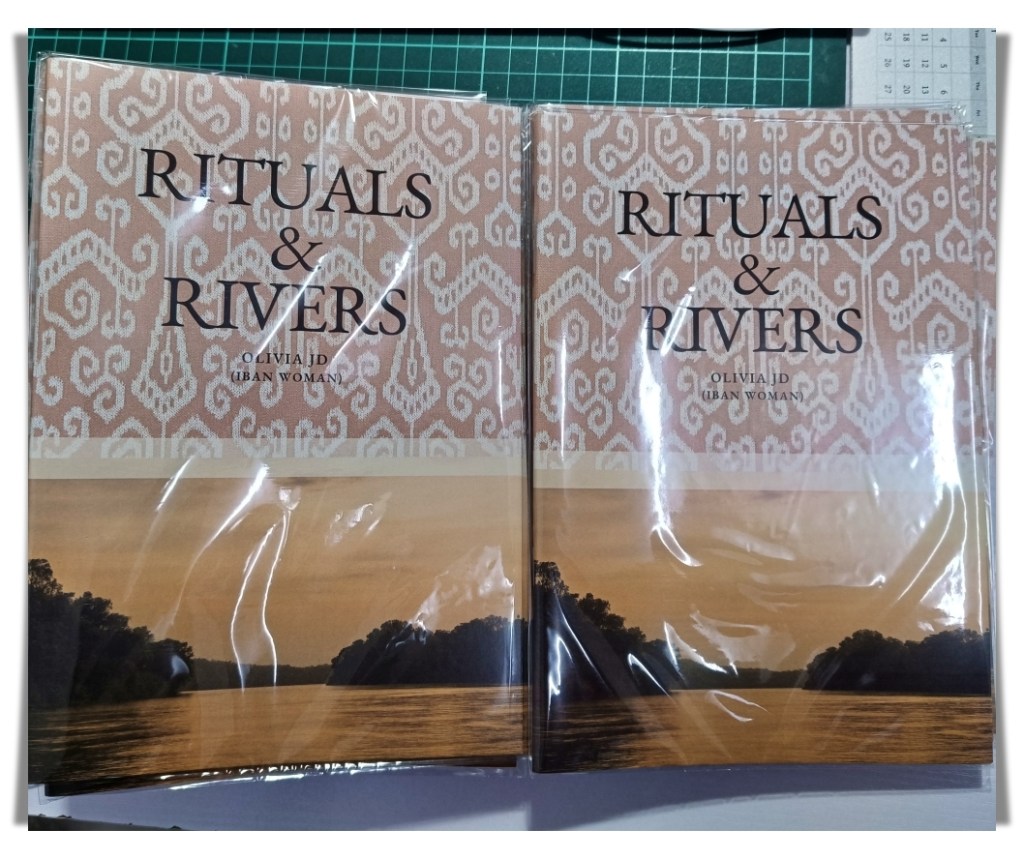
Tomorrow is the soft launch of Akar Kita Abadi, the group exhibition I’ve been preparing for the past few weeks. I will exhibit several of my Iban heritage poems called Rituals and Rivers, and holding these printed booklets, which just arrived, feels like a confirmation of all the time spent writing, editing, and polishing. This little booklet (or zine) has 10 poems from a much bigger collection of Iban heritage poetry that I want to publish in 2026. I will be selling these booklets during the exhibition and they are quite limited in number. I will share more about the exhibition after the launch tomorrow. I can’t share pictures until after the launch so I can’t really say much about the whole thing. The exhibition will last until 23 November so if you’re in Klang Valley, you may want to drop by and give us your support. 
While this exhibition marks the beginning of sharing that collection publicly, another project has started to take root in parallel. I have begun working on a new zine that will focus entirely on Iban women. This project seems like a continuation of Rituals & Rivers, but through a more personal viewpoint. It will look at various facets of Iban womanhood, from ancient times to the present.
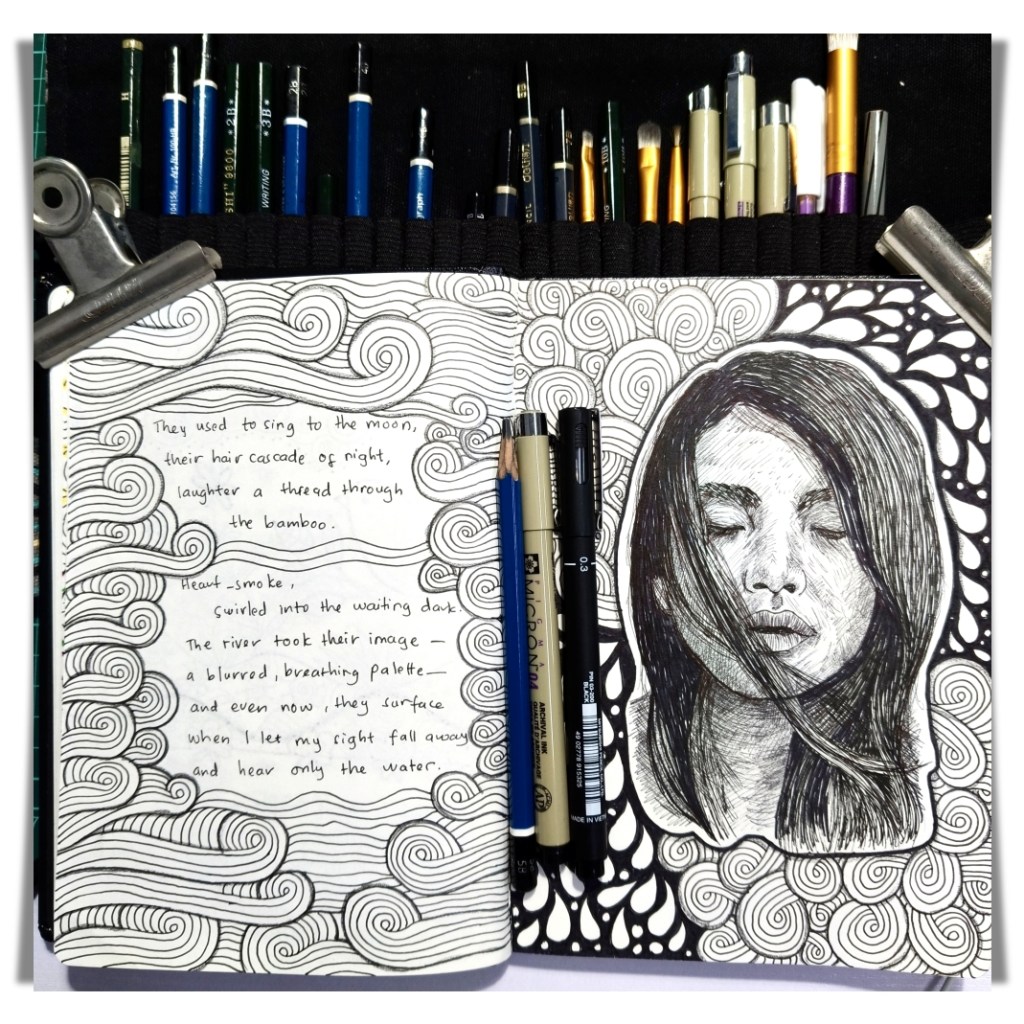
Every page will be hand-drawn using pencil and black fine liners, but for the actual zine they will be edited and printed. Drawing by hand has a grounding effect, allowing each line to have its own rhythm and imperfection. The only printed text will be the longer passages and explanations, saving space while keeping the design balanced. I have not planned the number of pages or illustrations yet. I like to let the process evolve spontaneously. Each piece generally begins as a poem or a brief reflection before taking on a visual shape.
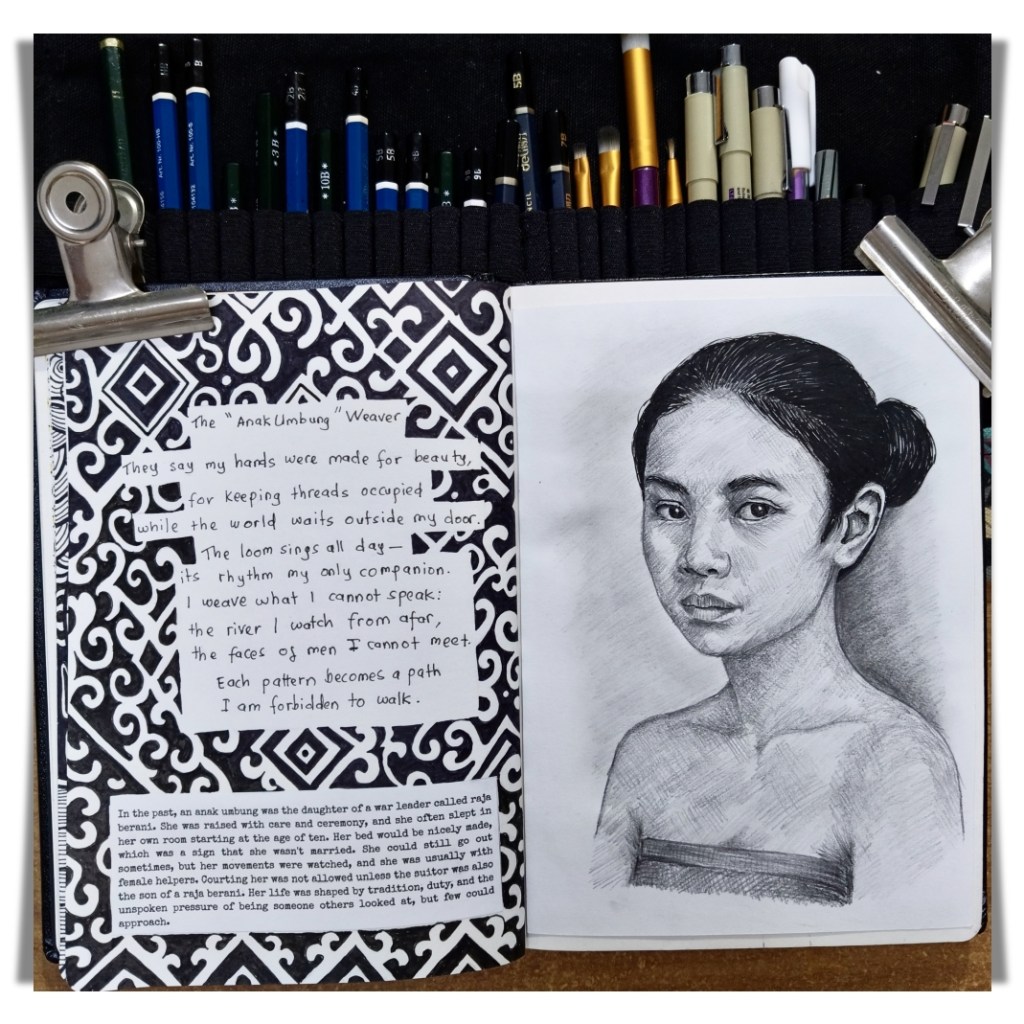
One of the first illustrations is inspired by women who sing to the moon as their laughter threads through the bamboo. Another drawing shows the anak umbung, the daughter of an Iban war leader who was raised apart from others and taught weaving skills. Her story has stayed with me, serving as a reminder of the beauty and self-control that once entwined women’s lives. There is also a drawing of a woman tending to the hearth before dawn. These aren’t big moments; they’re small actions that show tenderness, duty, and strength in Iban women. 
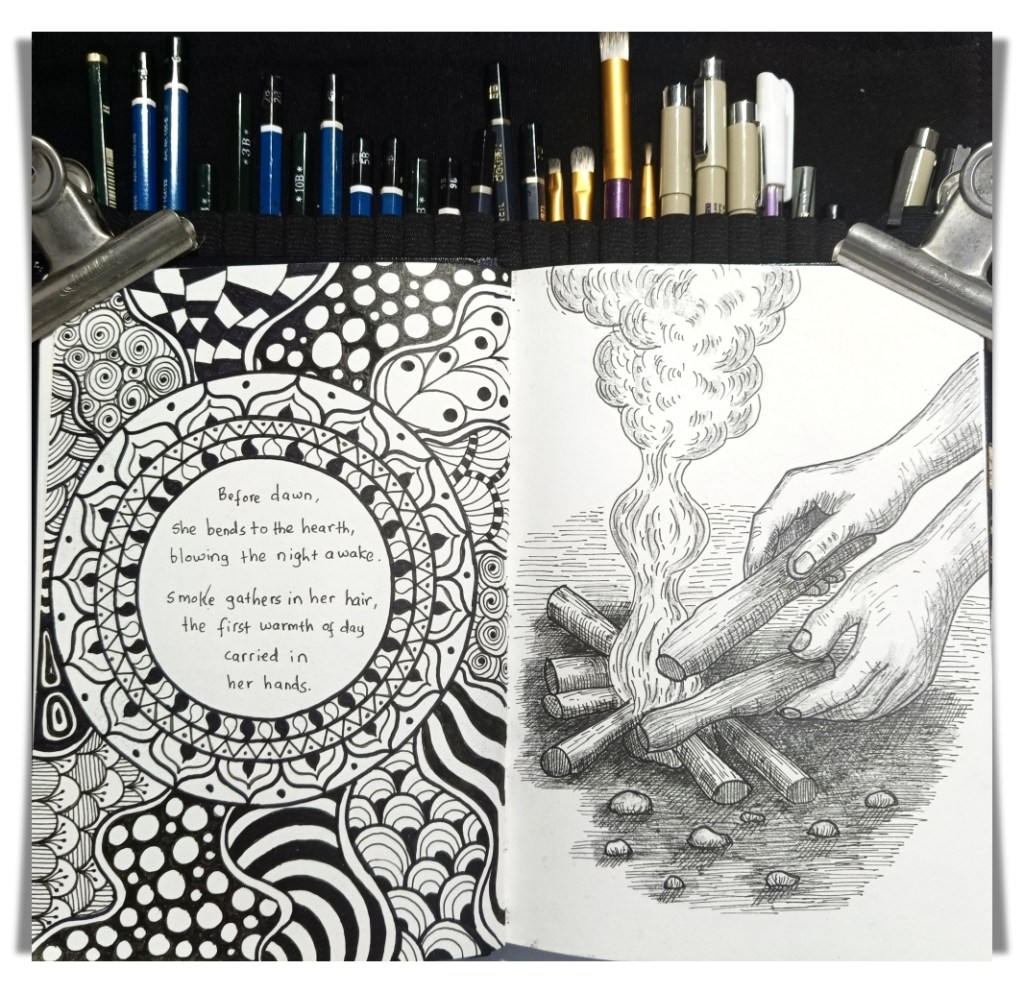
This new zine will be based on the same ideas as Rituals & Rivers, but it will focus more closely on the daily and the personal.  It will explore what it means to be an Iban woman across generations, including the traditions that are passed down, the unspoken resilience, and the actions that connect one life to another. It’s a way for me to listen to the voices of the women who came before me and to honor how their spirit still lives on in us now.

I don’t know what the completed zine will be like, but I know it will develop slowly, page by page, just like stories used to do, with care and patience.


I write about Iban culture, ancestral rituals, creative life, emotional truths, and the quiet transformations of love, motherhood, and identity. If this speaks to you, subscribe and journey with me.
The Forgotten Script of My Ancestors | Remembering the Papan Turai

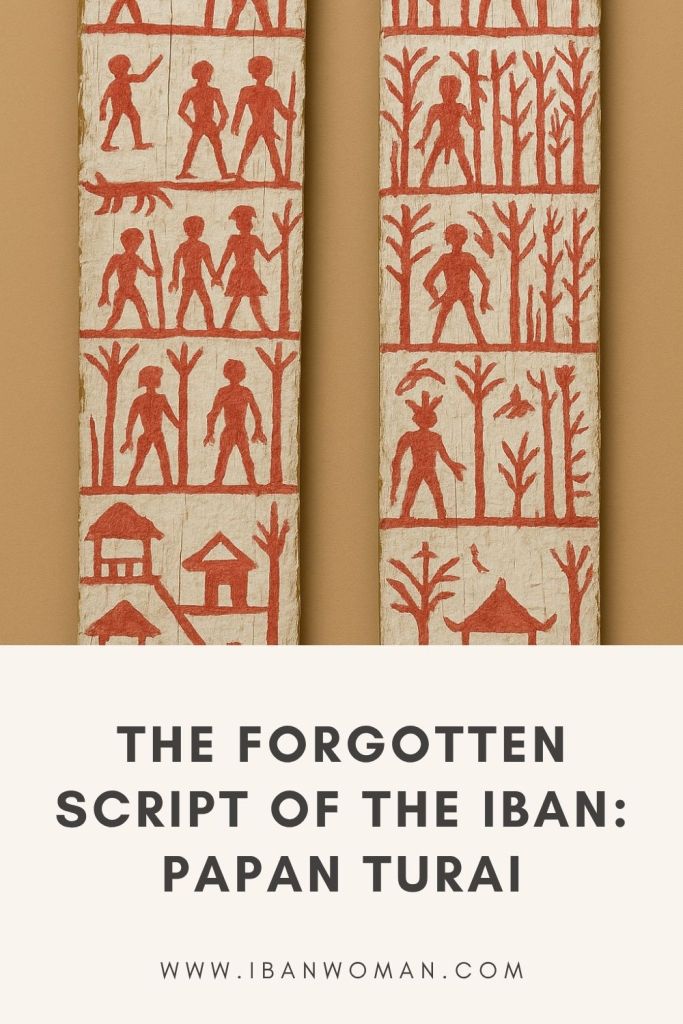
The majority of us are familiar with Egyptian hieroglyphics. However, not many people are aware that the Iban used to have their own type of pictorial writing. My ancestors’ written language, known as “turai,” is carved onto wooden boards called “papan turai.” During major festivals like Gawai Batu and Gawai Antu, lemambang (ritual bards) used these boards to recall and recite the pengap (folk epics), timang (invocations), and many other types of Iban poetry (leka main asal).

The papan turai is more than just a ceremonial piece. It serves as a link between oral and written tradition. Some of these carved symbols date back about four centuries. They preserve fragments of genealogy (tusut), the Iban’s migration history from the Kapuas region of Kalimantan to Sarawak, and even tales of tribal conflicts and legendary Iban leaders.

Researchers from the Sarawak Museum and UNIMAS have been examining these boards to find out what they symbolize. What is remarkable is that lemambang from various areas can comprehend each other’s papan turai. This demonstrates that there was once a common symbolic language among people in different communities.

This discovery goes against the previous belief that the Iban were completely “pre-literate” before Western influence arrived. The papan turai shows that our forefathers had their own way of keeping records of what they knew, which was based on ritual, cosmology, and collective memory. It reminds us that being able to read and write doesn’t just imply knowing the alphabet and how to write on paper.

In 1947, an Iban scholar named Dunging anak Gunggu expanded upon this tradition. He developed a whole writing system based on turai. However, few people know about this writing system, even among Sarawakians.

When I stood in front of the papan turai at the Borneo Cultures Museum, I felt a sense of recognition. They reminded me of the pua kumbu patterns that Iban women wove to tell stories about spirits, dreams, and journeys. Both have the same goal: to record, remember, and preserve meaning alive beyond the present.

It made me realize that each culture had its unique way of retaining memories. Some people carve it into stone, some into wood, others into sound, and yet others into cloth. For the Iban, it may have been all of these things at once. The lemambang sang what the papan turai contained, and the pua weavers wove tales and ancestral history into the thread. These were our books before books.

As I stood there, I thought about how easily such histories fade away. It’s not because they aren’t relevant, but because they aren’t documented in the systems that the world relies on. The papan turai lived on through continuity of ritual and faith. Its knowledge lived on through the lemambang, in various ceremonies and festivals, and in the community gathered around the ruai during Gawai. When modern eyes look at the papan turai, they may see only strange markings. But these are not just symbols. They hold our heritage. They are reminders that our people were already keeping records of their lives in their own way long before British colonials came with pen and paper. However, I am not sure how long we can keep them alive, as the lemambang is becoming a dying breed of heritage guardians of the Iban. 

I felt pride and loss as I left the museum that day. Pride, since the papan turai shows that Iban civilization was more complicated and deep than most people realize. Loss, because so few of us can interpret those symbols today.

Maybe this is why I write and draw. I want to continue that old rhythm in a new form. My writings and drawings are like my own papan turai, illustrating the lines that connect the past and the present. I strive to document things that could otherwise disappear, including stories from my indigenous perspective, feelings, and fragments of my identity.

To me, the papan turai is more than an artifact. It is a mirror that reflects an ancient hunger to make meaning clear and to preserve memories alive before they disappear. And maybe that instinct to leave a mark and to tell a story is something that never truly goes away. It exists in our language, our art, and our digital words. It’s the same urge that led a lemambang to carve symbols into wood hundreds of years ago, hoping that someone would remember it someday.

Sources: Religious Rites and Customs of the Iban or Dyaks of Sarawak by Leo Nyuak and Edm. Dunn (1906), UNIMAS Gazette. 


I write about Iban culture, ancestral rituals, creative life, emotional truths, and the quiet transformations of love, motherhood, and identity. If this speaks to you, subscribe and journey with me.
Iban Augury | The Language of Birds and the Art of Listening

Prior to the coming of Christianity and Islam, the Iban people had a sophisticated system of animistic beliefs. The world was believed to be filled with spirits—some friendly, others unpredictable—who lived in jungles, rivers, animals, and dreams. The desire to live in harmony with these invisible forces influenced many aspects of life, from farming and hunting to warfare and family decisions. 

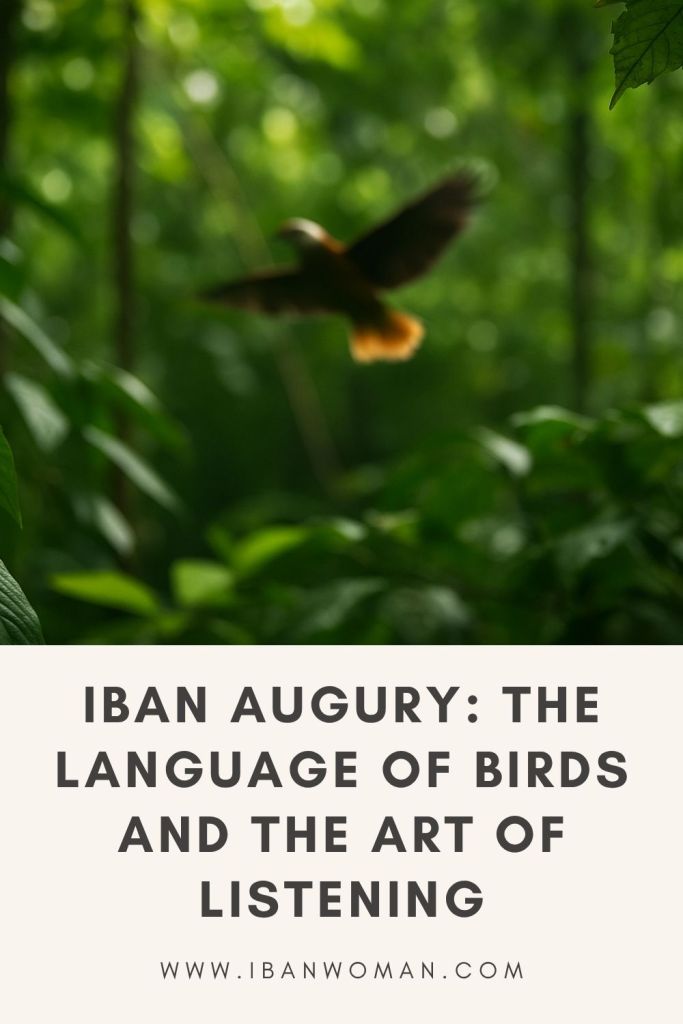
Augury, or “beburong” in Iban, was one of the most intricate systems in this belief. It is a sacred form of divination that uses the movements and sounds of certain birds known as burung mali (omen birds) to seek direction. The practice was said to have been taught to humans by Sengalang Burong, the Iban God of War and divine messenger. He taught that the gods do not speak directly but send their messages through the natural world.

Every omen bird has a specific meaning. The interpretation of their cries, flight paths, and actions guides important decisions, such as whether to start planting paddy, go on a journey, or go to war.  The tuai burong, an augur who can read and understand the language of birds, is responsible for figuring out what these signs mean. This cultural duty used to be a big part of Iban life because it was a way for people to connect spiritually and keep their conduct in line with God’s will.

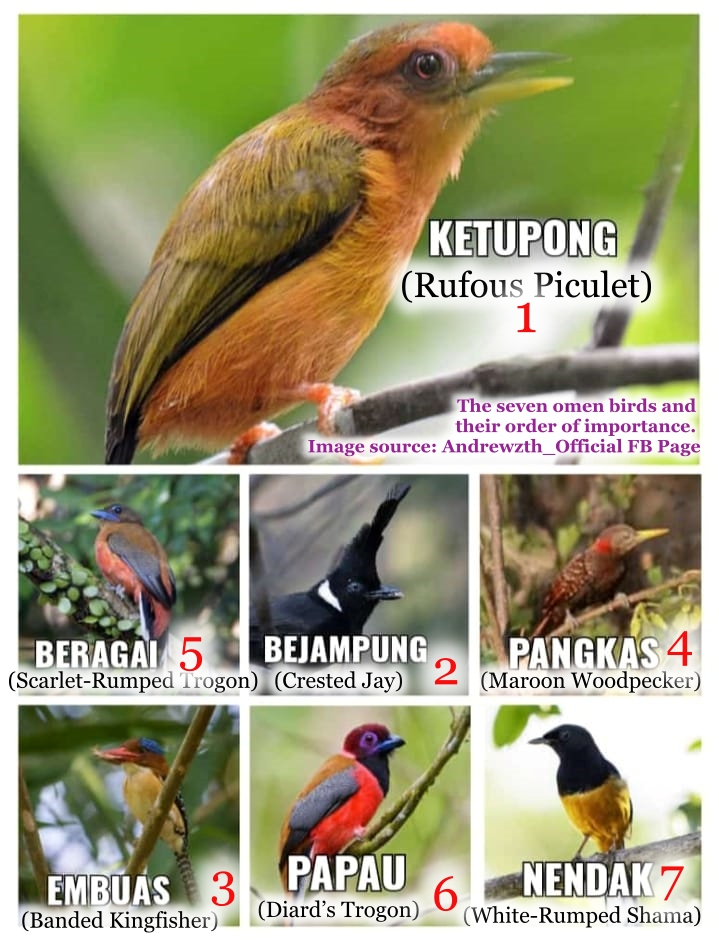
Oral history states that Sengalang Burong and his wife, Endu Sudan Berinjan Bungkong, had seven daughters and one son. Each daughter married a nobleman who became one of the seven omen birds: Ketupong (Rufous Piculet), Beragai (Scarlet-Rumped Trogon), Bejampong (Crested Jay), Pangkas (Maroon Woodpecker), Embuas (Banded Kingfisher), Kelabu Papau (Diard’s Trogon), and Burung Malam, which literally means “night bird” but is a cricket. The eighth omen bird, Nendak (White-Rumped Shama), is Sengalang Burong’s faithful messenger. All of these are real, common bird species that live in the Borneo rainforest.

Sengalang Burong passed down the knowledge of augury to his grandson, Sera Gunting. Sera Gunting is the son of Sengalang Burong’s eldest daughter, Endu Dara Tinchin Temaga, and her second husband, a man named Menggin. Sera Gunting also learned the omens of war when he joined a ngayau (headhunting) expedition with his seven uncles—the noblemen who married Sengalang Burong’s daughters. He later passed his knowledge to his descendants. Linggir Mali Lebu, Orang Kaya Pemancha Dana Bayang, and Unggang Lebor Menoa were among the subsequent generations of Iban war leaders who observed and practiced the war omens he had learned.

Sengalang Burong also taught Sera Gunting about the different stages of Gawai Burong, the festival that war leaders had to hold to invite him and his followers to attend. That is a story and post for another time.

All the omen birds mentioned above can still be found in Borneo’s rainforests. I have never seen them in the wild or heard their calls in person, but last month, when I visited the Borneo Cultures Museum, I had the opportunity to hear recorded calls from Beragai and Embuas. I could hear the sound of wind, insects, and other birds in the distance along with their calls in the recordings. It was difficult to tell which bird made which sound. It reminded me that to practice augury, you needed to believe and have an attentive ear to pay close attention to the different bird calls.

Those recordings brought back a memory from my childhood. When I was nine years old, my parents decided to adopt the baby son of a relative. They had everything ready: a small bassinet, baby clothes, and the trip to the longhouse where the child was staying. They had to walk through the jungle for three hours to reach the place. 

Along the way, they encountered an omen bird. I don’t know which one it was, but a tuai burong was consulted to explain the sign. He advised my parents not to continue. He said that if they went through with the adoption, the boy would grow up to “overrule” me and my siblings, which means he would prosper more than us and that we might fall into misfortune. My parents took the advice and chose not to go through with it. The baby stayed with his other relatives, and that was the end of it.

Looking back, I understand that moment not as superstition but as a reflection of how much faith my parents had in the way things were meant to be. They thought that signs meant something and that the natural world could warn or guide us through nature’s language. It was a way of life built on attention, not control. However, it didn’t stop me from wondering, what if the boy experienced a difficult childhood filled with poverty and hardship and was denied the chance to live a better life due to the bird’s signs?

Today I realized how rarely I listen. The world around me is full of noise—machines, traffic, and incessant messages devoid of meaning. Even in silence, my mind is busy with thoughts, endless scrolling, or work. Listening feels like a lost art. I no longer know how to hear what my forefathers intuitively understood: that signs came quietly, without noise or spectacle.

I’m not sure if anyone still practices augury today. Perhaps a few elders still possess fragments of that knowledge. Even if it is no longer practiced, I hope that Ibans, particularly the younger generation, understand its origins and significance. Beburong was once central to how our people made decisions and understood their relationship with nature. It influenced how they approached the world—with respect, patience, and a willingness to listen. Perhaps I’ll never see those birds in the wild or hear their true calls across the forest. But I’d like to believe they’re still there, their voices blending with the wind, delivering guidance that once guided entire communities.


I write about Iban culture, ancestral rituals, creative life, emotional truths, and the quiet transformations of love, motherhood, and identity. If this speaks to you, subscribe and journey with me.
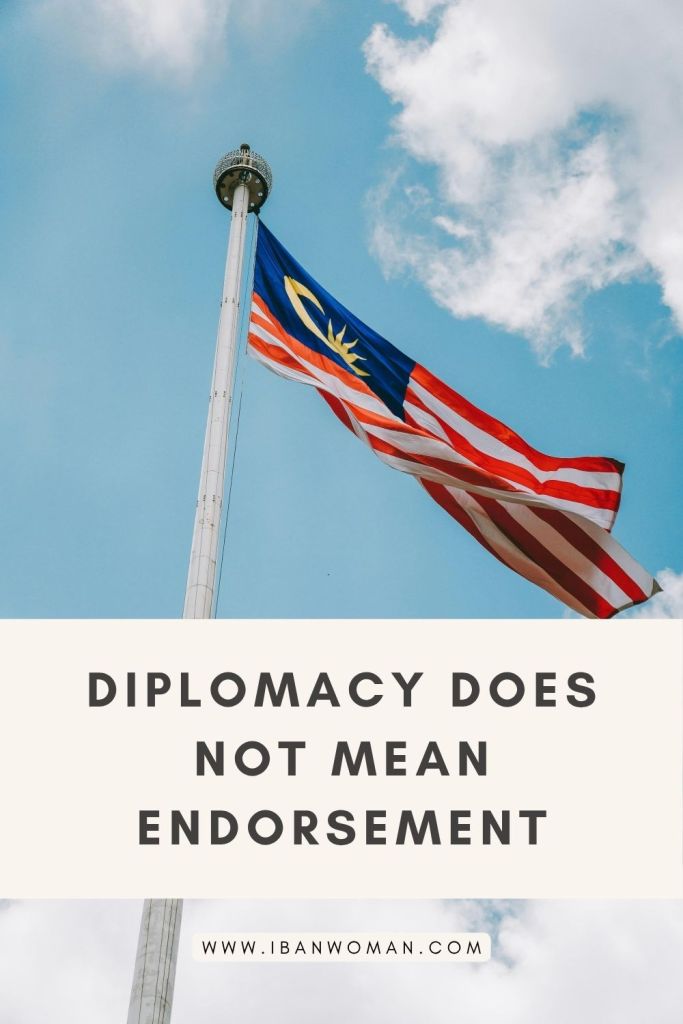
Diplomacy Does Not Mean Endorsement

Last night, I responded to a post on Threads about Donald Trump’s visit to Malaysia for the ASEAN Summit. The original post questioned why Malaysians who support Palestine were not outraged that Trump was coming. I replied that world politics does not revolve around the Palestinian issue alone and that diplomacy requires engagement, even with those we disagree with.

What happened next wasn’t a conversation; it was an attack. Someone called me naive and even used my identity as an Indigenous woman against me. She said that as an Iban, I should know more about land grabs and colonialism, and she implied that I was betraying that history by defending engagement with the United States. She cited Cuba as a model, saying Malaysia should isolate itself, like Cuba, and reject American influence completely.

I understood where the emotion came from. The Palestinian struggle resonates with many of us, as it reflects the shared anguish of displacement and dehumanization endured by other marginalized groups. It has come to stand for the fight against empire and global injustice. I grieve for them too. But that one conflict isn’t the cause of all the crises in the world. Congo, Sudan, Myanmar, and West Papua all have their own histories, shaped by local power struggles, colonial legacies, and modern exploitation. The Palestinian cause is not the origin of imperialism, but it is part of a larger pattern of it.

The comparison to Cuba also didn’t take into account how complicated our region is. Cuba’s defiance of the United States is often romanticized, but the reality is much harsher. Years of economic sanctions have caused suffering and shortages. Cuba remained steadfast, but the isolation it endured came at a heavy cost to its people. That path is not possible for Malaysia. We are not an island nation shielded from regional shifts. We are part of ASEAN, a bloc that survives through dialogue, consensus, and constant balancing between larger powers.

To disengage would not make us righteous. It would make us irrelevant. Sovereignty is not merely about being alone. It is also about having a seat at the table where decisions are made. Engagement does not mean agreement. We live in the world as it is, not as we wish it to be.

Malaysia’s invitation to Trump did not mean endorsement of his policies or his past actions. It was part of ASEAN’s long-established diplomatic practice. The United States has been a formal partner in ASEAN-led dialogues since 2009, when President Obama signed the Treaty of Amity and Cooperation (TAC). The treaty symbolized a willingness to follow the “ASEAN Way,” a diplomatic approach that values non-interference, consensus, and mutual respect. The TAC made it possible for the US to join the East Asia Summit, where world powers discuss cooperation and regional security.

The Obama administration strengthened this relationship by shifting American focus from the Middle East to the Indo-Pacific through the Pivot to Asia. This decision acknowledged the growing economic and political importance of Asia, as well as China’s rapid rise. The US began to engage with ASEAN more seriously, not out of charity, but because it seeks stability in the region to serve its interests. That engagement, even if self-serving, gave ASEAN leverage over China, which was becoming more dominant.

We cannot ignore China’s role in the region. In the past decade, it has become more aggressive in the South China Sea by building artificial islands, expanding military presence, and encroaching into maritime zones claimed by Vietnam, the Philippines, and Malaysia. This has placed ASEAN in a difficult position. China is vital economically but intimidating strategically. The United States functions as a counterweight in this situation. Without an external balancing force, Beijing could exert complete dominance over Southeast Asia.

This is the uncomfortable truth of international politics: moral clarity and strategic necessity rarely align. Malaysia can speak out against injustice in Palestine and still maintain good relations with the United States. We can be against occupation and still welcome dialogue. These positions do not contradict each other. They are two forms of survival that coexist.

It is easy to demand purity from the sidelines, but governance requires nuance. To those who use identity as a weapon, I say this: being Iban does not mean rejecting engagement or diplomacy. My ancestors fought when they had to and negotiated when they must. They understood that survival depends on knowing when to speak and when to listen. Being practical is not disloyal. It is wisdom passed down from generations who understood the cost of isolation.

Cuba resisted and endured decades of hardship. Malaysia engages because we have learned a different truth, that sometimes the best thing we can do for our people is to keep showing up, even when it is uncomfortable. Diplomacy does not mean endorsement. It is how small nations stay relevant. It is also how Indigenous voices remain part of the global conversation and how we hold our place between superpowers that shape our future.

Note:

I am not a political expert. As a Malaysian Iban woman, I’m trying to figure out how history and power affect where we stand in the world. I’m not trying to defend any leader or nation. I’m just trying to remind myself that ideals don’t mean much if they lack a basis in reality. I believe small nations can hold both principle and pragmatism, just like people can be both kind and rational.


I write about Iban culture, ancestral rituals, creative life, emotional truths, and the quiet transformations of love, motherhood, and identity. If this speaks to you, subscribe and journey with me.
Sengalang Burong and the Origins of Iban Augury

Before the arrival of Christianity and Islam, the Iban people practiced a complex system of animistic belief. The world was seen as alive with spirits; some benevolent, some unpredictable, residing in rivers, jungles, animals, and dreams. The desire to stay in harmony with these unseen forces guided every aspect of farming, hunting, and war.

Scholars such as Benedict Sandin and Clifford Sather suggest that early contact with Hindu-Minangkabau traditions from Sumatra may have influenced some aspects of Iban spirituality. These influences probably came when noblemen and their followers from the Majapahit kingdom fled westward at the end of the empire to escape persecution as Muslim rule expanded. They brought with them knowledge of rituals, governance, war, and agriculture. These ideas were slowly taken in and reinterpreted through the Iban worldview.

From this convergence emerged a cosmology rich with ritual poetry, omens, and divine intermediaries. One of its most complicated systems is augury, a sacred form of divination that reads the calls and looks of certain birds as messages from the spirit world. These omen birds are still an important part of Iban ritual life, especially during farming and community events.

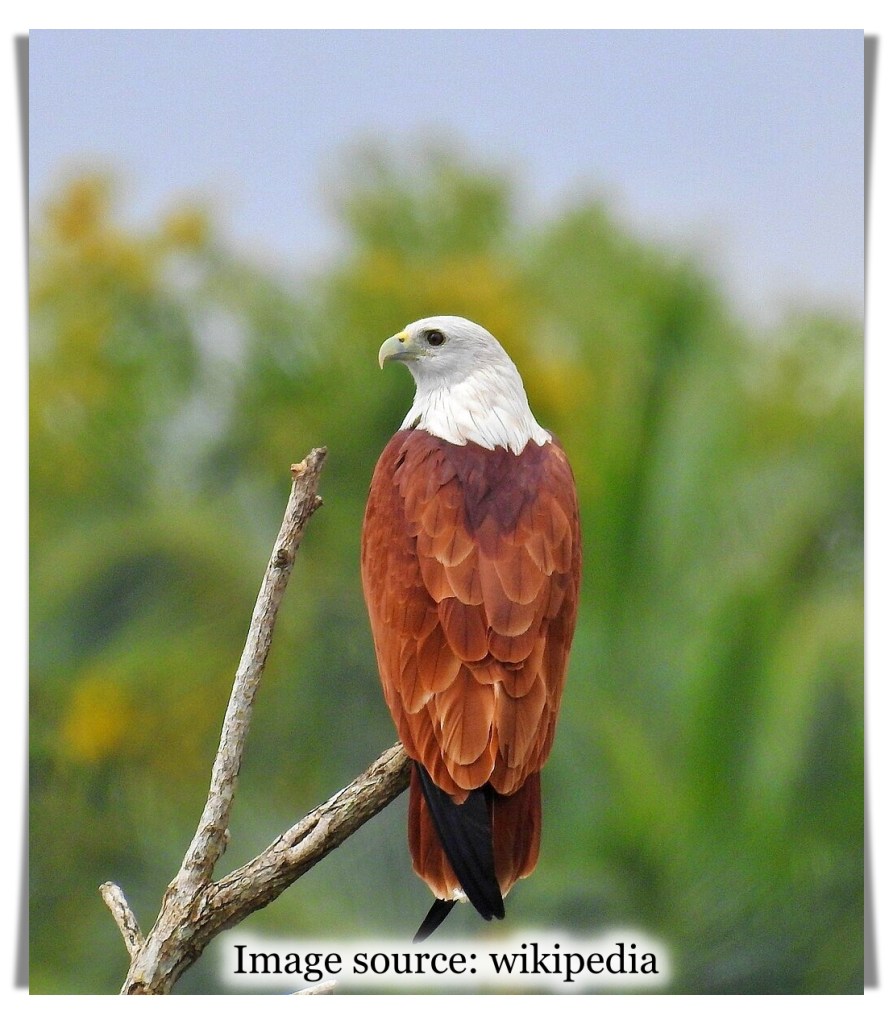
Sengalang Burong, the Iban God of War and messenger of the gods, is at the heart of this belief. He established the system of augury that connects the physical world with the spiritual world. Through him, communication between the two is made possible. The living interpret every sighting and call of an omen bird as a sign from God.

Sengalang Burong: The Iban God of War

In Iban belief, Sengalang Burong is the most revered of all deities. He is remembered as both the God of War and the divine messenger who connects the world of humans with the world of gods. Many ritual invocations and prayers include his name, and people often ask him for courage, protection, and clarity.

According to oral tradition, Sengalang Burong descends from Raja Jembu, a powerful deity whose family tree goes back to Raja Durong of Sumatra. It is said that Raja Durong and his followers fled their home near the end of the Majapahit era. They brought with them religious and cultural traditions that were influenced by Hindu-Minangkabau beliefs. These encompassed ritualistic practices, frameworks of social governance, agricultural knowledge, and strategies of warfare. Over time, these ideas merged with the Iban’s indigenous worldview, creating the spiritual framework that shaped their understanding of the cosmos.

In Iban ritual liturgy, Raja Jembu is the guardian of the batu umai, which is a sacred whetstone used in Iban farming rituals. He married Endu Endat Baku Kansat, and they had six sons and one daughter together. Their children became the main pantheon of the Iban gods, Bunsu Petara. 

Sengalang Burong, the oldest son, rules from Tansang Kenyalang (Hornbill’s Nest), in a realm high in the sky. On earth, he transforms into a Brahminy Kite, known affectionately among the Iban as Aki Lang (Grandfather Lang). He guides humankind through omen birds that act as his messengers. Through these birds, he sends divine messages that govern decisions related to farming, war, and community affairs.

Sengalang Burong married Endu Sudan Berinjan Bungkong, and together they had seven daughters and one son. Each daughter married a nobleman who became one of the seven omen birds: Ketupong, Beragai, Bejampong, Pangkas, Embuas, Kelabu Papau, and Burung Malam. Nendak, the eighth omen bird, is Sengalang Burong’s faithful messenger.

These eight omen birds form the foundation of the Iban system of augury. Their calls, directions of flight, and behavior are interpreted during rituals to determine whether an action, such as starting a journey, planting paddy, or launching a war expedition—is blessed or forbidden. For the Iban, these signs are not superstition but sacred communication. They represent the continuing dialogue between the natural and the spiritual worlds, a system established by Sengalang Burong himself.

In future posts, I will explain more about each omen bird and its role within Iban augury.


I write about Iban culture, ancestral rituals, creative life, emotional truths, and the quiet transformations of love, motherhood, and identity. If this speaks to you, subscribe and journey with me.

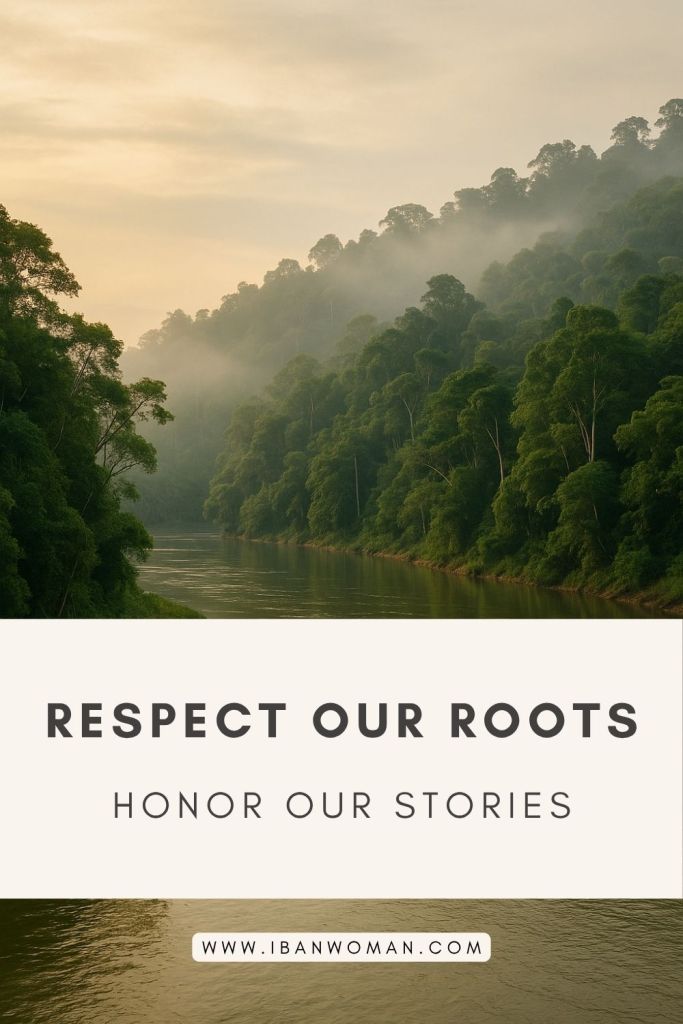
On Cultural Erasure and the Right to Be Ourselves | We Are Not Yours to Claim and Rename

This week, a man on social media told me that all Indigenous peoples of Borneo are Malay. He spoke as if it were an unbreakable truth, and a few confident sentences could change centuries of culture and memory. He talked like someone who was certain of his place in the world and couldn’t imagine that others might have histories older than his own.

I am Iban. You can’t claim and rename my people.

That one conversation was a sign of a much larger issue. It wasn’t just a rude comment but the same old narrative that keeps playing beneath the surface of national conversations. This idea that everything in the Nusantara archipelago belongs under the Malay umbrella is not unity. It is colonization in a new form that continues to erase the cultures that make this region truly diverse.

A thesis essay titled “Cultural Genocide Against Ethnic Groups in Sarawak” discusses this gradual erasure as a form of genocide that occurs through language, law, and land instead of war. It addresses what has been happening in Sarawak and all over Borneo for decades: the gradual disappearance of Indigenous ways of life. There won’t be any violence in the news, but you can see it in how children forget their native languages and how native stories are rewritten or how they are dismissed as myths.

The first impact is on the land. Large-scale logging, oil-palm plantations, and hydroelectric projects like the Bakun and Murum dams have forced Indigenous communities to evacuate ancestral lands they had occupied for generations. For many outsiders, these are symbols of progress. For the people who lived on that land, they are the loss of a living relative. Land isn’t just property; it’s a memory, a source of livelihood, and the center of our beliefs. When it is taken, the connection between people and their ancestors, between rituals and the land, ceases to exist.

The next impact is on language. Malay and English are the main languages spoken in classrooms and offices. Iban, Bidayuh, Penan, and other Indigenous languages, on the other hand, remain in private spaces. The national curriculum rarely acknowledges them. A language is more than just words; it also embodies every aspect of our heritage. When children grow up without it, they lose not only vocabulary but also the worldview embedded in those sounds. 

The third impact is spirituality. Before Christianity and Islam arrived, our ancestors believed in a cosmology that connected people, nature, and the unseen. The adat guided balance and respect. Several elements were based on Hindu-Buddhist beliefs from the Majapahit and Minangkabau traditions, but those influences became uniquely our own, shaped by our environment. If you call these beliefs primitive, you are ignoring how sophisticated they are. Long before the word existed, they taught people about law, ethics, and ecology. The suppression of these systems has shattered more than trust; it has destroyed the bridge between generations.

The last impact lies in invisibility. Bureaucracy rarely speaks the language of the natives. Many still struggle to gain recognition of their customary land rights or even simple documents like birth certificates and identity cards. People who don’t have these papers become ghosts in their own country—unseen in census numbers and uncounted in national decisions.

Taken together, these forces create the silent machinery of cultural genocide. It’s not about individual malice but about a system that values uniformity over diversity and control over respect. When progress is measured only by infrastructure and profit, it becomes a form of forgetting.

I write this not to sow division, but to call for honesty. Respect for Indigenous tribes and their histories is not charity but a moral obligation.  When you erase a culture, you do not create unity. You create emptiness. Real harmony happens when differences can exist side by side, without one overtaking the other.

If you have mixed roots and feel like you’re torn between two identities, know this: you’re not a poser. You are the result of two or more heritages coming together. You have the strength of several worlds inside you. You have every right to learn your ancestral language, honor both sides of your heritage, and talk about it with pride. You can still reach your roots and the journey begins with curiosity and grows through community.

And to those who continue to insist that “everyone is Malay,” listen up: you are not defending tradition; you are performing a modern version of the same colonial mindset you claim to oppose. Claiming and renaming others is not leadership. It’s theft. It is a refusal to accept that different roots can live together without merging into one trunk.

The Iban, Bidayuh, Kenyah, Penan, Lun Bawang, Melanau, Kelabit, and countless other groups are not extensions of a larger race. We are nations within a nation, with histories that predate borders. We have our own gods and deities, our own literature, our own rituals and way of life. We don’t need anyone to save us from ourselves.

So take care of your own culture and let us take care of ours. Guard your own identity and let us stay as ourselves. You don’t have to tell us what to believe, how to speak, or how to conduct our affairs. Preserve your own heritage and quit trying to claim ownership of what doesn’t belong to you.

This moment in our history calls for courage. We need courage to listen, fix what has been distorted, and return whatever is rightfully ours. We don’t need anyone’s permission to exist. Even when others pretend to forget, we remember. We will continue to speak, to write, to sing, and to exist in our own rhythm. We are not lesser branches of your tree. We are forests in our own right.


I write about Iban culture, ancestral rituals, creative life, emotional truths, and the quiet transformations of love, motherhood, and identity. If this speaks to you, subscribe and journey with me.
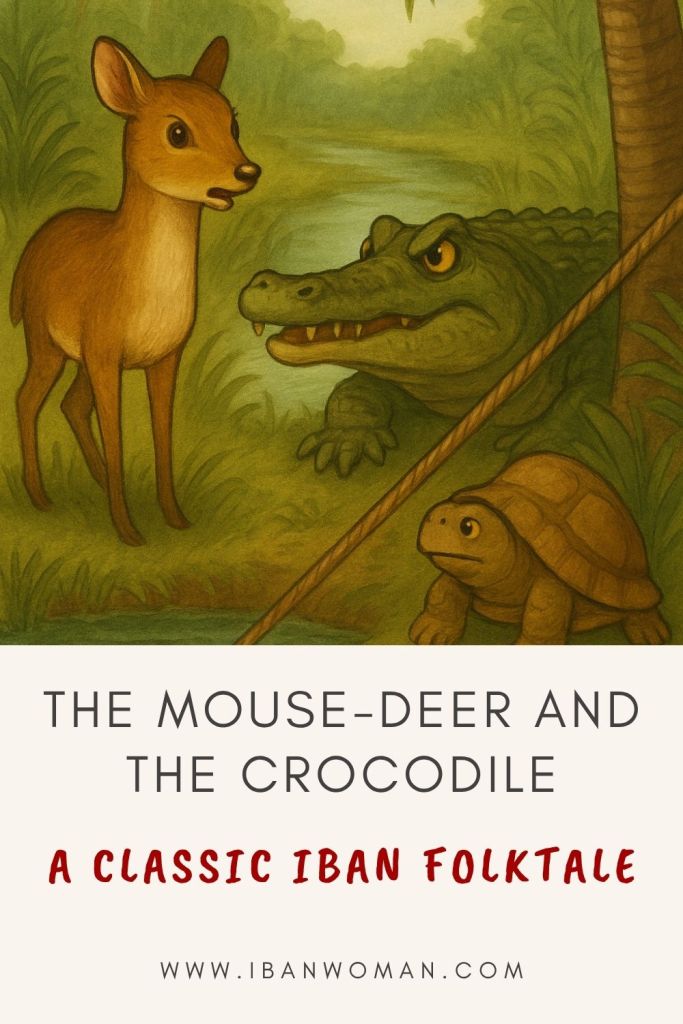
The Mouse-Deer and the Crocodile | A Classic Iban Folktale

One day, the mouse-deer (pelanduk) went out to look for food. After walking for about an hour, he reached a swamp covered in tall grass (madang melai) and water plants. Not far from there, an old Malay man named Pak Dollah was busy clearing the area to prepare it for farming.

The mouse-deer wanted to eat the fallen fruits of the simpur tree (pun buan) that grew nearby, but he was afraid Pak Dollah might see him. He moved carefully, one step at a time, hoping to stay unnoticed. But his fear was unnecessary, Pak Dollah was too focused on his work to notice anything around him. So the mouse-deer went ahead and ate the fallen fruits to his heart’s content.

When he was full, he turned to leave. Just as he was about to walk away, a female crocodile (baya indu) suddenly shouted at him.

“Hey, Mouse-Deer!” she called.

“Oh, Crocodile! You scared me!” he replied.

“You ate my eggs, didn’t you?” she accused.

“What? Of course not!” said the mouse-deer.

“Don’t lie! I saw your footprints near my nest. All my eggs are broken because of you!” the crocodile shouted angrily.

“You can’t just accuse me like that. What proof do you have?” asked the mouse-deer.

“I saw your footprints, that’s proof enough!” she insisted.

The mouse-deer tried to stay calm. “I didn’t eat your eggs. Maybe they broke because Pak Dollah accidentally cut through your nesting spot while clearing the grass. Look over there, he’s still working.”

But the crocodile didn’t believe him. “Don’t try to trick me. I know your sly ways, Mouse-Deer,” she said. “You’re so small that even if I swallowed you whole, I wouldn’t be full.”

“Alright,” she continued. “If you really didn’t eat my eggs, prove it. Let’s have a tug-of-war. If you lose, that means you’re guilty. If you win, I’ll believe you’re innocent.”

The mouse-deer pretended to think for a moment, then agreed. “Big body, small brain,” he muttered under his breath. He asked for three days to prepare, and the crocodile agreed.

When he got home, the mouse-deer sat quietly, trying to come up with a plan. He knew he could never win against the crocodile by strength alone, so he decided to use his wits. He called his friend, the tortoise (tekura), for help.

“Oh, Tortoise,” he sighed. “I’m doomed. The crocodile challenged me to a tug-of-war because she thinks I ate her eggs.”

“Don’t worry, my friend, I’ll help you,” said the tortoise calmly.

“Do you have an idea?” asked the mouse-deer.

“I do,” said the tortoise. “When the contest starts, tie your end of the rope to the coconut tree by the swamp. The crocodile won’t see it since she’ll be in the water.”

“That’s brilliant. Thank you, Tortoise,” said the mouse-deer, feeling relieved.

Three days later, the crocodile waited by the swamp.

“Hey, Mouse-Deer! Are you here yet?” she called out.

“I came earlier than you,” the mouse-deer replied.

“Are you ready?”

“I am. But before we start, we need a referee,” said the mouse-deer.

Right on cue, the tortoise appeared slowly from behind a tree. Seeing him, the crocodile quickly appointed him as referee. The tortoise pretended to be surprised but accepted.

He set the rules. “Crocodile, if your feet touch the land, you lose. Mouse-Deer, if your feet touch the water, you lose. I’ll go back and forth to make sure both of you obey the rules.”

The crocodile went into the water, holding one end of the rope in her mouth. The mouse-deer stood by the coconut tree, holding the other end. Once the crocodile was ready, the tortoise hurried to help the mouse-deer tie his rope tightly to the tree.

“Alright,” said the tortoise. “One! Two! Three! Pull!”

The crocodile pulled with all her might. Her tail whipped through the water, splashing high into the air. But no matter how hard she pulled, the mouse-deer did not move an inch. On the bank, the mouse-deer pretended to pull back with great effort, squinting and swaying from side to side as if truly struggling.

The contest went on for hours, until late afternoon. The crocodile grew exhausted and finally released the rope, gasping for breath as she crawled onto the shore. The mouse-deer still sat there, holding his end of the rope, calm and unbothered.

The tortoise approached them. “The match is over. Since the crocodile let go of the rope first and came onto land, the winner is the mouse-deer. This proves he didn’t eat your eggs. They were broken because Pak Dollah accidentally cut through your nesting ground while clearing the area. You were the one at fault for laying eggs on his land.”

“See, I told you I’m not afraid of you on land,” said the mouse-deer. “Next time, don’t accuse others without proof.”

The crocodile said nothing. Embarrassed, she quietly slipped back into the water. The mouse-deer and the tortoise looked at each other and smiled before heading home, pleased with how things turned out.

Note:

I translated and adapted this story into Malay (shared on Threads) and English (here on my blog), based on the version originally shared by Gregory Nyanggau Mawar on the Iban Cultural Heritage website.


I write about Iban culture, ancestral rituals, creative life, emotional truths, and the quiet transformations of love, motherhood, and identity. If this speaks to you, subscribe and journey with me.
The Risks I Haven’t Taken Yet

When we talk about risks, people often think of something brave or daring like skydiving, quitting a job to travel, or moving to a new country. Those are great choices, but the kind of risk I think about isn’t loud or exciting. It’s quiet, personal, and deep inside me.

The first risk I want to take is to be honest and tell the truth. Not the polite kind that makes things easier, and not the one that hides behind metaphors to avoid being judged. I want to be honest about how I feel and what I believe, even if it makes people who think they know me uncomfortable.

For a long time, I’ve written about love, faith, culture, motherhood, and identity. Writing has always helped me remember and make sense of things. But I’ve also noticed how often I hold back. I choose my words carefully. I filter and rewrite. I tell my stories in ways that feel safe because I’m afraid of being misunderstood or seen as disrespectful. I was taught to value peace, and I learned early that honesty was not always as safe as obedience. But as I grow older, I realize that silence can also be a form of dishonesty.

I want to talk about how faith changes, how love doesn’t fit into neat boxes, and how I’ve changed as a person after years of trying to please everyone. I no longer want to hide behind my writing. I want my voice to sound like it belongs to someone who has lived, made mistakes, and learned from them. Of course, the risk is that people won’t like what they read. But that’s a risk I’m finally willing to take, because what I write now is not for approval—it’s for truth.

The second risk is more physical. I want to get a tattoo.

It might sound simple, but it means a lot to me. I’ve wanted one for years, but I hesitated because of my religious beliefs. For a long time, I thought it was wrong. I thought my body should remain unmarked. Over time, though, my faith changed. It became simpler, gentler, and more personal. It no longer revolves around rules or fear; it revolves around love and truth. And part of that truth is that I want to mark my body in a way that tells my story.

When I finally get a tattoo, it won’t be something trendy or meaningless. It will be something that ties me to my heritage. I won’t use traditional Iban motifs that were meant for men, because I deeply respect the cultural and spiritual meaning behind those designs. But I’ve thought about creating something inspired by them—perhaps the tali nyawa spiral from the bungai terung, which represents the rope of life, or a design based on the buah engkabang, a forest fruit from Borneo with wing-like shapes that symbolize growth and resilience. Both carry meanings that reflect my life, my culture, and the changes that have shaped me.

I also like the idea of tattooing the coordinates of my parents’ longhouses—one for my father and one for my mother. Two longhouses in two different villages, both by the rivers that have run through my family’s history. It feels like mapping where I come from, a way to connect with the places that made me who I am. It would remind me of my roots and, in a strange way, serve as a promise that I will never lose them.

And to be completely honest, the practical side of it gives me comfort too. If I ever died far from home without identification, the coordinates would at least tell someone where I belong. It sounds morbid, but the thought brings me peace. It feels like a way of saying, “If you find me, bring me home.”

I plan to get the tattoo when I turn fifty. That gives me time to think, refine the design, and make sure it feels right. It will also mark a milestone: fifty years of living, growing, and learning to live on my own terms. The tattoo will not just be art on my skin; it will be a story written in ink, one that connects my body, spirit, and heritage.

These two risks—telling the truth and marking my skin—feel deeply connected. Both are about claiming ownership of who I am. Both are about letting go of the fear of how others might see me. I no longer want to live quietly in the background, trying to make everyone happy. I want to speak with honesty and carry symbols that reflect the life I’ve lived and the ancestors who came before me.

Risk might not always mean danger or being careless. It could be as simple as having the courage to live in a way that is true to who you are. That’s the risk I want to take.


I write about Iban culture, ancestral rituals, creative life, emotional truths, and the quiet transformations of love, motherhood, and identity. If this speaks to you, subscribe and journey with me.
What Most People Don’t See

Most people think I’m soft by nature. They think that gentleness is something I was born with. When people read my poems or see my drawings, they often describe them as whimsical, calm, tender, or peaceful. I don’t correct them. It is true in a way, but not the whole truth.

Softness was not something that came naturally to me. It took me years to realize that it can exist with pain. It took even longer to choose it on purpose. I learned it through exhaustion, heartbreak, and slowly putting myself back together after each disappointment. My softness is not passive. It’s a choice I made like a defiance against the hardness that threatened my heart once.

When I was younger, I thought survival meant staying guarded. I thought that being kind would let the world take advantage of me, so I learned to keep my feelings to myself and not talk as much. I became observant and cautious, studying people before deciding if it’s safe to let others in. I had that habit for years without understanding how difficult it was to break.

Art eventually taught me that erecting walls doesn’t always keep you secure. Sometimes it comes from creating something that is honest enough to show who you really are. I find peace when I write, draw, or pair my poems with drawings (“poetry art”). The page doesn’t judge or demand that I do well. It only needs me to be present. That silent conversation between me and the page taught me that being gentle can be strong. It could mend what silence had only kept concealed.

Still, I often feel like I don’t really belong anywhere. I was born into an Iban culture that is rich and layered, but the world I live in now moves quickly and values things differently. I write mostly in English, think partly in Malay, and dream in Iban, a language that doesn’t belong in the world I live in. Every day, I move between these spaces, trying to find balance between them. I can see both the person I used to be and the person I’ve become in these two mirrors, but never both at the same time.

This in-between space is where I create from. It’s where the poems and art begin. I write about rituals, rivers, tattoos, and stories from my ancestors since they are all part of who I am. I draw and write about love and longing because they are a part of the world I live in now. My art is an attempt to bring these two worlds close enough to touch. Even if it’s just for a moment, each poem or drawing is a small way to feel like I belong.

Many people ask me what makes me want to keep creating. The truth is that I create art to feel grounded. Writing helps me return to myself when I start to drift too far from the person I want to be. It reminds me that I still have something to say, even if I don’t say it out loud. Every time I write, I rediscover that softness and strength are not opposites. They are two parts of the same language, which I am still learning to speak fluently.

I’ve learned that belonging doesn’t always mean having a fixed place or community. It could mean accepting that your identity is still changing. Or it could mean carrying your culture and memories in your work, even if those around you don’t always see where they come from. It could also mean finding peace in creating without expecting approval from others.

Most people don’t know these things about me because I rarely share them. But they exist in everything I create. The older I get, the less I feel like I have to explain myself to everyone or to gain approval from anybody. I just need to keep making work that feels honest and can stand as a small reflection of where I’ve been and who I’m becoming.

Softness or gentleness doesn’t mean you don’t feel pain. It is the space that remains vulnerable and courageous despite it. And belonging, for me, will probably always be in that space between the languages I speak, the places I’ve lived, and the stories I continue to tell.


I write about Iban culture, ancestral rituals, creative life, emotional truths, and the quiet transformations of love, motherhood, and identity. If this speaks to you, subscribe and journey with me.

What Rest Looks Like After Fifteen Years of Mothering

It’s been a long time since I’ve had a truly lazy day.

I’m not talking about a day off from chores or deadlines. I’m referring to a day when I let go of everything without feeling pulled in any direction. It’s the day where I don’t feel like I have to be useful or productive or show up for someone else.

Most of my days for the last 15 years have been spent on others. When my kids were younger, especially when they were babies and toddlers, everything was about them. Feeding, bathing, cleaning, holding, and comforting them came first. When they were sick, it meant even less sleep and more work. At that time, I was tired all over, not just my body. It got into my thoughts and emotions as well. Everything was affected by the exhaustion.

There was no such thing as a lazy day back then. It seemed like I had to work for rest. And even when I tried to rest, it cost me something. Waking up from a nap meant a mess. A slower morning meant that I was already behind when I started my day. A moment alone was always interrupted.

At night, when everyone else was asleep, I had the house to myself. Finally, the house was quiet, and I could breathe. I stayed up, though, although I was tired. I wanted a moment when no one needed me so I could be a person again. I found out later that this was called “revenge bedtime procrastination.” It made sense to me. I wasn’t staying up because I had energy, but I stayed up because I didn’t have any other time to be alone.

Back then, I still made time for art. I still wrote in my journal. It was not consistent but enough to keep a small part of myself alive. My creative work never stopped; it just happened in the margins during stolen hours. Or in between picking up the kids from school and doing laundry. I didn’t think of it as something extra but as something I depended on. 

Now, with the kids older, I have more “free time” or space. The demands on my time are different. My kids are more self-sufficient, and I can finally enjoy long periods of peace. But I still don’t take lazy days. 

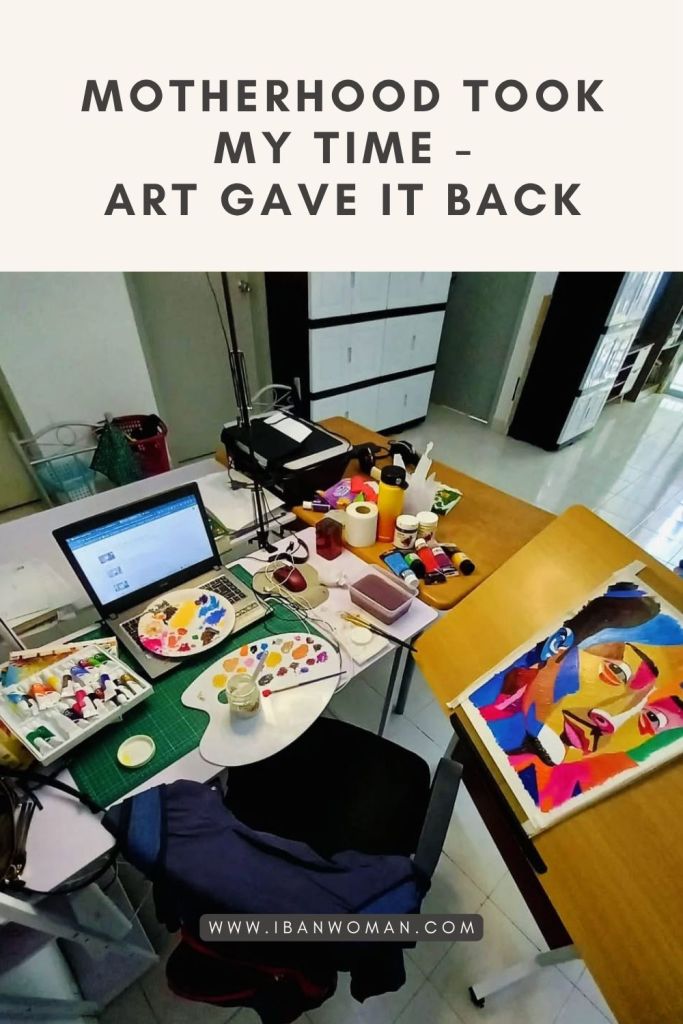
Even on weekends when I don’t have any plans or on school holidays when things are slower, I still gravitate toward my work. And by work, I don’t mean a job. I mean things that feed my mind and spirit, like writing, painting, and reading. These things are not obligations. They’re what make me feel most alive.

Some people might think what I do is work. But for me, it’s the opposite of draining because it gives back and keeps me grounded. I don’t create to be productive. It’s in my nature to create.

That’s why the idea of lazy days is strange to me. I don’t resist rest. I just experience it differently. When I spend time writing or making art, I’m not trying to prove anything. This is how I return to myself and how I unwind inwardly while still moving.

If you ask me if lazy days make me feel rested or unproductive, I would say neither. I don’t have lazy days. I have quiet and slow days or days where I work inward, even if nothing shows on the outside.

Rest doesn’t always look like lying on the couch doing nothing. Putting on soft music and painting without a goal in mind is one way to relax. Sometimes it’s writing in a journal in the early morning, before anyone else wakes up. Sometimes it’s reading a book that makes me feel less alone.

To be honest, I don’t think I want a life full of lazy days. I want to live a life where I feel like I’m really there in everything I do. Whether it’s being a parent, creating something, or just being still. Maybe that’s what I’ve been working toward all this time.


I write about Iban culture, ancestral rituals, creative life, emotional truths, and the quiet transformations of love, motherhood, and identity. If this speaks to you, subscribe and journey with me.