
I finished The Abundance of Less today. I don’t think I’ll read this book from start to finish again. There are parts of the book that I might read again because some of the people in it have inspired me one way or another. Their lives were at peace and consistent over time. That has remained with me.
What I liked most was how some of them lived without separating things. There was no separation between work, art, and everyday life. Making meals, growing food, making art or writing, or carving wood all come from the same place. There was no clear line between survival and meaning and I can see why that might be appealing because it feels solid and complete.
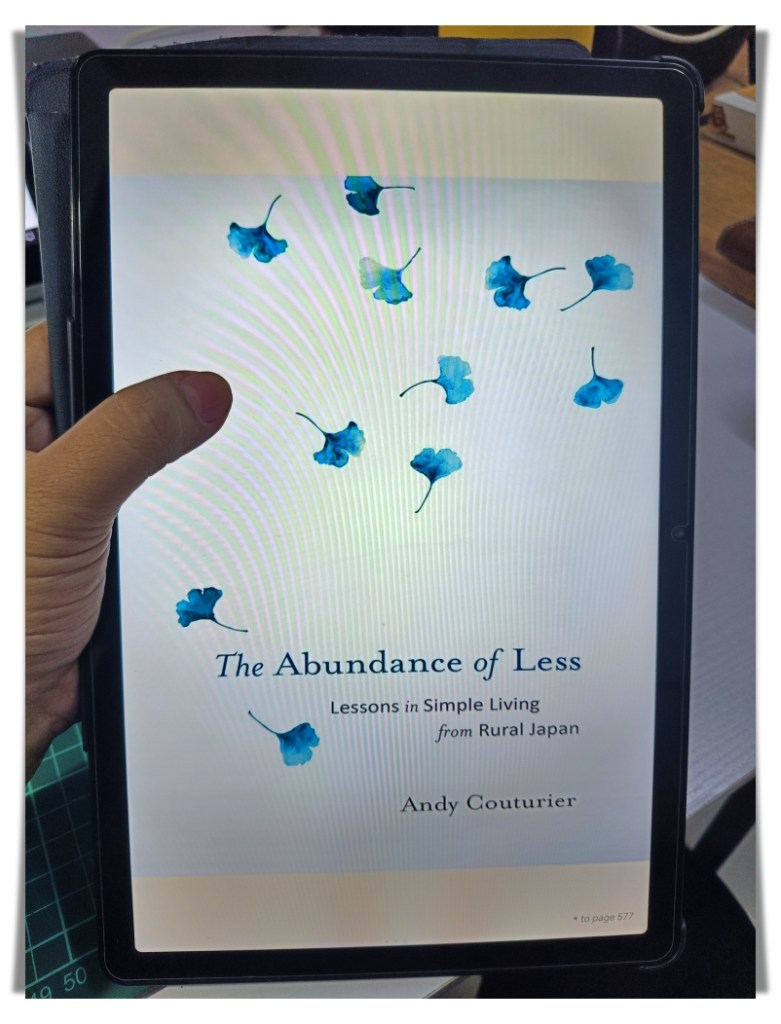
Some of the people in the book choose to live with less. They kept their needs minimal. They worked with their hands and they were aware of their surroundings. Living that way takes discipline but it brings clarity. You know what you need and what you don’t. However, a tension that was hard to ignore grew as I read on.
In the Afterword chapter, the author mentioned one of his book reading sessions when someone asked if these people were just surviving at a basic level of survival. That question lingered because it sounded familiar. Where I come from, many people already live that way. It’s not a philosophy or a decision made after reflecting on it. That’s just how life is.
I come from an Iban background. My grandparents were paddy farmers who lived in longhouses. They grew their own food and they depended on the land. Life in the longhouse community was close and practical. It wasn’t considered meaningful or spiritual. It was simply necessary and it wasn’t easy. Farming is hard work and the yield is sometimes uncertain. There are limits to what you can access, especially education and healthcare. Many people in these communities wish to have a stable income. They need money to send their kids to school or pay for healthcare. They want to repair their homes or build new ones. They want to help their elderly parents. These concerns are genuine and constant.
When I read about people who want to live a simpler life, I see two separate realities. Some people choose to live with less. And some people have always lived with less. The difference is in the choosing. Choice allows you to choose that life and leave whenever you want to. Choice lets you regard it as meaningful. If something goes wrong, it allows you to return to a system that supports you. But without that choice, that same life would look very different.
In the Afterword, the author asks if small “green” changes to one’s lifestyle are really meaningful. They say that these changes let people stay comfortable while calling it sustainability. The concern is real, especially when certain changes are made more for show than for a good reason. But this perspective doesn’t take into account that not everyone can make big adjustments to their lives. Some people can’t move away from the city, change jobs, or move closer to nature. They can’t make those kinds of adjustments because of their jobs, finances, and other circumstances in their lives.
For them, small changes let them do things within their limits. Making small changes like consuming less, being more mindful, or doing less harm to the environment can still reflect a genuine effort to live with awareness. These decisions may not seem like enough from the outside, but they are based on what a person can realistically change at that point in their life.
This doesn’t mean that the people in the book are wrong. I understand what they’re attempting to achieve. I can see the benefits of living with purpose and cutting back on things I don’t need. I can see they care about the land and their communities. But I can’t ignore the other side either. Moving to a city or looking for a job that pays cash does not mean giving up on values. People are just responding to their circumstances. They are trying to make their life more stable by making decisions based on what they need.
Both ways of living arise from different needs and situations and are shaped by different circumstances. One is often chosen and can be left behind. The other is lived without the option to leave. That difference should not be overlooked. To be frank, this book did not give me a model to follow. It just offered me another perspective to consider and it made me think more about my own life and what I already value. It also made me think about how some ways of living are described and seen in a higher regard.
I will remember certain chapters of this book. The chapters about Asha Amemiya, Akira Ito, Koichi Yamashita, and Wakako Oe are worth reading. They are not offering answers, but rather something that can fuel my inspiration. I will return to those chapters when I need a reminder of some kind of discipline or attention. I will also give my perspective the same weight because it also means something important to me.
I write about Iban culture, ancestral rituals, creative life, emotional truths, and the quiet transformations of love, motherhood, and identity. If this speaks to you, subscribe and journey with me.
 Olivia's Atelier